
When it comes to the NCAA tournament, the only thing better than watching small schools made up of lightly-recruited players upsetting major-conference schools made up of blue-chippers is being the only one in your pool who knew it would happen. Upsets are a surefire part of March, and predicting them is integral when filling out your bracket. Before we get to this year's best sleepers and Cinderellas, though, let's take a closer look at recent history and seed trends to remember when picking your upsets.
The 12-over-5 upset pick is typically the most popular--and for good reason. After a pair of 12-seeds (Little Rock and Yale) advanced past the Round of 64 last year, there has now been at least one such upset in eight of the last nine tournaments. In fact, since 2012, picking this game has been a 50-50 proposition, with the 5's and 12's evenly splitting 20 matchups.
Recently, 11-seeds have been even more likely to ruin--or save--your bracket. Gonzaga, Wichita State and Northern Iowa all got it done last year (and all advanced to the Sweet 16, as well), pushing the No. 11's to 7-5 against the No. 6's over the last three years.
Interestingly enough, 10 seeds have been less successful than than their higher-digit counterparts, going 2-4 last year but just 7-13 since 2012. That said, Syracuse turned a 10-seed into a Final Four appearance last year, so there is some danger in completely dismissing the 10's.
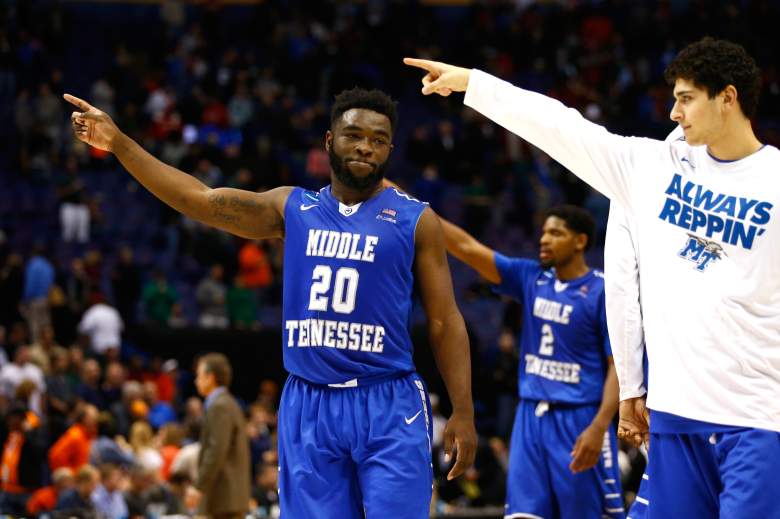
Finally, while the 10's, 11's and 12's are obviously the most likely to pull off some upsets, don't be afraid to stop there. A 13 (Hawaii), 14 (Stephen F. Austin) and 15 (Middle Tennessee) all won last year, while 14's have been particular good Giant Killers lately, knocking out a No. 3 in each of the last four tournaments.
So, while the mid-major teams boast somewhat weaker resumes in 2017, and while a number of conference tournament upsets only thin out that pool, you can rest assured there are going to be upsets, and you can click through the gallery for my favorite double-digit seeds to win at least a game in 2017. (Getty)
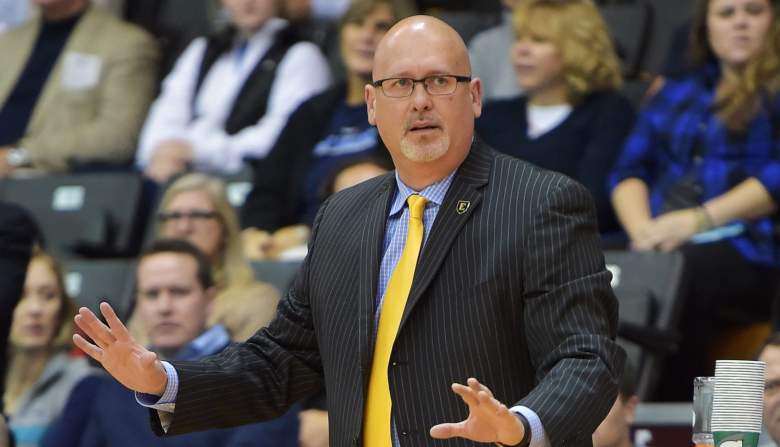
No. 13 East Tennessee State
Opponent: Florida
Last year we saw with Stephen F. Austin that a star player combined with an aggressive, turnover-forcing defense is a good recipe for taking out a favorite, and the best candidate to follow that blueprint in 2017 has to be East Tennessee State. The Buccaneers have a player capable of taking over in TJ Cromer, who averages 19.1 points and 3.0 threes per contest, while the defense forces turnovers on 22.0 percent of possessions, the 19th best mark in the country.
A matchup against Florida, a team that has a talented backcourt and takes good care of the ball, isn't ideal, but the Buccaneers are an undeniably dangerous team. (Getty)
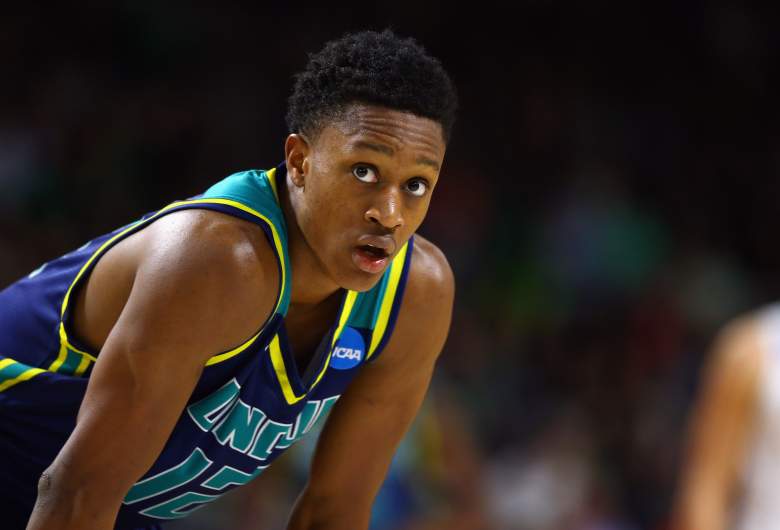
No. 12 UNC Wilmington
Opponent: Virginia
You may remember that 13-seeded UNC Wilmington gave Duke all it could handle last year before ultimately running out of gas late in the second half. Well, this year's team is even better.
Guards CJ Bryce, Chris Flemmings and Denzel Ingram, who were are crucial to last year's success, are still there, while Davontae Cacok--who was lightly used last year--has developed into an efficiency stud on the interior. The 6-foot-7, 240-pound sophomore ranks first in the country in effective field-goal percentage, first in true shooting percentage, 27th in offensive rebounding percentage and 13th in defensive rebounding percentage.
Put it all together, and you have a team that ranks 18th in Ken Pomeroy's adjusted offensive efficiency rankings, 25th in effective field-goal percentage, fifth in points per possession, and perhaps most importantly, second in turnover percentage, giving away the ball on just 13.9 percent of their possessions.
Virginia is a really tough first-round matchup because they are so disciplined, but they've been susceptible at times this season, and the Seahawks' talented, experienced guard-play plus efficient offensive attack is the perfect weapon to counter the Cavaliers' pack-line defense. (Getty)
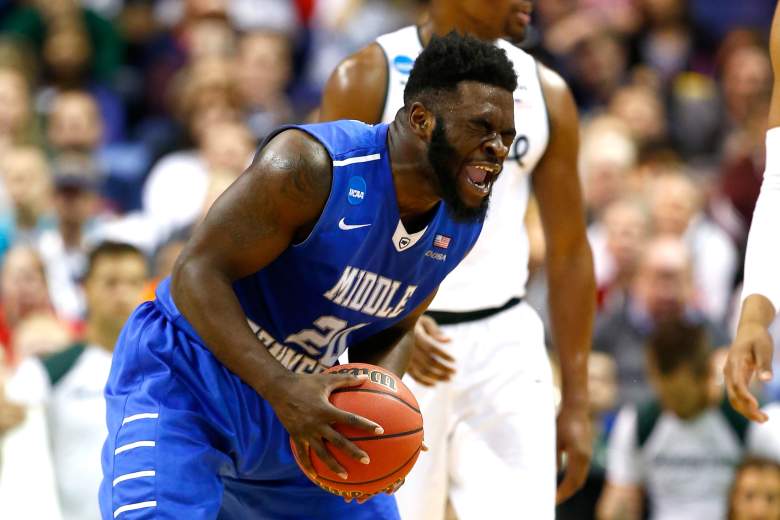
No. 12 Middle Tennessee
Opponent: Minnesota
Not only do the Blue Raiders still have their top two scorers (Reggie Upshaw and Giddy Potts) from a team that pulled off one of the biggest upsets ever against No. 2 Michigan State in the Round of 64 last year, but they've added a star in Arkansas transfer Jacorey Williams, who put up 17.3 points and 7.3 rebounds per contest to earn Conference-USA Player of the Year honors.
The new-and-improved Cinderella scored impressive non-conference victories over UNC-Wilmington, Ole Miss, Vanderbilt and Belmont, then proceeded to bulldoze its way through C-USA, winning all but four games--including all three in the conference tournament--by double-digits. A well-balanced squad (Top 55 in Ken Pomeroy's offensive and defensive efficiency) that takes care of the ball (26th in turnover percentage) and limits opponent possessions (third in defensive rebounding percentage), Kermit Davis' team is going to be an extremely tough out. (Getty)

No. 12 Princeton
Opponent: Notre Dame
Beware the Ivy League. Over the last seven NCAA tournaments, the smart guys have gone 4-3 in the Round of 64. Three of the wins were by 12 seeds (2016 Yale, '14 Harvard and '10 Cornell) and one was by a 14 seed ('13 Harvard), while the 2015 Harvard team (13 seed) and 2011 Princeton squad (13 seed) each lost by just two points to a couple of pretty decent programs: North Carolina and Kentucky, respectively. The worst loss over that span was by the 2012 Harvard squad (12 seed), who fell to Vanderbilt by nine.
This has annually been a really good league for quite some time now, and for Princeton to go undefeated during the regular season and win the inaugural tournament despite a format that didn't truly benefit the champs is a testament to what the Tigers bring to the table.
They take care of the ball (12th in turnover percentage), they can shoot the 3 (four players average at least one make per game, while Devin Cannady is one of the best shooters in the country), they protect the glass (12th in defensive rebounding percentage), and they defend really well (45th in Ken Pomeroy's defensive efficiency). Notre Dame can be dangerous, but if they aren't knocking down threes, they become vulnerable. (Getty)
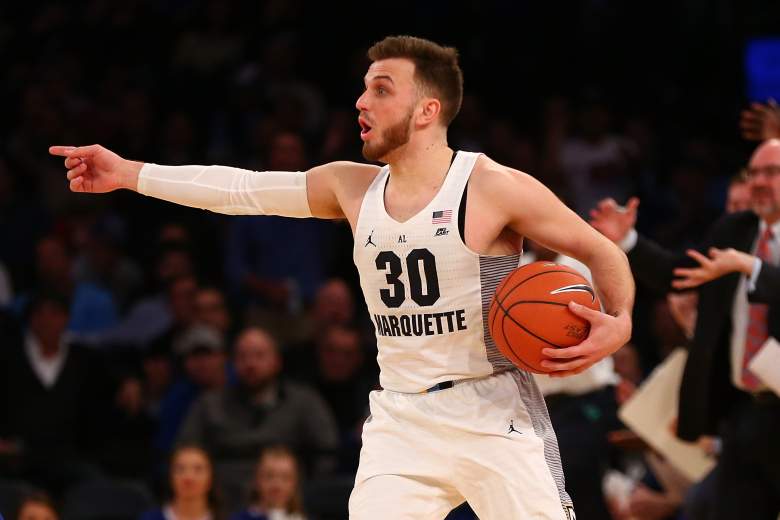
No. 10 Marquette
Opponent: South Carolina
Marquette has been frustratingly inconsistent, never winning more than two games in a row inside Big East play. Fortunately, you only need to be able to win one game to get onto this list, and when the Golden Eagles are on the correct side of the Dr. Jekyll and Mr. Hyde act, they are capable of beating anyone on any given night. No. 2 Villanova found that out the hard way on January 24.
They can absolutely light it up from long range. Steve Wojciechowski has four players who hit at least 2.0 treys per game, while three of them knock 'em down at an absurd clip of 45 percent or better. As a result, the Golden Eagles are first in the nation in three-point percentage, sixth in effective field-goal percentage, and seventh in Ken Pomeroy's adjusted offensive efficiency.
Though they can struggle on the defensive end, and the inconsistency is concerning, that kind of offensive firepower against South Carolina's elite defense is going to be a really intriguing matchup. (Getty)
NCAA Tournament Bracket Predictions 2017: Top Upset Picks