
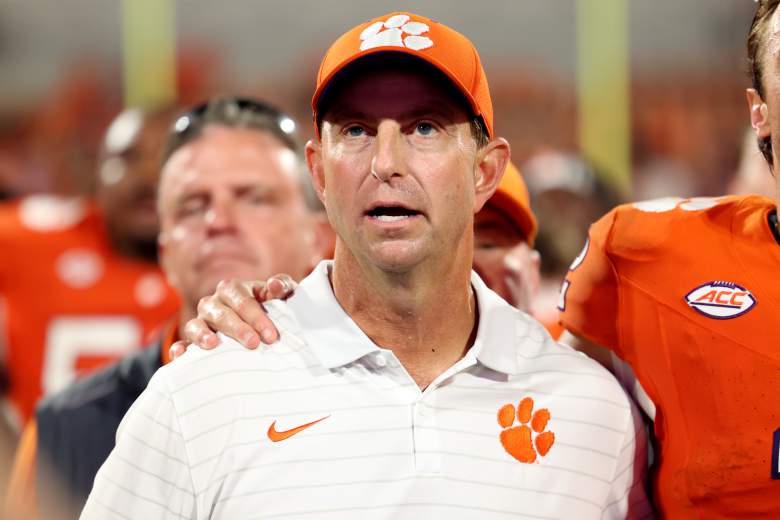
Dabo Swinney has earned more patience at Clemson than almost any coach in college football.
Two national championships, eight ACC titles and nearly two decades of winning do not disappear because of one terrible Saturday night. But Clemson’s 51-10 demolition at the hands of LSU creates an uncomfortable question that the Tigers may no longer be able to avoid.
How much longer can Clemson’s past protect its present?
LSU did not simply beat Clemson in the 2026 opener. The Tigers overwhelmed Swinney’s team in virtually every measurable way, piling up 643 total yards while holding Clemson to 145. Clemson averaged only 3.0 yards per play and did not score a touchdown until the final minutes.
For a program trying to prove last season was an aberration, it looked alarmingly familiar.
Pressure Around Dabo Swinney Is No Longer Hypothetical
Clemson finished 7-6 in 2025, Swinney’s worst record since 2010. The Tigers went 4-4 in ACC play and posted their first losing home record since 1998.
Those results were enough for CBS Sports voters to move Swinney into the “pressure is mounting” category entering 2026.
Saturday did nothing to quiet that conversation.
Swinney remains Clemson’s greatest coach, and that matters. He transformed the Tigers from a strong regional program into a national powerhouse and beat Nick Saban’s Alabama twice for national championships.
But college football rarely allows programs to live indefinitely on old accomplishments.
Clemson once measured itself against Alabama, Georgia and Ohio State. Against LSU, the Tigers looked nowhere close to that standard.
Clemson Has to Decide What It Wants to Be
This does not mean Clemson should make an emotional coaching decision after one game.
It does mean the standard surrounding Swinney should no longer be simply whether Clemson remains respectable.
The question is whether the program is actually moving back toward championship contention.
LSU provided a brutal early answer.
Swinney has resisted several trends that have reshaped modern college football, particularly the aggressive roster construction used by programs embracing the transfer portal. His approach helped Clemson build something special, but the results increasingly invite questions about whether that same philosophy can restore what has been lost.
Clemson athletic director Graham Neff publicly expressed confidence in Swinney following last season.
That support should not prevent legitimate scrutiny.
Swinney has accumulated enough credibility to earn the opportunity to respond. But after a 7-6 season followed immediately by a 41-point humiliation, simply pointing toward the trophies of the past is becoming a less convincing answer.
Clemson does not need to erase Swinney’s legacy.
It needs to determine whether he is still the coach capable of creating its next great era.
Dabo Swinney Faces Uncomfortable Question After Clemson’s LSU Disaster