
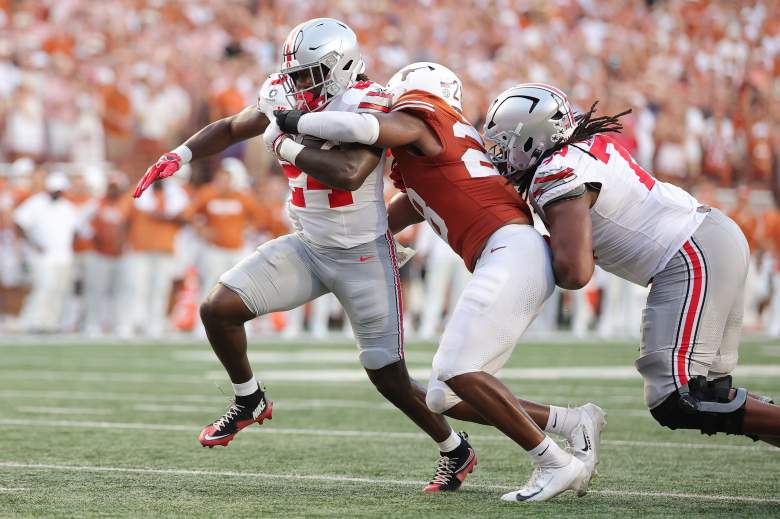
The Ohio State Buckeyes had no business losing to the Texas Longhorns on Saturday night, not after the way OSU had dominated much of the game.
But down the stretch, Arch Manning and the Longhorns started scoring, and the Texas defense began getting stops.
All of a sudden, Texas was on the doorstep with less than a minute left, trailing by six points.
Ohio State had one timeout left and about 50 seconds, and Texas had a first-and-goal from just a yard or two out.
It was the classic conundrum: Do you let them score?
A Longhorns touchdown and extra point would put them up 24-23.
Obviously, if Ohio State prevents Texas from diving across the goal line, the Buckeyes win the game.
But to do that four plays in a row? Unlikely, to be sure.
And if you fight it, you risk letting more clock get used.
In the end, Ohio State didn’t take its foot off the gas, and it might’ve cost the Buckeyes.
Texas did end up scoring, and it did end up as a 24-23 win for the Longhorns when no desperation effort in the closing seconds could work for Ohio State.
Why Ohio State Should’ve Let Texas Score
The reality is this:
If Ohio State lets Texas score on the first play after the Longhorns punched it in close, the Buckeyes would’ve gotten the ball needing just a field goal and possessing one timeout with about 50 seconds left.
Instead, Ohio State used its timeout while Texas was stuffed, then had more time run off the clock when Texas was stuffed again.
Only then, on third down, did the Longhorns score — and even then, they really snapped it too fast. They could’ve waited longer.
I’m shocked Ohio State didn’t let Texas score late
Once they got to the 1 yard you let them in
Still have 1 TO left and 50 seconds vs 25 seconds and no TO
— Jim Costa (@JimCosta_) September 13, 2026
The reality, while sometimes feeling complicated, is that teams play to win the game.
And while counterintuitive, the best chance Ohio State had of winning Saturday night’s game would’ve been to first accept the near-inevitable deficit in the hopes of having more time to turn it around in the closing seconds.
Why Ohio State Didn’t Let Texas Score
Simply put, the No. 1 team in the country isn’t going to lay down, even temporarily.
It feels wrong to let the other team waltz into the end zone, even if it’s a perfectly valid stategy.
That must be at the core of what Ohio State was doing. Instead of considering a useful alternative, the Buckeyes simply put their hard hats on and went to work.
They got two downs worth of stops, but given that the Longhorns got into the end zone in the end, those stops actually just hurt Ohio State’s chances against the clock.
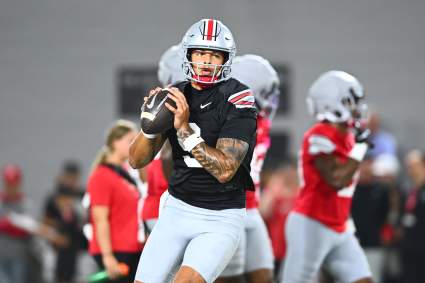
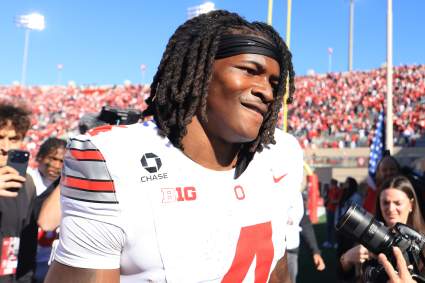
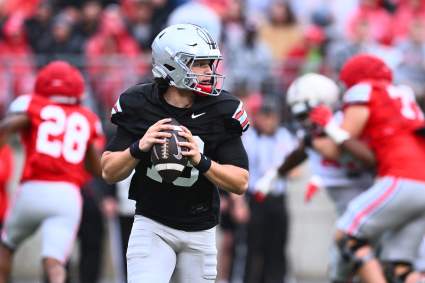
You’ll never get a perfect outcome on these thought experiments, but it sure would’ve been interesting to see the other approach pay off — maybe Julian Sayin and Jeremiah Smith would’ve had enough time then to play hero.



This Is Why Ohio State Should’ve Let Texas Score