
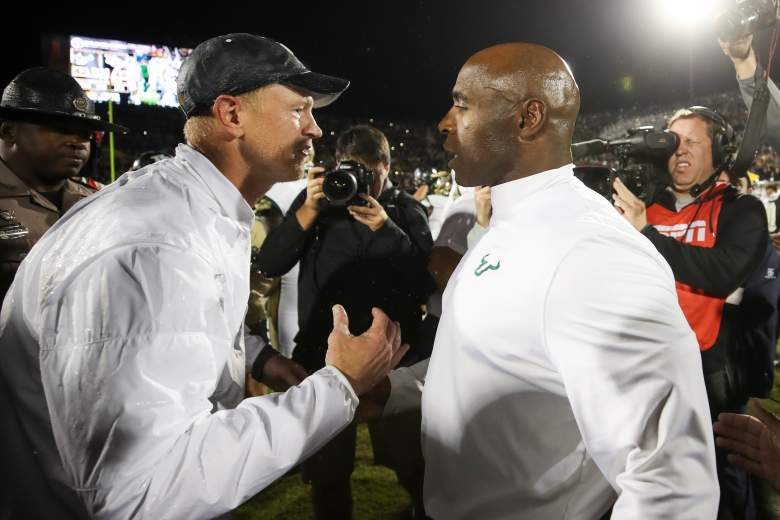
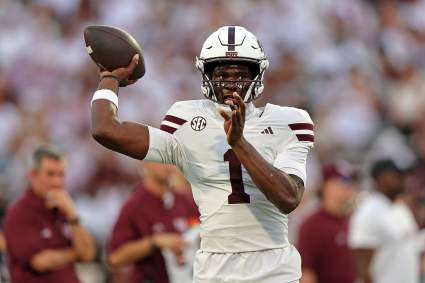
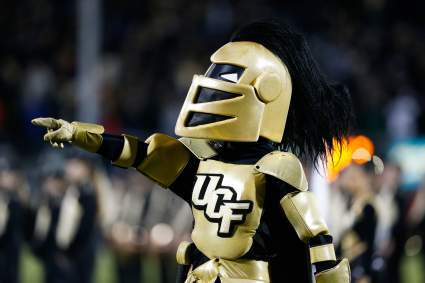
It’s now been since 2022 when the UCF Knights and the USF Bulls last met to play the War on I-4. That coincides with the last time they shared a conference, before UCF made the jump to the Big 12.
At the time, it had been budding as one of college football’s most interesting young rivalries. Now, it looks like it’s dead. At least, it looks like that way for the foreseeable future as the two sides reportedly failed to come to an agreement on continuing their rivalry series.
Brett McMurphy of On3 reports that neither side is willing to change its scheduling philosophy. That means they’re not going to be scheduling future games.
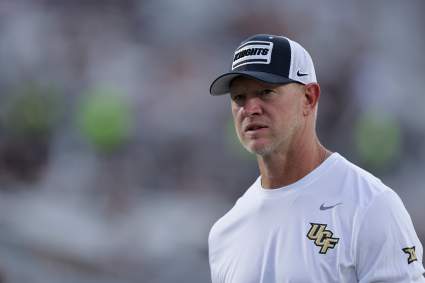
UCF, now a Power Four program, won’t play a home-and-home with a Group of Six team. USF, meanwhile, isn’t interested in playing the War on I-4 without a return trip to Tampa. UCF AD Terry Mohajir had reportedly offered to host in 2030, but it was declined due to the lack of a return game.
“This has nothing to do with us snubbing our nose at another team in the state,” Mohajir said. “It all has to do with our financial model. It has to work financially.”
USF also, apparently, offered a four-game series with each team hosting a home game and then two neutral-site games. UCF declined that. Again, because USF is in the Group of Six.
The UCF Knights and USF Bulls Have A Brief, Intense History

Neither UCF nor USF has been playing football all that long in the grand scheme of college football history. The Knights first played in 1979, then a Division III school. By 1996, they made it to Division I-A, which is now called FBS. USF, meanwhile, didn’t start playing until 1997. By 2001, they were in Division I-A.
UCF and USF wouldn’t play, despite being a 90-minute drive from one another, until 2005. By then, USF was in the Big East while UCF was in C-USA, giving the Bulls a BCS affiliation that the Knights didn’t have, and it showed on the field, with USF winning the first four games of the War on I-4.
At this same time, USF would work behind the scenes to block UCF from entering the Big East and moving up in the college football world. Many of those reports came from around 2011. By that time, USF was 4-0 on the field against UCF, but the Knights were rapidly building new facilities.
The Big East would collapse regardless. When that happened, UCF and USF both ended up in the AAC, where UCF immediately dominated, winning the conference four times and eventually getting the Big 12 call. USF’s facilities and wins lagged behind. Eventually, USF was the one left behind in the Group of Six while the Knights entered the Power Four.
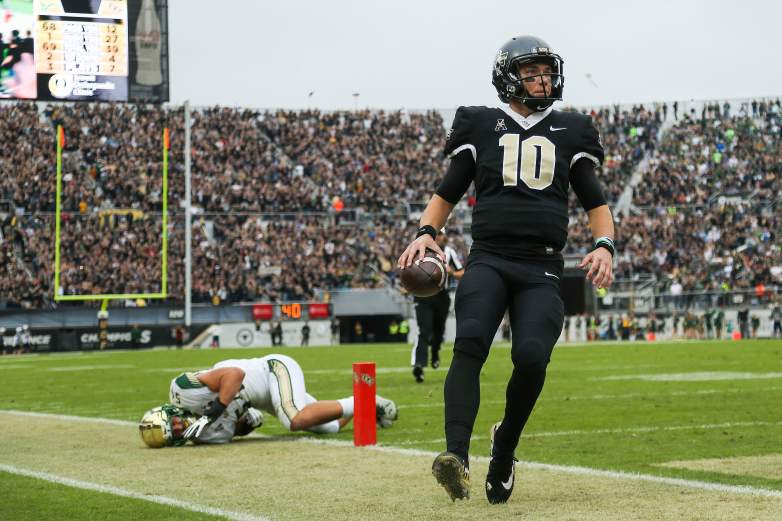
In the War on I-4, UCF got its first win in 2013. Then, starting in 2017, they began a six-game winning streak. That included the phenomenal 2017 game, which ended on a Mike Hughes kickoff return for a touchdown and a 49-42 final score. UCF now leads the dead series 8-6.
The Finances Play a Role for UCF and USF
College athletics face a harsh reality in 2026. Finances matter. They matter so much that history and tradition can be left by the wayside at times.
For UCF, that means that they need to play a Power Four non-conference game, which is required by the Big 12. Those are, typically, going to be home-and-home games. Then, with their other two non-conference games, the Knights need home games against G6 or FCS opponents for ticket and concession sales.
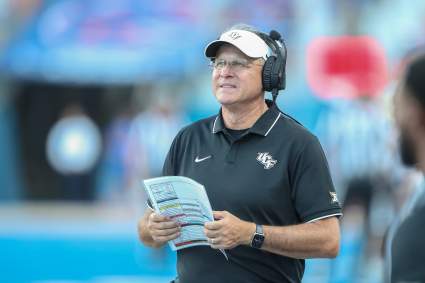
USF needs money, too, though. The War on I-4 could be worth plenty of money, which is something USF AD Rob Higgins has emphasized.
“We’re both leaving a tremendous amount of money and media value on the table, which is a shame especially in the current landscape,” Higgins said. “There is a big opportunity for Thanksgiving weekend to feature a huge national spotlight on all of the Sunshine State’s great college football rivalries. I hope we can all work together to arrive at an agreement to make it happen as soon as possible.”
UCF isn’t going to bend and play a road game against a Group of Six team, though. In many respects, it wouldn’t make sense for USF to only play in Orlando, either, as it would be acknowledging that one side has more power within the rivalry. That’s especially embarrassing given that the shoe used to be on the other foot.
“I 100 percent agree (with Higgins) asking for a home/home; it’s the right thing to do,” Mohajir said. “But the financial models have changed.”
That means that it looks like the War on I-4 is dead. That is, until USF ends up in a Power Four conference. That is, if USF ever ends up in a Power Four conference. The only other option is for a change of leadership at one or both schools, which would potentially come with a change of heart about scheduling practices.
“When USF gets into an autonomy conference it will be easier,” Mohajir said. “That’s my game and I’d never have to leave the state to fulfill (the Big 12’s) Power 4 non-conference requirement. We’ll play USF every year. That would be great.”

UCF and USF Fail to Agree to Continue War on I-4 Rivalry, What’s Next?