

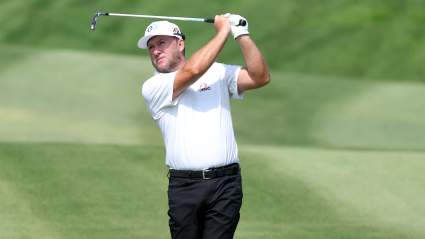
For most of his career, Gary Woodland has been known for resilience – the kind required to win major championships and compete at the highest level of professional golf. But this week, ahead of THE PLAYERS Championship, the 2019 U.S. Open champion revealed he has been fighting a battle far more personal and difficult than anything on the course.
Woodland shared that he has been diagnosed with post-traumatic stress disorder (PTSD) following brain surgery in 2023 to remove a lesion. The four-time PGA Tour winner admitted that while fans and fellow players have welcomed him back with enthusiasm, the reality of his recovery has been far more complicated than it appears from the outside.
Woodland said that although the support from the golf world has meant everything to him, it has also created an internal conflict. To many observers, his return to competition suggested he had moved past the worst of his health challenges. Internally, however, Woodland revealed he has continued to struggle with anxiety, emotional stress, and the lingering psychological effects tied to the surgery and its aftermath.
“I can’t waste energy anymore hiding this,” Woodland said. “Everyone’s just been amazing out here, and I appreciate all the love and support. But inside, I feel like I’m dying, and I feel like I’m living a lie.”
The Long Road Back After Brain Surgery
Woodland underwent brain surgery in 2023 after doctors discovered a lesion that was causing serious neurological symptoms. The procedure marked the beginning of a long and uncertain recovery period that kept him away from competitive golf for months.
According to Golf.com, doctors cut a baseball-sized opening in the side of his skull to remove as much of the brain lesion as possible, a procedure that carried the frightening risk of leaving him paralyzed on the left side of his body. Fortunately, the operation was successful.
After spending two nights in the ICU, Woodland was already determined to prove to himself that he could regain control of his life. When hospital staff brought a wheelchair to take him out, he refused. “I’m sorry, I walked in this place and I’m walking out,” Woodland said. He got out of bed and walked out of the hospital under his own power.
The initial relief after surgery was immediate, but Woodland’s competitive instincts quickly resurfaced. Just two days after returning home, he had already installed a PuttView green in his dining room and began rolling putts as part of his recovery routine. Doctors warned him he wouldn’t be able to swing a club for four to six weeks, but the wait didn’t last that long. After only two weeks, Woodland admitted he quietly grabbed a wedge and began hitting shots in his backyard.
Woodland’s Comeback Was Far From a Normal Return
He returned to the PGA Tour in January 2024, determined to resume the career he has built over nearly two decades. But returning to competition proved far more difficult than simply stepping back onto the first tee.
While physically capable of playing again, Woodland soon began experiencing intense psychological symptoms that he later learned were connected to PTSD. Hypervigilance, a heightened state of awareness and sensitivity to surroundings, became one of the most challenging aspects of daily life on the golf course.
One moment during the FedExCup Fall in Napa, California, illustrated how overwhelming those symptoms could become. Woodland recalled a round where a walking scorer unexpectedly approached him from behind.
The moment startled him and triggered a sudden wave of anxiety.
“I was hypervigilant,” Woodland explained. “A walking scorer got close to me from behind and it startled me. I told my caddie [Brennan Little], ‘You can’t let anybody get behind me.’”
Shortly after, the situation escalated.
Woodland said he began experiencing blurred vision and confusion, leaving him momentarily unable to continue playing.
“It was my turn to hit and I couldn’t hit,” he said.
Struggling in Silence on the Course
Despite the overwhelming moment in Napa, Woodland refused to walk away from the round. He insisted on continuing, determined not to abandon the competition or the fans watching.
Little suggested they leave the course, but Woodland pushed back.
“I said, ‘No man, I’m here for these guys. I want to fight through this,’” Woodland recalled.
He ultimately finished the round, but the emotional aftermath was difficult to manage. Woodland admitted that once the round ended, the weight of what had happened finally caught up to him.
“I went into every bathroom to cry the rest of the day,” he said. “When I got done, I got in my car and got out of there.”
For a player who spent years competing under pressure in front of massive crowds, the isolation of those moments was particularly difficult.
“I don’t want to live that way anymore,” he said.
Finding Support and Learning to Adapt
As Woodland has continued navigating life with PTSD, the PGA Tour has worked alongside him to create protocols that help him feel more comfortable while competing. Adjustments to security and awareness on the course have helped reduce situations that could trigger anxiety.
The learning process has been gradual. Woodland said that understanding the psychological effects of neurological trauma has helped him recognize that his experiences are not unusual for someone recovering from brain surgery.
Still, the journey has required patience and support from those closest to him.
Woodland acknowledged that the emotional toll has been especially hard on his family and team, who want to help but cannot simply make the condition disappear.
“This has been harder on my family and my team because they just want to help,” Woodland said. “They want to make it go away, and that’s not how this battle goes.”
Support from fellow players has also played an important role. Woodland said being around teammates during Ryder Cup activities offered one of the few environments where he felt completely comfortable.
“I didn’t have to hide it,” he said. “I could be myself.”
Continuing to Fight for His Dream
Even with the challenges he faces, Woodland remains determined to keep competing. Doctors have suggested that avoiding high-stress environments might be beneficial, but stepping away from the game entirely has never felt like an option for him.
Golf remains the dream he has chased since childhood – the passion that carried him to a major championship and multiple PGA Tour victories.
“This is my dream,” Woodland said. “I have a lot of fight in me and I’m not going to let this thing win.”
His results since returning have reflected the ongoing balancing act between recovery and competition. Woodland finished 90th in the FedExCup Fall standings and has made five starts this season, making the weekend in two of those events.
For now, progress is measured not only in scores but in resilience.
By opening up about his PTSD diagnosis, Woodland hopes his story might resonate with others facing similar struggles. He has spoken with military veterans and others dealing with trauma, many of whom offered advice that resonated deeply with him.
One lesson stands above the rest: no one should try to face these battles alone.
“I hope somebody struggling sees me out here still fighting,” Woodland said. “But I’ve realized I have to help myself first.”

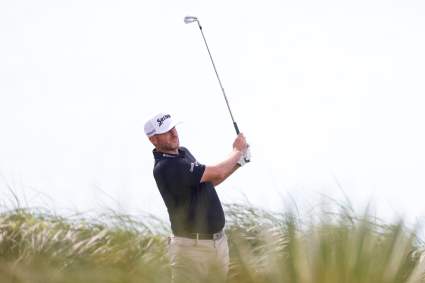
Gary Woodland Reveals Intense Health Struggle Ahead of THE PLAYERS