
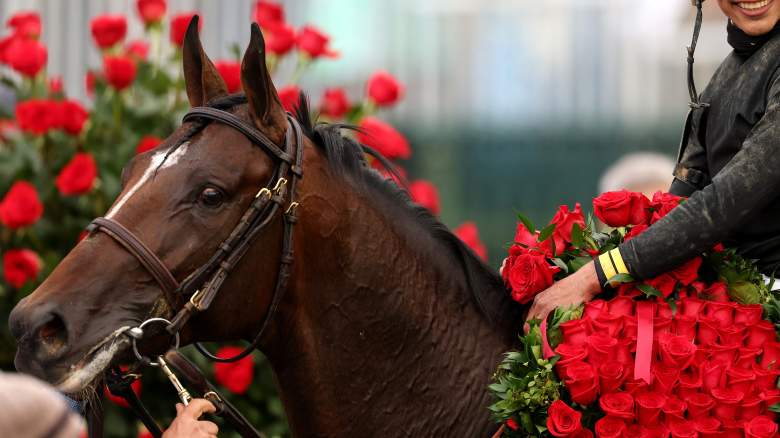
The road to the Triple Crown will come to an abrupt halt this year after Kentucky Derby winner Golden Tempo was officially ruled out of the Preakness Stakes. Trainer Cherie DeVaux announced Wednesday that the colt will instead target the Belmont Stakes on June 6 at Saratoga Race Course, giving the Derby champion additional recovery time following his dramatic victory at Churchill Downs.
While disappointing for racing fans hoping to see history unfold, the move reflects a growing trend in modern thoroughbred racing: prioritizing long-term health and spacing between races over the demanding traditional Triple Crown schedule.
DeVaux emphasized that the choice was made with the horse’s future in mind.
“We are incredibly appreciative of the excitement and support surrounding the possibility of a Triple Crown run,” DeVaux said. “Golden gave us the race of a lifetime in the Kentucky Derby, and we believe the best decision for him moving forward is to give him a little more time following such a tremendous effort. His health, happiness and long-term future will always remain our top priority.”
The move also carries personal significance for DeVaux. A native of Saratoga Springs, she became the first woman to train a Kentucky Derby winner when Golden Tempo crossed the finish line first on the sport’s biggest stage.
A Derby Victory for the Ages
Golden Tempo’s victory in the Kentucky Derby instantly became one of the defining moments of this year’s racing season. Entering the race as a 23-1 long shot, the colt was largely overlooked among a packed field loaded with highly regarded contenders. But by the time the horses reached the final stretch, Golden Tempo had delivered one of the most electrifying closing runs in recent Derby memory.
Trailing much of the race, Golden Tempo unleashed a furious rally down the stretch, weaving through traffic before surging past favorite Renegade in the final strides. He crossed the finish line a neck in front, stunning bettors and igniting celebrations across Churchill Downs.
The victory was memorable not only because of the upset, but because of the emotional story surrounding the connections. DeVaux and co-owner Daisy Phipps Pulito had built a carefully measured campaign around the colt, believing his late-running style and improving form could make him dangerous at the Derby distance. Their confidence proved justified in spectacular fashion.
Golden Tempo’s charge from the back of the pack instantly drew comparisons to some of the sport’s great closers, and his Derby win helped deliver massive television ratings for the event. The race averaged nearly 20 million viewers, making it one of the most-watched editions of the Derby on record.
Why the Preakness Is Losing Derby Horses
Golden Tempo’s absence from the Preakness continues a trend that has become increasingly common in horse racing. He is now the third Kentucky Derby winner in the past five years to skip the Preakness Stakes, and for the sixth time in eight years, the second leg of the Triple Crown will be run without a chance at a sweep.
The primary issue is timing.
The Preakness takes place just two weeks after the Kentucky Derby, a turnaround that many trainers and owners now consider too demanding for elite thoroughbreds. Modern racing schedules typically allow horses four to six weeks between starts, especially after exhausting performances in marquee races.
As a result, many horsemen believe skipping the Preakness gives horses a better opportunity to succeed later in the season and extend their careers. Last year’s Derby winner, Sovereignty, followed a similar path by bypassing the Preakness before going on to win both the Belmont Stakes and the Travers Stakes.
The debate surrounding the Triple Crown calendar has intensified in recent years. Maryland racing officials are reportedly considering moving the Preakness from the third Saturday in May to the fourth Saturday, potentially giving Derby horses an additional week to recover and increasing participation from the Churchill Downs field.
“The Triple Crown is hard to win for a reason,” DeVaux said. “I appreciate the history of it. Horses are definitely different. They’re not built the same. They’re not trained the same as back then. But current times have shown that it can be done with the right horse.”
A Different Kind of Preakness
This year’s Preakness Stakes will also be unusual because it will not be run at its traditional home, Pimlico Race Course. Ongoing reconstruction of the historic venue has temporarily moved the race to Laurel Park.
The renovation project is part of a sweeping overhaul of Maryland racing infrastructure. Pimlico is expected to reopen as the state’s primary year-round racing venue beginning next year, while Laurel Park transitions into a dedicated training facility.
Even without Golden Tempo, the Preakness will still carry intrigue, but the absence of the Derby winner undeniably changes the atmosphere. Fans hoping for another Triple Crown chase will instead have to wait until Belmont Stakes weekend, when Golden Tempo returns to the track with fresh legs and growing expectations.
Alyssa Polczynski Alyssa Polczynski is a multimedia journalist covering Major League Baseball and golf for Heavy.com. She has experience as an editorial producer for MLB.com and contributed to the Society for American Baseball Research (SABR). More about Alyssa Polczynski
Golden Tempo Opts Out of Preakness After Emotional Derby Triumph