
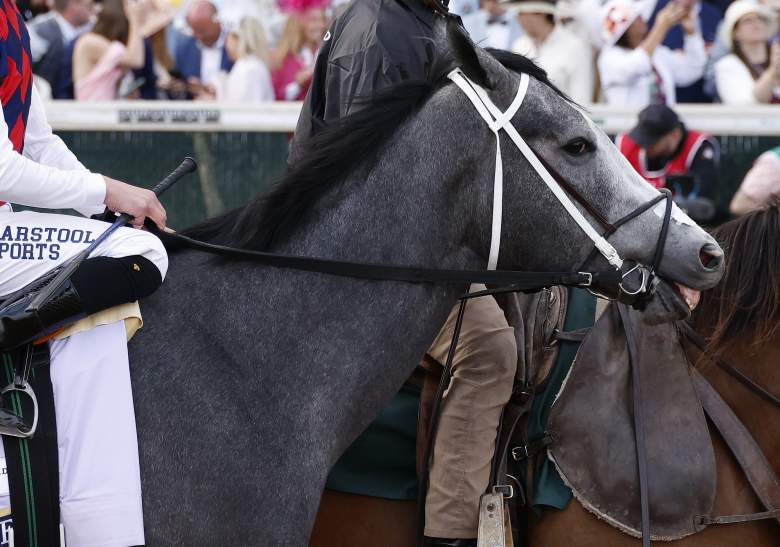
The road to the Preakness Stakes is rarely smooth, but few horses in this year’s field have traveled a path as unusual as Great White. The towering gray gelding arrives at Laurel Park carrying intrigue, resilience, and the hopes of connections who believe they may have something special despite long odds.
Great White’s story is one centered on size, patience, and the difficult decision to geld a horse before he ever stepped onto the racetrack. That choice, once viewed strictly as a practical move, now looks increasingly important as the son of Volatile prepares for the biggest challenge of his career.
Built Bigger Than Most
Even as a yearling, Great White stood out because of his sheer physical presence. According to trainer John Ennis and the team at Three Chimneys Farm, the horse’s immense frame ultimately led them to geld him early in hopes of protecting his long-term soundness and athleticism.
Rather than risking the colt becoming too heavy and difficult to manage physically, his connections chose a route designed to keep him lighter and more agile. It was not about behavior or temperament issues. Instead, it was a calculated move aimed at giving the horse the best chance to develop into a durable racehorse.
That decision may now prove invaluable. Great White has matured into a more balanced athlete while maintaining the powerful frame that first caught horsemen’s attention. The transformation from a raw, awkward youngster into a legitimate Preakness starter has become one of the more fascinating developments of this Triple Crown season.
A Family Filled With Power
Pedigree also plays a major role in Great White’s appeal. His sire, Volatile, showed elite talent during his racing career and passed along size and athleticism to many of his offspring.
On the dam side, the influence of Uncle Mo contributes additional scope and stamina to the pedigree. Although his dam Kelly Bag never found success on the track, the deeper female family includes graded-level quality and strong international bloodlines.
That development curve is especially important because Great White is still relatively inexperienced. He enters the Preakness with only four career starts, but his connections believe there is still considerable upside ahead.
Learning Through Adversity
Great White’s spring campaign has included both promising moments and frustrating setbacks. He earned attention earlier in the season with a victory in the Leonatus Stakes at Turfway Park, showcasing his ability against quality company. However, his transition to dirt in the Blue Grass Stakes proved far more difficult.
Caught too close to the pace early, Great White struggled to finish effectively and faded badly late. Rather than viewing the effort as discouraging, his team treated it as a learning experience. They believe the race demonstrated that the gelding performs better when allowed to settle behind horses instead of dictating the pace himself.
Then came an even more dramatic setback during Kentucky Derby week. After drawing into the Derby field from the also-eligible list, Great White was scratched late after rearing and flipping behind the gate before loading. Thankfully, he escaped serious injury, but the incident abruptly ended his Derby dream.
For many horses, such a chaotic experience could leave lasting effects. Instead, Great White appears to have rebounded quickly, arriving at Laurel Park fresh and full of energy for the Preakness.
Confidence Inside the Barn
Although Great White enters the race as a longshot, confidence within the barn remains surprisingly strong. Ennis has openly stated that he is not intimidated by the competition, a reflection of how highly the stable regards the horse’s natural ability.
That belief is rooted less in what Great White has already accomplished and more in what they think he is still capable of becoming. Big horses often take longer to develop physically and mentally, and his connections believe his best races may still lie ahead.
There is also an advantage unique to geldings. Without the future pressures of a breeding career, Great White can continue racing for years if he remains healthy. A strong effort in the Preakness would instantly elevate the value of both his sire and dam while allowing the gelding himself to continue building his own legacy on the racetrack.
A Chance to Make History
Only a handful of geldings have ever won the Preakness Stakes, with Funny Cide famously accomplishing the feat in 2003. Great White now attempts to join that exclusive group while proving that unconventional decisions sometimes create extraordinary opportunities.
Whether he ultimately wins or simply outruns expectations, Great White already represents one of the most compelling stories in this year’s Triple Crown series. He is enormous, lightly raced, and still learning, yet talented enough to make experienced horsemen believe he belongs on racing’s grandest stage.
Why Great White Could Be the Preakness’ Most Dangerous Longshot