

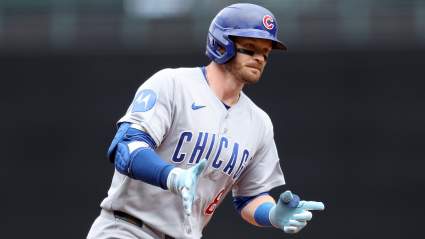
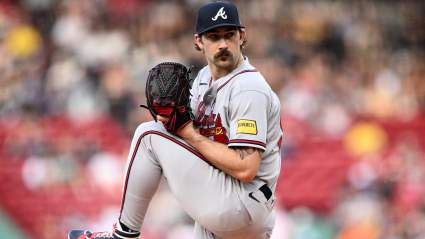
On the same day the Baltimore Orioles sent Ramón Urías to Houston, the team made another trade: it shipped veteran reliever Andrew Kittredge to the Chicago Cubs in exchange for 17-year-old shortstop prospect Wilfri De La Cruz.
The move wasn’t headline-grabbing. De La Cruz hasn’t pitched above the Florida Complex League and lacks the polish or pedigree of top-100 prospects. But Baltimore’s front office clearly sees something in the Dominican-born switch-hitter.
He fits the mold of a projectable prospect with tools that can be sharpened within a forward-thinking player development system–something the Orioles have built a reputation for in recent years.

De La Cruz, 17, hit .262/.442/.417 with more BB (26) than K (24) this season in the DSL. The switch-hitting infielder was the Cubs #17 prospect, per MLB Pipeline

From San Pedro de Macorís to the Orioles’ System
De La Cruz hails from San Pedro de Macorís in the Dominican Republic, a city known as one of the most prolific producers of baseball talent globally. Signed as an international free agent in early 2024, he quickly emerged as a standout in the Dominican Summer League (DSL), showcasing a combination of plate discipline and defensive instincts rarely seen at his age.
The Orioles have prioritized international scouting more aggressively in recent years, and De La Cruz reflects the payoff of that shift. While he was not one of the highest-bonused players in his signing class, his advanced approach at the plate and soft hands at shortstop earned attention from evaluators. Scouts have noted his ability to make consistent contact from both sides of the plate, with more power likely to come as he physically matures.
In 27 DSL games this summer, De La Cruz slashed .262/.442/.417 with 26 walks against 24 strikeouts–a near 1:1 ratio that signals rare patience for a teenager. He also stole nine bases and handled shortstop duties with poise, showing above-average footwork and an accurate arm.

The Fit in Baltimore
Baltimore’s player development pipeline is among the best in baseball, and De La Cruz adds a different flavor to its already loaded infield crop. While many of the club’s top names–like Jackson Holliday or Coby Mayo–were acquired through the draft, De La Cruz strengthens the international side of the system. His switch-hitting skill set, advanced feel for the game, and age-relative performance make him a strong candidate for long-term growth under the Orioles’ guidance.

has a 50+ grade for all tools .. 45 overall somehow Switch hitter with power
6’2 with + bat speed
He’ll join a farm system that’s proven capable of turning lean, projectable players into legitimate big-league contributors. The Orioles’ recent success with international signings, like infielder Cesar Prieto and catcher Samuel Basallo, suggests that De La Cruz will receive the development attention necessary to take meaningful steps forward.
Eyes on the Future
De La Cruz is likely to finish the 2025 season in the Florida Complex League or with Low-A Delmarva, depending on how he transitions stateside. His early returns in the DSL suggest a player who understands the game beyond his years–particularly in how he works counts and handles at-bats.
While it’s far too early to project his MLB timeline, the ingredients are present: athleticism, patience, versatility, and a switch-hitting profile that adds matchup flexibility. His defensive projection at shortstop remains solid, though he could also grow into a second base role depending on organizational needs.
For the Orioles, this trade was about philosophy as much as roster construction. Acquiring De La Cruz is another example of their commitment to building from the bottom up—investing in players whose value may not be visible on the surface, but whose upside could pay off in years to come.

Orioles-Cubs Deal Brings Switch-Hitting Prospect Into Pipeline