
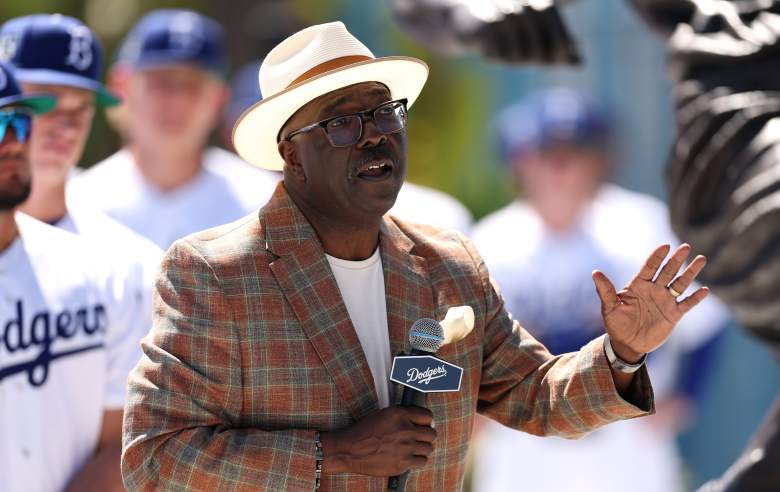
On May 29, 2024, a major bridge in baseball history formed. Major League Baseball officially recognized Negro League stats, The two world that defined America’s pastime seamlessly fit together, Thanks to video games and history, younger generations and people in general can now appreciate the Negro Leagues. Bob Kendrick, the president of the Negro League Baseball discuss the museum’s path and how the Negro Leagues’ recognition increased over the decades.
With the recent, historic integration of Negro Leagues statistics into the official Major League Baseball record, how has the museum’s strategic focus shifted from advocating for historical recognition to preserving and contextualizing the raw data and individual narratives behind those numbers?
From the inception of the Negro Leagues Baseball Museum in 1990, it has long been our focus on preserving, celebrating, and illuminating this once-ignored chapter of baseball and American history. The integration of these statistics of the Negro Leagues into the record books of Major League Baseball really hasn’t changed our strategic focus. Now, we certainly recognize it as a tremendously important historic milestone, but to be honest, I was far more excited about the long overdue acknowledgement of the Negro Leagues by Major League Baseball for what we already know it to be – a Major League.
Beliefs
I’ve long held steadfast in the belief that you can never reduce the story of the Negro Leagues to merely statistics; the story is too powerful, too compelling, and too awe-inspiring to be reduced to just numbers. But for that hardcore baseball fan and for those who had been very skeptical about the caliber of play that was there in the Negro Leagues, they needed these numbers.
Now, they have an opportunity to dissect those numbers.
We knew there would be some skepticism even once the numbers were presented, because there was going to be this cross section of baseball fans who simply were not going to accept the notion that these players who had played in the Negro Leagues, not by choice, that they were as good as their major league counterparts. But you see, the Negro League player was never seeking validation from anyone.
They knew how good their league was, they knew how good they were, and quite frankly, the major leaguers knew how good they were. After all, they played countless exhibition games against one another, and the record books bear out that the Negro League teams or the Black All-Star teams won the majority of those head-to-head matchups.
Data and Open Doors
But for those who felt like this level of quantifiable data was needed to give greater credence to the Negro Leagues, they got it on May 29th, 2024. And for the Negro League family and the handful of surviving Negro League players, it was a tremendous milestone. It was certainly cause for celebration.
But I had always said that had the doors to Major League Baseball opened before 1947, the record books would be entirely different. Well, what did Major League Baseball Commissioner Rob Manfred do? He went back and opened the doors of Major League Baseball, and now the records are indeed entirely different. And it has certainly assisted the museum in giving this history a mainstream voice.
And that’s a good thing. It further enhances the important work that we do to make sure that the legacy of the Negro League lives on long after there are no more Negro League players to attest to just how great this league was.
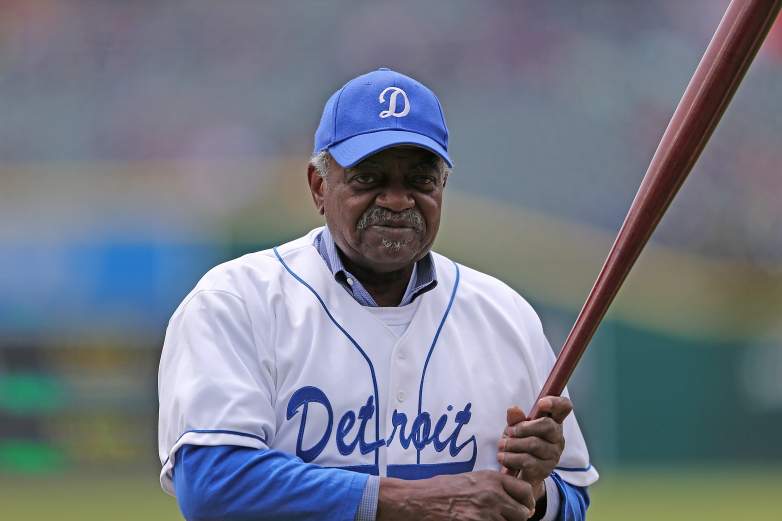
As the museum moves closer to realizing its vision for a new, 30,000-square-foot international headquarters at the historic 18th & Vine District, what specific economic and cultural revitalization outcomes do you anticipate for the surrounding Kansas City community?
When the Negro Leagues Baseball Museum established itself in a little tiny one-room office inside the Lincoln Building at Historic 18th and Vine in 1990, no one gave it any chance of succeeding. And I can understand why, because there was nothing at 18th and Vine anymore. Now, keep in mind, in its heyday, 18th and Vine had been one of the most recognized street cross sections as there was anywhere in the world because you had that intrinsic mixture of jazz and baseball radiating from that one street corner.
But like a lot of urban areas, it had died. And I find it tremendously interesting that you can trace the demise of many of those urban communities to the loss of the Negro Leagues. As we were preparing to build a museum there at Historic 18th and Vine, you can see why so many were detractors of the sustainability of an organization in this area.
Sage Advice
It was thanks to the infinite wisdom of the late great Buck O’Neil, the founder of the Negro Leagues Baseball Museum, who said, “This is where we will build this museum, and in doing so, we will not only preserve this history, but we will help resurrect this once proud, prominent African American community.” Again, that was in 1990 – and we haven’t looked back since. Now, people are living, working and playing at 18th and Vine.
And we’ve essentially done what Negro Leagues baseball had done for so many urban communities across this country. You see, wherever you had successful Black baseball, you typically had thriving Black economies. It gives me great joy that we have seemingly embodied that winning spirit as we look at not just the success of the Negro Leagues Baseball Museum, but the residual impact that we have created in helping sustain a community.
Change for the Better
We moved from a one-room office to our current home, which offers about 10,000 square feet of exhibit space. With it, we brought a level of energy and excitement into this district. Here we are now, recognized as America’s National Negro Leagues Baseball Museum, and are on the cusp of building what I call the Nation’s First Negro Leagues campus as both the gateway into Historic 18th and Vine and an international headquarters for both Black baseball and social history.
With the building of a new 30,000-plus square foot Negro Leagues Baseball Museum, it will be anchored against the historic Paseo YMCA, which we are now converting into the Buck O’Neil Education and Research Center. It was in that building, that historic landmark that Andrew “Rube” Foster led a group of eight independent Black baseball team owners into a meeting. And on February 13th, 1920, they walked out having established the Negro National League.
We are thrilled to be saving that historic landmark. We will build the new museum attached to where it all began, I guess you can say, going full circle right back to the very building that gave birth to the story that we now are charged with preserving. And we’re also excited about our partnership with Grayson Capital to build a Marriott tribute hotel that will aptly be called The Pennant, the first active hotel in the historic 18th and Vine Jazz District since the Old Street Hotel eventually closed its doors.
Kansas City Revitalization
With a new ballpark that is slated to be two miles away from where the museum will be operating and the possibility of the first East-West line of the streetcar, you can see why we’re so excited about the prospect that this project will not only have for the museum, but I believe will be transformative for the 18th and Vine community specifically.
But I also think that it will be a celebrated addition to our great city and I dare say that it will become an even more important cultural institution in the eyes of many across this nation. And that is absolutely cause to be excited. We think that this will be something that will create jobs and social activity.
It will obviously become an even greater tourist attraction for those who live as well as those who are coming in from outside the Kansas City area. And as I said, I take great pride in the fact that this museum is doing exactly what Negro Leagues baseball history had done for those urban communities.
We think that the economic and cultural revitalization will have a tremendous impact, not just in the area that we operate, but for our city at large – and I also believe for our nation.<h3>3. How is the Negro Leagues Baseball Museum adapting its educational outreach and interactive exhibits to effectively engage younger, digitally native generations who never witnessed these players in action and may have a different connection to baseball’s cultural history?
The challenge that any museum has, but particularly a history museum, and even more so a cultural institution like the Negro Leagues Baseball Museum, is how do you establish relevancy? Negro Leagues baseball history hadn’t been made in over six decades, yet the life lessons that stem from this story of triumph over adversity are as meaningful today, perhaps even more meaningful today, than ever before. But you can’t just sit back passively and hope that a young audience is going to come through your doors.
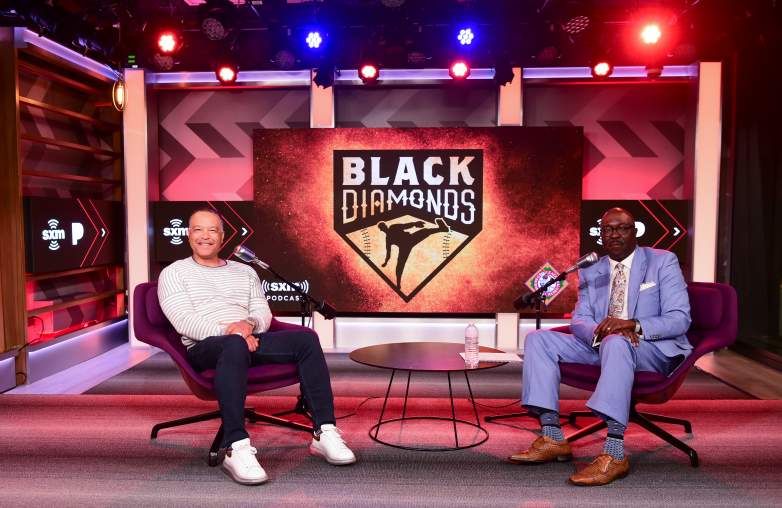
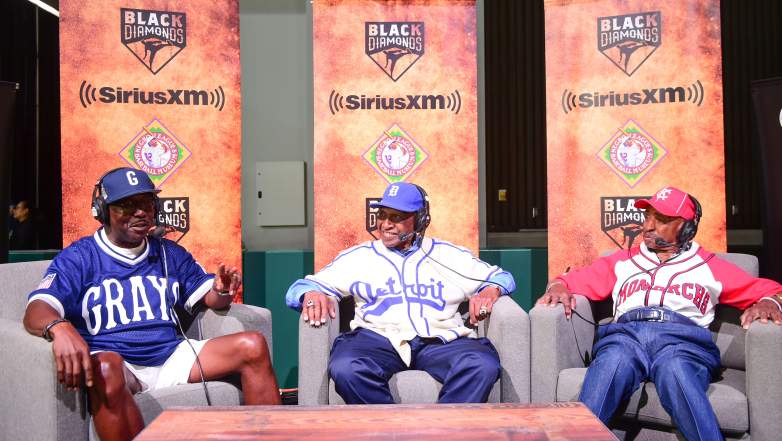
Sometimes you have to go meet them where they are, and the museum has continually challenged itself to do just that.The creation of acclaimed digital exhibitions like our Barrier Breaker exhibit or our Negro Leagues Béisbol exhibition, the creation of the award-winning podcast, “Black Diamonds” that I host in partnership with our friends over at SiriusXM Radio, but perhaps the most significant innovative project that we’ve undertaken was the inclusion of the Negro Leagues into the video game, “MLB: The Show,” the biggest baseball video game in the world.
And it has literally been game changing for Negro Leagues history and for the Negro Leagues Baseball Museum because what it has now done is open up this history to millions of young folks and young adults who, to be quite frank, I don’t think would have ever thought about the Negro Leagues until we put them into the video game, a partnership that we created with Sony and their San Diego studio in 2023.
The Plan
We have a five-year contractual partnership for the inclusion of Negro League players, but what Sony was so very smart about doing was that they didn’t just randomly throw the players into the game with no contextualization behind them. Instead, we created a mode called “Storylines.”
And that’s where I come in – I’m in the video game telling stories. I chuckle at that thought myself because I never dreamt that I would be in a video game. Once we put the Negro Leagues into the video game, you add a great soundtrack to it, the animation is next level, and you have a guy that tells a pretty good story – all of a sudden, you have captivated an audience. And as a result, I’ve become a household name in the gaming community.
⚾YMCA and KC’s Black Heritage
During WWII, Black soldiers fought for freedom abroad while facing segregation at home.
The legacy cont. through the Buck O’Neil Center at @NLBMuseumKC, with @Royals & @KC_UYA. Watch or listen https://t.co/sgF26xCLOz#YMCAKCConnects #YMCAofKC pic.twitter.com/Dysr7sHX2b
— YMCA of Greater Kansas City (@KansasCityYMCA) February 13, 2026
https://platform.x.com/widgets.js
But I’ve seen this impact our business in almost every facet of the museum’s operations. And we’re getting scores of kids who are now coming to the museum because they saw the museum in the video game, and they all want to meet the guy who was telling the stories in the video game.
It is exactly what we had hoped to accomplish. There’s been this misnomer that our children don’t care about history, but they do care; it just becomes incumbent upon how history is presented to them. So when we put these very charismatic players (because if anyone deserved to be in the video game, it would be the players from the Negro Leagues who played the game video game-esque) into the game, I knew that they would love these players once they got to know them.
What’s not to love about the swagger of Satchel Paige, the speed of Cool Papa Bell and the almost mythical power of Josh Gibson?
Embracing Future Generations
But I have been just blown away by how much the kids are loving the stories that I’m sharing in the game. But when I stop to think about what really connects with this generation, two things come to mind: authenticity and storytelling. It’s great to see how storytelling has reemerged as a primary source.
Now, of course, in the African American community, it was primarily how we learned about ourselves. Your grandparents sat you down and told you about these ballplayers that you should have known something about. To see storytelling return in such a triumphant fashion has been just absolutely amazing. And the work that we continue to do to make this history relevant has created a level of appeal to a new generation.
James “Cool Papa” Bell’s jersey at the @NLBMuseumKC museum. pic.twitter.com/kqRXMq1R6Z
— Augie Nash (@AugieNash) February 14, 2026
https://platform.x.com/widgets.js
To be honest, I think I was a little naive about just how big the gaming community is, and the impact has been tremendous. I’m very proud that we’ve won a number of educational awards for how we’re using a video game to teach history.
In an era where major corporations and philanthropic organizations are re-evaluating their diversity, equity, and inclusion initiatives, what unique value proposition does the museum offer to long-term corporate partners and donors?
The Negro Leagues Baseball Museum is one of the nation’s preeminent civil rights social justice institutions – it is just seen through the lens of baseball, but more importantly, it is triumph over that adversity.
And it’s all based on one small, simple principle: “You won’t let me play with you in the major leagues, then I will create a league of my own.” When you stop to think about that, that is the American way. And while America tried to prevent them from sharing in the joys of its national pastime, it was the American spirit that allowed them to persevere and prevail. What’s not to love about that kind of story?
And I do think that is the value proposition that we bring forth with this incredibly compelling piece of baseball and Americana that has been ignored for so long. We don’t shy away from the foundation of this museum. Not to oversimplify it, but when Jackie Robinson took the field with the Brooklyn Dodgers, what happened? The game got better.
Talent: The Ultimate Decider
The Negro Leagues didn’t care what color you were, and they didn’t care what gender you were. Can you play? Do you have something to offer? And that’s the way it is supposed to be. And that is why I believe that the story of the Negro Leagues embodies the American spirit, unlike any story in the annals of American history.
It is everything that America should aspire to be. There’s still work left to be done, but it’s important to have a cultural institution like the Negro Leagues Baseball Museum, where our young people can come, not only to learn, but to gain an understanding and I do believe a greater appreciation for the true value of diversity, equity, and inclusion, and why they are indeed pillars for building a bridge toward tolerance and respect.
How do you balance the museum’s dual mission of celebrating the incredible joy, innovation, and triumph of Negro Leagues baseball with the necessary, sobering education regarding the harsh realities of American segregation and Jim Crow laws?
When I got involved with the Negro League Baseball Museum as a volunteer in 1990, I was surprised, particularly as a baseball fan, at how little I knew about the history of this game and its connections to the history of this country. And I became engrossed in it.
But then when I started to meet the players, it gave me an entirely different perspective because had they been bitter about the things that transpired in their lives as they were trying to play baseball in this country, I think all of us would’ve said, “you had every right to be bitter.” But to any ball player that I have ever met, not one of them harbored any bitterness or spoke any ill will toward anyone who may have attempted to perpetrate something against them. And I found that to be such an incredibly endearing spirit, particularly even more so in such a cynical world in which we live today.
Thought Process
And to be honest, it took me a minute to figure out how this could be. First and foremost, they were never going to be bitter about baseball because you couldn’t convince them that they weren’t playing the best baseball that was being played in this country. Now, most believed that the best baseball was being played in the major leagues, but they never believed that. They knew how good their league was and how good they were – and the major leaguers knew how good they were.
So, they weren’t going to be bitter about baseball. Did they like the things that happened to them as they traveled the highways and byways of this country? Of course not. If you can imagine this, they could oftentimes ride into a town, fill up the ballpark, but yet not be able to get a meal from the same fans who had just cheered them on, or not have a place to stay. So yes, they would sleep on the bus and eat their peanut butter and crackers until they could get to a place that would offer them basic services.
But what you have to admire about this story is that they never allowed that set of social circumstances to kill their love of the game. Their spirits were such that, “If I’ve got to sleep on the bus and if I’ve got to eat my peanut butter and crackers, then I’m going to keep playing ball. You can’t rob me of this joy of playing baseball.” And that is how we’ve tried to treat this story at the Negro Leagues Baseball Museum. It is a counterintuitive look at the civil rights movement.
Pushing through Adversity
These athletes never cried about the social injustice; they went out and did something about it. That is where the triumph overcomes the adversity. I know it’s surprising for so many of our visitors because I do believe that they understand that the story of the Negro Leagues was anchored against the ugliness of American segregation, a horrible chapter in this country’s history. But the way that we’ve tried to treat this story is as a celebration because that’s really exactly what it is.
It is granted the celebration of the power of the human spirit to persevere and prevail. When our guests walk through the Negro Leagues Baseball Museum, you walk out cheering to the power of the human spirit. And I think that is where our inspirational aspect of this story comes into play.
I think that for me, having been around those Negro League players, we got a real understanding of how to balance the negative aspect of what a challenging social society was like for Black folks in this country, but then were able to balance it with the sheer joy that these players had playing the game.
Ultimately, we’re helping our guests understand how their love of the game not only change the game, but it has also helped change this country for the better.
With the successful execution of high-profile events like the “MLB at Rickwood Field” game, how can Major League Baseball and independent museums better collaborate to ensure that the celebration of Black baseball history is a year-round endeavor rather than a series of isolated events?
I don’t think there was ever a time that people didn’t want to know about the history of the Negro Leagues. They just had no way to know about the history of the Negro Leagues because no one ever talked about it in any real significance until this museum, the Negro Leagues Baseball Museum, emerged as its primary voice. Our quest has always been to give Negro Leagues history a mainstream voice.
As my late mother would say, “You don’t know what you don’t know.” And that’s why this museum is so important.
Our partnership with Major League Baseball has really helped elevate the interest and awareness of Negro League baseball history. Negro League baseball history today is as hot as it has ever been and I do think it is because of the success of those milestone events like the centennial celebration of the Negro Leagues in 2020, even though it was partially interrupted by a worldwide pandemic; ultimately integrating the stats of the Negro Leagues into the record books of Major League Baseball.
The epic MLB game at Rickwood Field, even though the late great Willie Mays passed away two days before he would’ve made his homecoming back to Rickwood Field; and now with the return of the East-West All-Star game that my dear friend CC Sabathia and others have held over the last couple of years there at Rickwood Field – these events are keeping the Negro Leagues baseball history front and center.
Continuing Partnership
We will continue our efforts to not only work with Major League Baseball, but it’s 30 Major League Baseball franchises to find meaningful ways to continue to celebrate and honor the Negro Leagues for their impact, both on and off the field.
But it’s also incumbent upon this museum to find creative avenues to continue this celebration whether that means our partnership with the video game, “MLB: The Show,” or it is the rebranding of a minor league team that was once the Kansas City T-Bones and now are the Kansas City Monarchs, or the epic partnership that we just entered into in October 2025 on the return of the Indianapolis Clowns as part of the Savannah Banana Ball League, where legions of fans are now not only learning about the Indianapolis Clowns and their history, but they’re also learning about the Negro Leagues.
It is always our goal to make the history of the Negro Leagues a 24/7, 365-day venture with not just Major League Baseball, but any entities that are involved with the game of baseball and historical outlets that will continue to help elevate the interest in this subject matter.
From a curatorial standpoint, what are the primary challenges the museum faces in authenticating, acquiring, and preserving physical artifacts from a time when Negro Leagues history was largely ignored or undocumented by mainstream media?
It’s not as much a challenge of authenticating these artifacts as it is to have the financial means to go out and buy the artifacts. Most of the pieces that we acquire, we get from trusted sources like our friends over at Hunt Auctions and some of the other auction houses.
But as I’ve oftentimes said, the Negro Leagues Baseball Museum has become its own worst enemy. The more we popularize this story, we are now driving the price of these rare artifacts to the point that we cannot compete to go get them. Most of these artifacts are in the hands of private collectors who have unlimited wealth to go out and buy these pieces, sit on them for two or three years, and then roll them back out, where they will then fetch multiple times more than what they likely paid for them.
But it makes it very challenging for a museum that has a very limited budget to be able to compete with those who do indeed have unlimited wealth.
More than a Pastime
And this is not just their hobby; this is their business. And we have to try and navigate the landscape to go and try and find pieces that we can continue to bring into the collection.
Hopefully, the building of a new Negro Leagues Baseball Museum will allow additional pieces to come home to Kansas City that they can be displayed, that we can continue to preserve them and make them available in various fashions, whether they are being digitized and parts of digital exhibitions or physically displayed at the Negro Leagues Baseball Museum as fuel for new traveling exhibitions.
Every time we acquire an item of any level of significance, it gives us an opportunity to tell a new story. And that’s what excites me about this, but it is a challenge to just go out and acquire these items because more times than not, we are competing against those who have great means. And right now, we just don’t have the budgets that would allow us to be competitive in that realm.
Given your extensive background in marketing and public relations, what specific storytelling frameworks have you found most effective in transforming the museum from a local Kansas City treasure into a globally recognized cultural institution?
I can’t help but smile when I hear people tout me as being a great baseball storyteller. And honestly, I really don’t know where this art of storytelling came from. But I do know being around the likes of Buck O’Neil, the other Negro League players who lived here in Kansas City and were so important in establishing the Negro Leagues Baseball Museum, the likes of my dear friend, the late great Monty Irvin, Ernie Banks, and Minnie Miñoso, that I kept my mouth closed and I listened.
And now these stories that I heard firsthand from them, I get to share them every day. And in doing so, for me personally, it keeps them alive in my mind and in my heart. But after all, that’s what museums are supposed to do.
Motivation
I remember asking the late Buck O’Neil when I met him in 1993 for the very first time, “Buck, what motivated you to want to build a Negro Leagues Baseball Museum?” And his answer was succinct, but also very poignant: “So that we would be remembered.” He did not want them to be forgotten for not just what they gave the game of baseball, but more importantly, what they gave this country.
And of course, Buck O’Neil was one of the game’s greatest storytellers. He literally stole the show when he appeared on the Ken Burns documentary. And Ken would be the first to tell you that. America fell in love with this very charming, gentle man who was telling these wonderful baseball stories to baseball fans. And they had not heard them before.
And of course, he was doing it with a twinkle in his eye and a smile that lit up the screen – and America fell in love with Buck. He was 82 years old at that time. The good Lord blessed him to live another 12 years, where he was literally gallivanting across this country, preaching the gospel of the Negro Leagues and the virtues of his museum to any and everyone who would listen.
Lessons Learned
And I guess you could say that I was hanging from the hem of his garment. And now I get to preach the gospel of the Negro Leagues and the virtues of Buck’s museum to any and everyone who will listen.
Storytelling platforms like my podcast, Black Diamonds, that I do in partnership with my friends over at SiriusXM Radio, which has is now an award-winning podcast with over a hundred episodes across five seasons, has really given the museum a national and international voice.
And it’s coincidental that it would be the podcast that would actually catch the attention of the game developers over at Sony that led us down this path to creating a partnership that includes the Negro Leagues in the video game “MLB: The Show,” but also created another storytelling platform for the Negro Leagues Baseball Museum.
Media Availability
And we’ve been very fortunate to be able to land a number of high-profile national caliber types of interviews. I’ve oftentimes said, when you don’t have enough money to pay people to talk about you, you sure better find ways to get people to talk about you.
We try to take advantage of the PR machine as much as we possibly can, but I am so excited that we’ve created this desire from media outlets around the country who want to hear about these stories. And for the better part, this is a new history for the majority of people who get connected to the work that we’ve been doing now for the last three-plus decades.
And I think that is why we’ve been able to grow the profile to a globally recognized cultural institution. The building of a new museum will take us to a whole other level, and I hope that people will continue to want to learn about the stories of the Negro Leagues. And I hope they enjoy hearing them from, as one of the T-shirts that we have in the museum gift shops calls me, the Chief Storytelling Officer.
How is the museum actively supporting the growth and preservation of contemporary Black baseball culture, youth participation in the sport, and the legacy of the historic modern franchises?
While the Negro Leagues Baseball Museum is here to preserve and celebrate a once forgotten chapter of baseball and American history, we have always had an eye on how this game will be played today and looking intothe future. And I think that’s part of why the partnership with Major League Baseball and Major League Baseball’s Players Association has been so meaningful.
Because both of those organizations have embraced the fact that it’s important for kids of color, particularly those in urban communities, to be able to see themselves in order for them to want to be involved in a game like baseball, where our declining participation has been magnified and talked about for quite some time.
But when urban kids walk into the Negro Leagues Baseball Museum, they see people who look just like them, who played this game as well as anyone ever played this game. But not only did they play the game, but they owned teams. They were executives, they were managers, they were coaches, they were traveling secretaries, and team physicians. They fulfilled every role that could be filled in the game of baseball.
Mission
So, we don’t just want our kids dreaming about the possibilities of playing in the big leagues. We want them to have an understanding of what all the opportunities are that can be afforded to them in the game of baseball, but also give them an understanding of their place in this game, which is why I always relish every opportunity that I have to welcome young Major League Baseball players, certainly of any skin color, but particularly African-American and Hispanic players who come through this museum because for them, this should be their mecca.
These are their roots – there is no ifs, ands, or buts about it. They don’t play had it not been for those heroes of the Negro Leagues. It’s important that the museum embodies that spirit and do everything that we possibly can to positively impact our game, and to be a part of helping bridge the economic gap that has really hurt the opportunity for urban kids to play this game.
But I do think having an understanding of a sense of self and understanding what your legacy is in this game serves as a tool of hope and inspiration that motivates our young people to want to play this game. And of course, it’s our job to make sure that we are doing everything we possibly can to continue to work with Major League Baseball and the Players Association to make the Negro Leagues history front and center so that it can be used as a tool of hope and inspiration.
Looking past the opening of the new museum campus, what is your long-term vision for the global legacy of the Negro Leagues Baseball Museum, and how do you plan to ensure its financial and cultural sustainability for the next fifty years?
The challenge that most cultural institutions face, and particularly smaller cultural institutions like the Negro Leagues Baseball Museum, is that they are undervalued and underfunded. We are trying to change that narrative as it relates to cultural institutions at the Negro Leagues Baseball Museum. When you start the way we did with such humble origins, you have to have hope.
Having begun this project in a little tiny one room office in 1990, where guys like the late great Buck O’Neil and other local Negro leaguers literally paid the monthly rent to keep the little office open and, as I like to say with it, our hopes and dreams, we hoped to one day build a facility that would pay rightful tribute to not just one of the greatest chapters in baseball history but what thousands upon thousands each year discover is one of the greatest chapters in American history.
Progress Towards Original Goal
Along that journey, we were proud to be recognized by the United States Congress as America’s National Negro League Baseball Museum. And, on the cusp of building our new home, the nation’s first Negro Leagues campus as the gateway into the Historic 18th and Vine district. Again, a headquarters for Black baseball and social history. It’s been an amazing journey for a little museum that no one gave any chance of succeeding.
Our long-term goals are simple but certainly very much aspirational, and that is to be the best baseball history museum anywhere in the country. We want to create a nexus where not only scholars but kids who are writing their first book report on Jackie Robinson, and those who are writing their thesis on the economic impact of Negro League or on African American communities, have a place where they can turn and gain meaningful information about that subject matter.
Long Term Goal
Our goal is to go and bring in the absolute best talent that we can get as we grow our staff to meet the ever-growing needs and demands generated by this heightened interest in the subject matter.
And of course, to be able to do that, you have to be financially strong. I’ve said that building this project will be the easy part. But keeping it will be the most challenging part of this equation. We are working very hard to not only raise the dollars to meet the capital effort. Also to generate an operating endowment for this museum.
When I turn the keys over to my successor, I want them to inherit a museum that is financially strong. Plus, they will have an expanded, talented staff of people to work with. Lastly, that they will have every opportunity to continue to grow this institution for its next 50-plus years of operations.
Exclusive Interview: Negro Leagues Baseball Museum President Bob Kendrick