
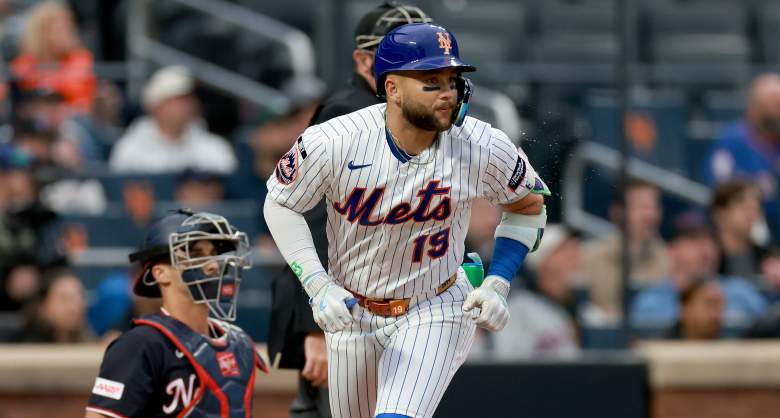
The New York Mets find themselves with the worst record in baseball, behind one of the worst offenses in the MLB. Moreover, the pitching has not lived up to the lofty expectations set at the beginning of the year. After a rough month in April, the team must begin turning it around quickly. Jorge Castillo of ESPN believes that rightful panic found its way to Queens.
“The offense is the worst in the majors. The proof is evident in old-school statistics and new-age metrics. The Mets rank 30th—that’s last—in runs scored, on-base percentage, and slugging percentage. They’re last in wOBA, wRC+, and ISO. Juan Soto, who missed nearly three weeks with a calf injury, and Francisco Alvarez are the only healthy regulars with an OPS+ above 100—that’s average.”
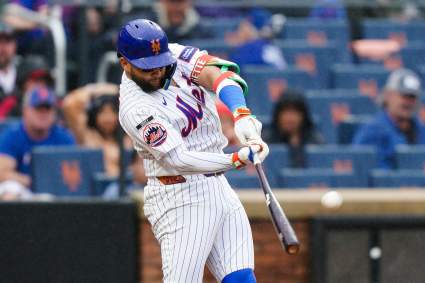
By every metric, the Mets cannot hit the ball. For example, only four batters (MJ Melendez, Mark Vientos, Marcus Semien, and Luis Robert Jr.) boast averages over .300 with runners in scoring position. The team bats a collective .227, up from .226 from a couple of weeks ago. 69 extra-base hits in 1,037 official at-bats. The team hit into more double plays (22) than successful stolen bases (16).
Can the Lineup Fix Itself?
Castillo outlined a couple of positive scenarios that could help let the franchise out of the metaphorical abyss.
“Bo Bichette is not a .237 hitter. Carson Benge has looked much better lately. Luis Robert Jr. possesses every tool in the kit to succeed when healthy.”
While Bichette isn’t a .237 hitter, he’s at .230, with signs of a player trying to do too much. Reliever Luke Weaver outlined a chronic problem with the team here. So far, specific pitches give the infielder the most problems. According to Baseball Savant, Bichette hits fastballs at a .194 average. In contrast, he struck those offerings at a .306 pace.
Additionally, the overswings tend to curtail the effectiveness of at-bats. Bichette hit over 25 home runs once. By nature and lineup slotting, he is not a power hitter. As a result, placing the ball for hits should serve as his main motivation. Setting the table could lead to big innings. Still, Bichette appears to be affected by the booing and fan reaction.
Benge is another case altogether. As a true rookie, you’d expect to struggle. In order to see if he’s the long-term solution in the outfield, the Mets need to keep pushing him onto the field if he is healthy. In a season marked by disappointment, credit Carlos Mendoza for keeping Benge in the lineup.
Closing Games Becomes Important
Provided the Mets start winning, what happens when they get to the ninth inning with a lead? For years, Edwin Diaz was the lights-out closer who sealed the opponents’ fates. Now, Devin Williams answers the call. However, his approach needs questioning. First, the closer decided to streamline his pitch repertoire.
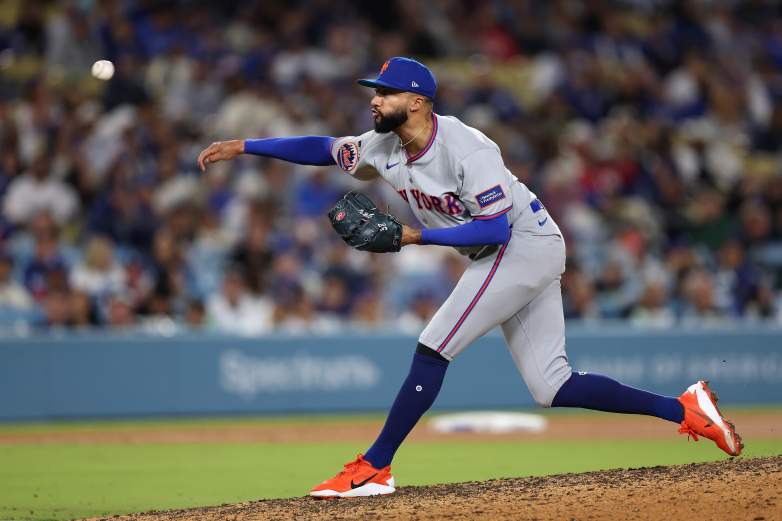
Now, he exclusively uses a four-seam fastball and a changeup. On top of that, another concern is the vertical drop of the pitch, averaging 38.8 inches. A year ago, the same pitch fell 44.3 inches. Those six inches mean the ball stays in the strike zone relatively longer. If the two-pitch approach is what Williams prefers, then those two offerings need to be better and more efficiently spotted.
The Mets need to win games. Whether the wins are pretty, ugly, or in between. However, the team must hit the ball and close out leads. Further collapses could see the franchise go in a different direction.





Mets Facing Brutal Reality As Season Continues to Disintegrate