
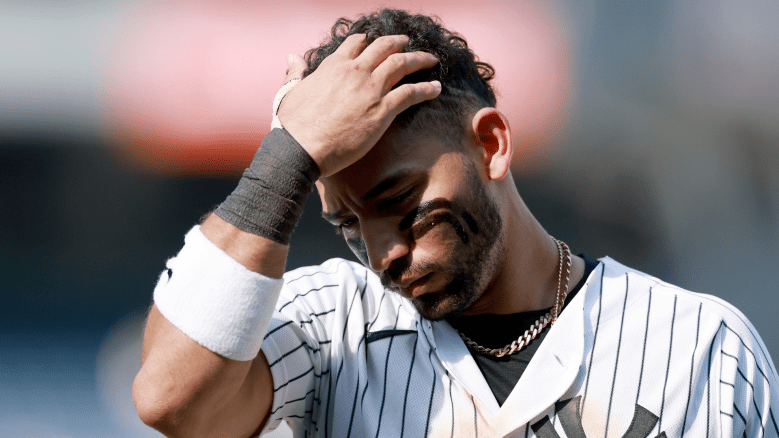
The New York Yankees are searching for answers at the plate, but one of their newest tools is quietly making things worse.
What was supposed to be a competitive advantage in the automated ball-strike (ABS) challenge system is quickly turning into a self-inflicted problem. And the numbers suggest it is not just bad luck. It is bad process.
Yankees’ Aggression With ABS Challenges Backfiring
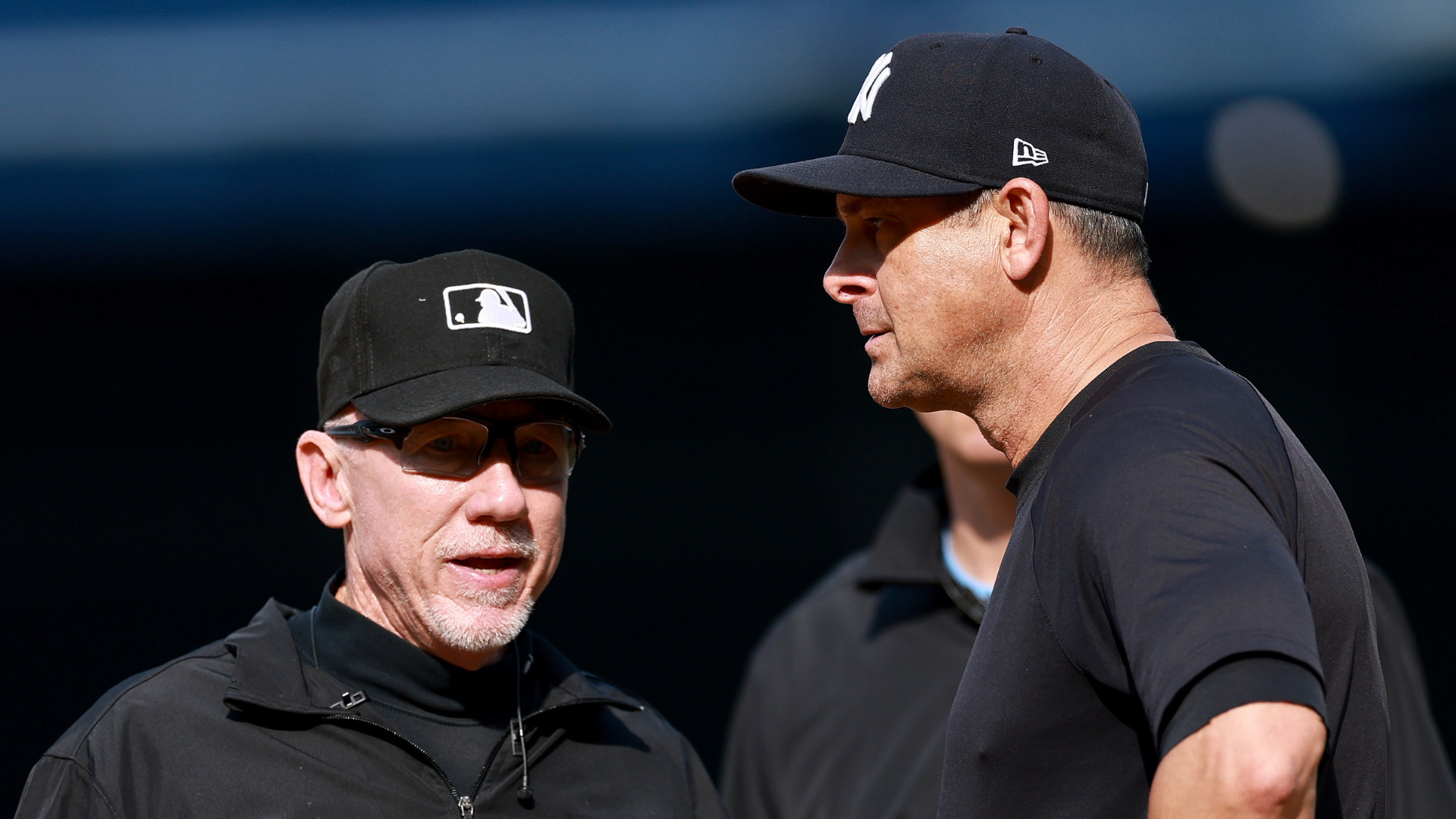
According to reporting from Sports Illustrated, the Yankees burned both of their hitter challenges almost immediately in Thursday’s loss, using them up before the game had even settled in. That alone would be questionable. The bigger issue is that it has become a pattern.
New York now sits tied for the MLB lead in failed hitter challenges with 16, while converting just 45 percent of them. That success rate ranks near the bottom of the league and tells a clear story. The Yankees are not just aggressive. They are inefficient.
Take Jazz Chisholm Jr. as the most visible example. He has already piled up multiple failed challenges early in the season, often in low-leverage situations and early counts. In Thursday’s game, he challenged a borderline pitch in a two-out situation with little immediate upside. The call stood. The Yankees lost a challenge. The inning was already slipping away.
Moments later, Trent Grisham followed with another failed challenge to open an at-bat, wiping out the Yankees’ remaining opportunity to use the system before the lineup had even turned over.
That is not strategy. That is impulse.
And it matters more than it seems.

The Hidden Cost Is Bigger Than One Call
The ABS system is not just about correcting missed calls. It is about resource management. Teams only get a limited number of challenges, and both hitters and fielders pull from the same pool.
That is where the Yankees’ approach becomes even more damaging.
League-wide trends show that defensive challenges, especially those initiated by catchers, are significantly more effective than hitter challenges. Early data suggests defensive reviews are overturned roughly 60 percent of the time, compared to under 50 percent for hitters. More importantly, they tend to come in higher-leverage moments.
There is also a run value component. Early research has shown that successful challenges in high-leverage spots can swing expected runs far more than those used in low-impact situations. In other words, when you waste a challenge in the first inning on a 1-1 pitch, you are not just losing that call. You are potentially sacrificing a game-changing moment later.
The Yankees are doing that too often.
This is where manager Aaron Boone faces a decision. The current free-for-all approach is not working. If anything, it is amplifying an already struggling offense by removing one of the few ways to steal an edge late in games.
The fix does not require eliminating hitter challenges entirely. But it does demand structure. Limiting who can challenge. Saving at least one for late innings. Prioritizing leverage over emotion.
Because right now, the Yankees are treating the ABS system like a safety net. In reality, it is a finite asset.
And until they start managing it that way, what should be an advantage will keep showing up as another reason their offense cannot get out of its own way.
Yankees’ ABS Strategy Becoming Costly Problem