

The automated ball-strike challenge system is not officially part of Major League Baseball games yet. But the MLB ABS system strategy is already taking shape across the league.
Not in rulebook form. In behavior.
Clubs spent spring training testing the ABS challenge system ahead of its planned 2026 debut, and what’s emerged isn’t just feedback on technology. It’s a shift in how teams are thinking about managing innings, at-bats, and moments.
As teams prepare for 2026, the MLB ABS system strategy is becoming less about technology and more about decision-making.
Because once you limit something, it becomes strategy.
Each team will have two challenges per game, with the ability to keep them if the call is overturned. On paper, that sounds like a simple correction tool. In reality, teams are treating it more like a finite asset. Something closer to a timeout in football than a replay in baseball.
And the early read across the league is clear. These aren’t being spent casually.
MLB ABS System Strategy: It’s About When You Use Challenges
The instinct might be to challenge anything that looks off. That’s not how this is trending.
Across the league, there’s already a strong lean toward holding challenges for leverage. Full counts. Late innings. Situations where one pitch meaningfully shifts win probability.
In other words, teams are preparing to live with missed calls early if it means having an answer later.
That’s a philosophical shift. For decades, a borderline call in the third inning was just part of the game. Now it carries a second layer. Not just whether it was right or wrong, but whether it was worth doing something about.
Most of the time, it won’t be.
The Catcher Is Becoming the Decision-Maker
Technically, the pitcher, catcher, or hitter can initiate a challenge. Functionally, teams are already narrowing that down.
Early indications suggest this is trending toward the catcher’s call.
It’s not hard to see why. The catcher has the cleanest view of the pitch as it finishes, receives it at the point of judgment, and isn’t coming off the physical and emotional spike of a delivery. That matters more than it sounds.
What’s developing is a quieter layer of communication. A look. A pause. A split-second decision between battery mates. And increasingly, it’s the catcher who has the final say.
That’s not written anywhere in the rules. But it’s how this is being shaped.
That adjustment isn’t just happening behind the plate. Hitters are also having to rethink how they interpret the strike zone in real time.
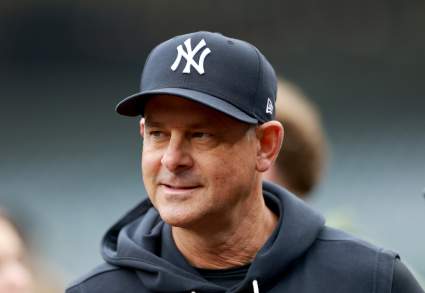
Aaron Judge offered a glimpse into that mindset during spring, telling MLB.com he expects an adjustment period with the ABS challenge system.
“I’m excited for it,” Judge said. “I think it’s going to be a little weird, because I’m not an umpire. I’m a hitter. I’ve never been in the box trying to think about, ‘Is this a ball? Is that a strike?’ If I feel like I can hit it, I feel like it’s a strike.”
That perspective highlights another layer teams are navigating. The decision to challenge isn’t just about location. It’s about how players interpret the zone in the moment.
The Real Decisions Live on the Edge of the Zone
The obvious misses will take care of themselves. Those are easy.
The tension is in the pitches that could go either way. The ones that clip the bottom of the zone or just catch the corner. The calls that look fine in real time but don’t always hold up under review.
That’s where teams are still figuring it out.
Challenge too aggressively, and you’re out of options before the game tightens. Wait too long, and you risk letting a critical pitch go uncontested. There’s no perfect threshold yet. Just feel, information, and a growing sense of what’s worth the risk.
That gray area is where this system will actually be won or lost.
Late Innings Are Going to Feel Different
If there’s one place this shows up immediately in 2026, it’s at the end of games.
Teams are already talking through a very real scenario. You reach the eighth or ninth inning without a challenge left, and a borderline call lands in a defining moment.
That’s not hypothetical. It’s a scenario teams are already preparing for.
Which is why those two challenges are starting to be treated like something you protect. Not just tools to fix calls, but opportunities you may need when the game is on the line.
That changes pacing. It changes decision-making. And it introduces a layer of tension that hasn’t existed in this form before.
This Is the Next Strategic Layer of Baseball
The technology is the headline. The strategy is the story.
ABS isn’t replacing umpires. It’s not turning every pitch into a review. What it’s doing is forcing teams to make choices they didn’t have to make before.
When to act. Who decides. How much certainty is enough. Those aren’t rules questions. They’re baseball questions.
By the time this system officially arrives in 2026, teams won’t be experimenting with it. They’ll have internal philosophies. Defined roles. A sense of how aggressive they want to be and when they’re willing to wait.
And the teams that get that balance right won’t just win challenges. They’ll win moments.


MLB’s New ABS System Is Already Changing Game Strategy