

The Seattle Mariners could see several veteran salaries disappear this offseason. That does not mean every departing dollar becomes money for a new hitter.
A new set of arbitration projections shows why Seattle’s 2027 budget deserves a closer look before the free-agent wish lists get too ambitious.
Roundtable’s October 3 breakdown, using MLB Trade Rumors’ estimates, lists 15 Mariners at a combined $58.3 million. Remove Bryce Miller’s projected $3.9 million because his contract also includes an option, and the remaining estimates total $54.4 million.
Those figures are projected salaries, not settled contracts. They also are not $54.4 million in additional raises above Seattle’s current payroll.
Logan Gilbert accounts for the largest estimate at $15.4 million, followed by George Kirby at $9.8 million. Bryan Woo projects at $5.2 million.
For Seattle, the offseason calculation starts with keeping that existing talent paid.
Bryce Miller Changes the Payroll Calculation

Miller’s situation makes a simple arbitration total incomplete.
FanGraphs’ payroll tracker lists a $6.075 million club option for the right-hander in 2027. The option and the arbitration estimate represent alternative salary paths, subject to his contract’s conditions.
Counting both would inflate the calculation.
If the option applies and Seattle exercises it, Miller plus the other 14 projected arbitration salaries would total approximately $60.475 million. That still would not represent the Mariners’ entire payroll.
Guaranteed contracts, other option decisions, minimum-salary players and roster additions would also enter the picture. Potential trades, extensions and non-tender decisions could change the arbitration group itself.
The useful takeaway is straightforward: a payroll estimate must explain which players and salary categories it includes.
Fans should also distinguish cash salaries from luxury-tax accounting. Those measures answer different questions, and mixing them can make an apparent spending opportunity look larger or smaller than it really is.

Departing Salaries Do Not Set Seattle’s Budget

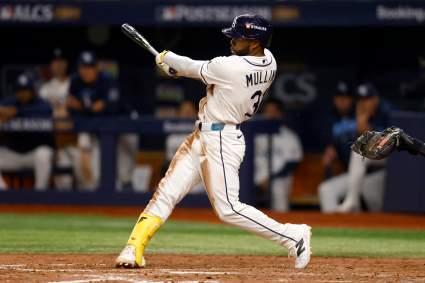
An October 4 analysis from SoDo Mojo examined the payroll implications of likely departures. Randy Arozarena and J.P. Crawford are among the veterans approaching free agency.
Their situations create choices, not a guaranteed shopping allowance.
The distinction becomes especially important when comparing this year’s payroll with next year’s. A list of expiring contracts measures departures. It does not account for the salaries required to retain the players filling other spots on the roster.
Seattle could redirect money toward replacements, retain a departing player or pursue a different roster balance. Without a confirmed spending target, the arbitration estimates cannot establish how much the club will offer free agents.
That is why the next meaningful offseason development should be a clearer payroll framework, followed by decisions on the players already under team control.
A lower preliminary total would be useful information. It would not, by itself, prove that a major signing is coming.
The Mariners can still improve through free agency. These projections simply show why any serious shopping list should begin with the full bill.













Mariners’ Offseason Spending Room Has a $54 Million Catch