

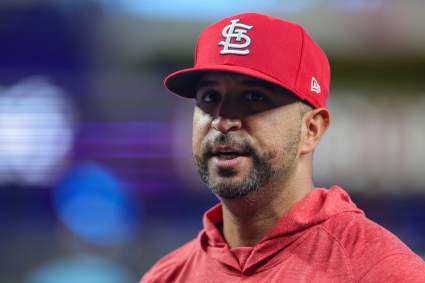
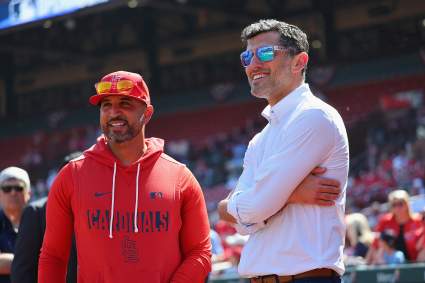
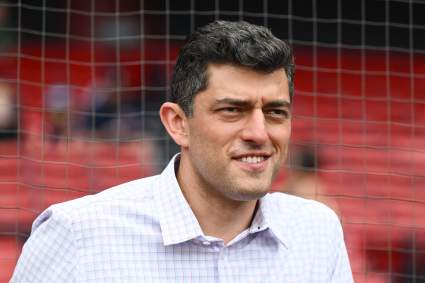
The St. Louis Cardinals have officially ushered in a new era. Chaim Bloom will succeed John Mozeliak as the team’s President of Baseball Operations, becoming the chief architect of the Cardinals’ baseball future.
Bloom is no stranger to the organization. This year, he served as an advisor, helping evaluate the club’s systems and philosophies before assuming full control. Mozeliak, who has been at the helm of Cardinals baseball operations for nearly two decades, will step down following the 2025 season, handing over a legacy and a challenge.
In his first public statements as incoming president, Bloom emphasized continuity in the Cardinals’ core operating model: “The Cardinals win first and foremost with players we develop.
“That operating model that has sustained this organization for decades is still sound. But for it to develop the results that we need, we have to be elite at acquiring and developing baseball talent in every aspect.”


Bloom’s Background & The Rationale for the Shift
A Track Record of Development & Innovation
Before joining the Cardinals, Bloom made his mark in baseball operations across multiple front offices. He spent a long tenure with the Tampa Bay Rays beginning in 2005, rising through their system and helping build their analytics, scouting, and development frameworks. Later, he served as the Chief Baseball Officer for the Boston Red Sox, bringing with him a reputation for blending data, scouting, and player development.
Bloom’s philosophy tends toward long-term infrastructure over short-term fixes. That aligns with the Cardinals’ historical identity–a franchise built not just by marquee signings, but by a deep farm system and a culture of internal player growth.

Why Now? The Case for Change
The move is partly about timing. The Cardinals missed the playoffs in consecutive seasons, prompting a front-office reset. Mozeliak’s departure had been planned; Bloom has been internally preparing for the transition.
“Our goal is to field a team every year and compete for this division and a World Series championship,” Bloom said. “In this competitive business, the front of the line is always moving. We’re not going to concede anything. We need to be focused on our ultimate goal.”
St. Louis is betting that a fresh voice–even one steeped in internal understanding–can reinvigorate the organization’s competitive edge. Bloom’s advisor role in 2025 gave him a runway to diagnose strengths and weaknesses before taking over fully.
Owner Bill DeWitt Jr. framed the switch as necessary for “a reset of our player development system,” with expectations of immediate investment in staffing and infrastructure.
Challenges Ahead for Bloom
Bloom inherits a franchise with strong traditions in drafting, development, and cultivating homegrown talent. That legacy is part of the Cardinals’ brand. His task will be to modernize systems–analytics, biomechanics, international scouting–without dismantling what already works.
Transitions involve internal politics. Bloom will need to win over stakeholders: existing coaches, scouts, minor league staff, and players. If there are philosophical or stylistic gaps, friction may emerge.
Thank you for three decades of dedicated service to our team and your numerous contributions to Cardinals Nation!

He also steps into big shoes. Mozeliak presided over numerous postseason runs, two National League pennants, and a World Series title in 2011. While the later years of his tenure had more setbacks, his track record commands respect. Bloom must respect that legacy while forging a distinct identity.
Unlike a pure rebuilding team, the Cardinals still have expectations. They are not seeking to start from ground zero. The pressure will be on Bloom to deliver measurable improvement relatively quickly–whether in player performance, roster flexibility, or postseason positioning.

Cardinals Announce New President of Baseball Operations