
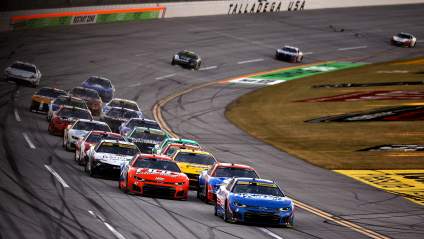
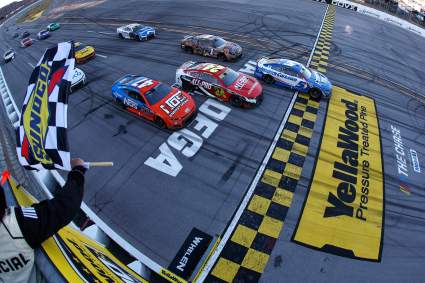
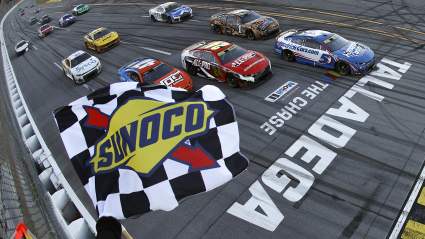
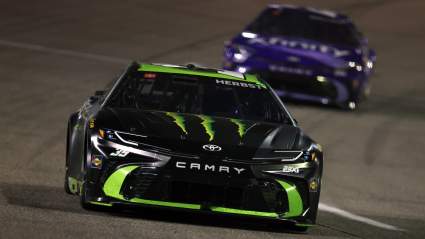
The final lap of the 2026 Daytona 500 produced a frantic run to the finish, with multiple contenders fighting for position in the closing seconds. Tyler Reddick emerged from the late scramble to win the race and claim his first Harley J. Earl Trophy. Behind him, Riley Herbst found himself in a position to challenge for the victory as the field rushed toward the start-finish line.
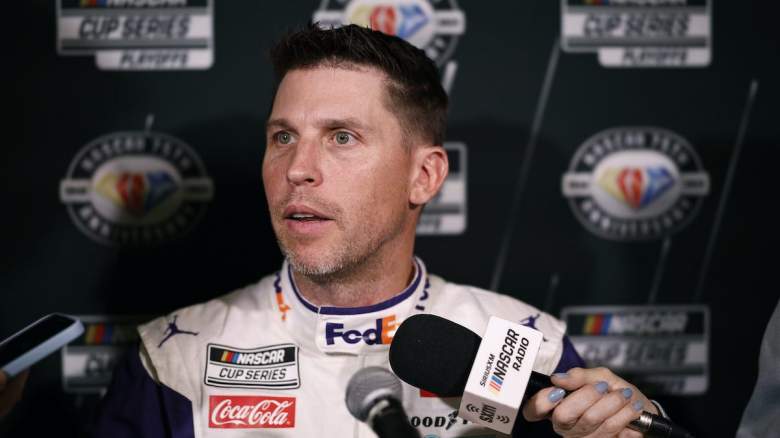
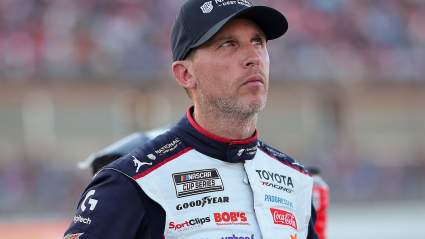
After the race, three-time Daytona 500 winner Denny Hamlin reviewed the sequence on the Actions Detrimental podcast. He explained how Herbst lined up behind Chase Elliott and briefly had a strong run, only for a small decision in traffic to change the outcome. Hamlin’s breakdown focused on how tight the margins were and how quickly the situation shifted in the final moments.
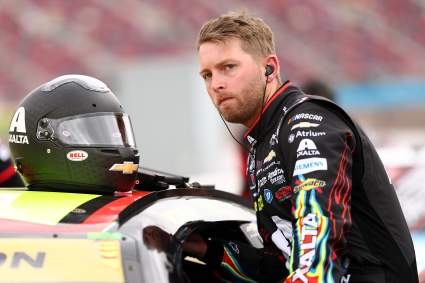
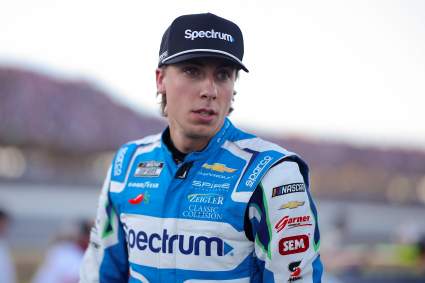
Riley Herbst’s late run put him in a position to challenge
Denny Hamlin said Herbst had placed himself well as the cars formed up for the last push to the line. With Tyler Reddick’s No. 45 moving down the track and Chase Elliott’s No. 9 ahead, Herbst had clean air and momentum building.
“Yeah, I think Riley would have been really, really close to winning the race. The 45 pulls down and removes himself from the front of the 35, goes to the inside of the 9, and now Riley has the 9 right there in front of him. He’s got such a big run that he’s probably thinking, ‘Let me go high real quick, and we’ll have this three-wide finish at the line.’”
Hamlin explained that Herbst’s speed forced a quick choice as he closed fast on Elliott. The move to the outside looked possible for a moment as the finish line approached and the pack tightened.
The brake tap changed the momentum in seconds
According to Hamlin, the key moment came when Herbst avoided contact with Elliott. Instead of pushing forward, Herbst tapped the brake slightly, which reduced his speed at a critical time.
“He just barely hit the brake, maybe about 100 pounds of pressure. Coming to the line, Riley is closing really fast on the 9, and instead of hitting him and probably shooting him past the 45, he taps the brake because he doesn’t want to touch him. So he decides to go high, and that little loss of momentum is what allowed the 6 to get there.”
Hamlin said that a small slowdown allowed Brad Keselowski’s No. 6 Ford to move into contention on the outside. The added pressure in the pack helped scramble the finish and opened the lane that Reddick used to surge ahead for the win.
Denny Hamlin says the move was instinct in the final seconds
Hamlin also rejected the idea that Keselowski would have fully cleared Elliott even without Herbst’s hesitation.
“We’re living in fairy-tale land if people think the 6 was actually going to get all the way there. I think he might have gotten beside the 9, but he wasn’t going to clear him.”
From a driver’s view, Hamlin described Herbst’s choice as a normal reaction in the final stretch of a superspeedway race.
“At that point in the race, when you’ve got a run like that, and you see the start-finish line 600 feet in front of you, you’re not really worried about anything else. You just think, ‘I’ve got a run, I see open track to the right,’ and you make an instinctive move. He was clear for a second when he started to move up, but once he touched the brake, that slowed the momentum enough for the 6 to appear on the outside.”
The closing sequence became one of the defining moments of the 2026 Daytona 500, showing how a brief lift or brake tap can decide the sport’s biggest race in the final seconds.
Denny Hamlin Dissects 2026 Daytona 500’s Chaotic Finish