
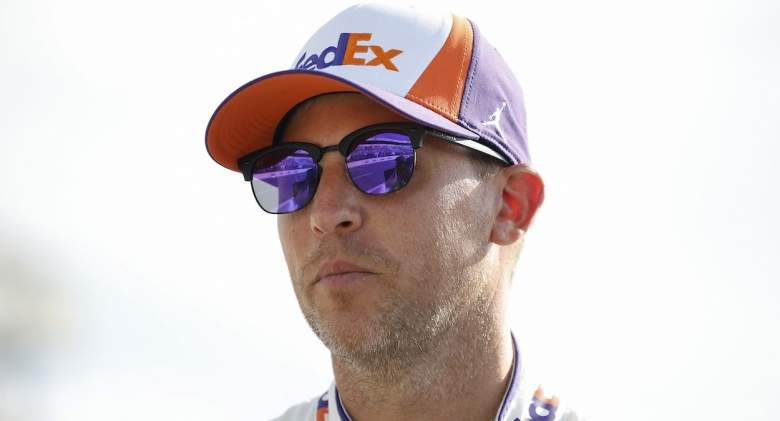
Denny Hamlin spoke after the Daytona Duel races on February 12, pointing to aggressive racing as the main theme of the event. The Joe Gibbs Racing driver described a race filled with tight battles and steady pressure across the field.
Cars ran close together for much of the night, yet the race avoided the type of major wrecks that often follow that level of intensity. Hamlin shared his thoughts in a post-race interview with FOX Sports reporter Bob Pockrass.
He broke down what he saw on track, from the action around pit stops to the small changes that may have affected car handling. His comments offered a clear look at how drivers managed speed, space, and control during a fast-paced exhibition that served as an early test ahead of the new season.

Denny Hamlin Details Aggressive Racing Without Major Incidents
Denny Hamlin said the action remained intense throughout his Duel, especially after drivers returned to the track following pit stops. He noted that the field pushed hard but still avoided large crashes.
“Our Duel was aggressive, especially after the pit stop,” Hamlin told Pockrass. “It really had a few moments before the pit stop. I thought we were just as aggressive as what I saw on TV from the first group. We just unfortunately didn’t wreck.”
Drivers often race with extra urgency in exhibition events because track position matters and the races are shorter. Even so, Hamlin pointed out that competitors kept control despite the constant side-by-side racing. The lack of heavy contact showed that drivers balanced risk with precision as they fought for position.
Track changes and car feel
When asked why the racing looked more out of control, even though teams used similar tires and cars, Hamlin said the answer likely lies in several small factors rather than a single major change.
“I don’t know. It feels faster this year. There are probably no facts or data to back that up. The track ages another year. It’s just a few small differences that can make the cars a little more unstable than they were in the past.”
Track surfaces change over time as weather and repeated use wear them down. Even minor shifts in grip can affect how cars enter corners or respond to the throttle. Hamlin suggested that these subtle differences may have made drivers work harder to keep their cars steady at speed.
Aerodynamic tweaks and driver input
Hamlin also pointed to a specific update on the car that could influence airflow and balance.
“We obviously have that wicker on the side of our A-post that deflects a little air from the spoiler. That could contribute to it.”
Aerodynamic adjustments often produce small but important effects. A slight change in airflow can alter rear stability, especially in close racing, where turbulent air already challenges control.
Still, Hamlin placed most of the responsibility on driver actions rather than equipment.
“Most of the ones I saw were just from hard pushes and hard side drafts.”
Side drafting and bumping help drivers gain momentum, but both moves require careful timing. Too much force can unsettle a car, particularly on a tight circuit like the Coliseum.
Hamlin added that tire compounds and chassis setups remained largely consistent with past events. That consistency suggests that even marginal updates, combined with normal track aging, can shape how cars behave during competition. The exhibition provided teams with useful early feedback as they prepare their cars and strategies for the upcoming NASCAR Cup Series season.
Denny Hamlin Reflects on Daytona Duel