
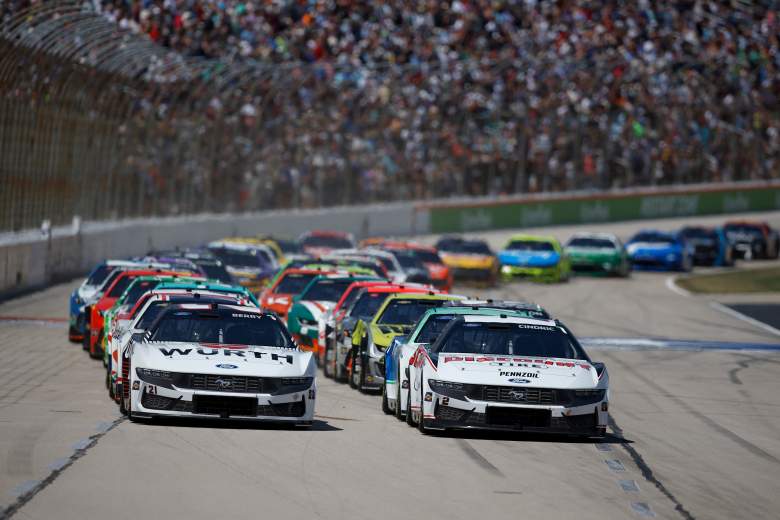
In a rare admission years later, veteran crew chief Ben Leslie revealed how his team worked around fuel rules while preparing cars for Mark Martin at Roush Racing. The method allowed them to add extra fuel during inspection without triggering penalties. At the time, NASCAR limited fuel cells to 22 gallons, and officials checked each car before races.
Leslie explained that the team used a weakness in the inspection process to gain an advantage. The system depended on scales that could reset mid-check. By timing their actions carefully, the crew managed to go past the limit. The account, shared in a later interview, has brought renewed attention to how teams once handled fuel checks.
How The Fuel Trick Worked During NASCAR Inspection
The process took place in full view of officials. Ben Leslie said the crew would begin filling the tank while the inspector watched the scale. Once the number reached or passed the allowed limit, they would quickly stop fueling. That action caused the system to reset.
When the inspector turned the scale back on, the reading returned to zero. The team would then repeat the same step. Each reset allowed them to continue adding fuel without the earlier amount showing on the system.
“He’d get all mad because then when he turned it back on, it erased it, it went back to zero.”
After one or two resets, the crew would add a bit more fuel before moving the car forward. Leslie admitted they sometimes adjusted how obvious it looked.
“So then, you know, you do that a time or two, and you make the fuel guy mad, so, ‘well, let’s put some fuel in it before we go over there so we don’t, we don’t keep just showing how blatant we are.”
Why Extra Fuel Gave Mark Martin An Edge
The added fuel gave Mark Martin a clear race advantage. With more fuel in the car, the team could run longer before making a pit stop. In long races, that meant fewer stops or better timing when cautions appeared.
Leslie said the crew could add two to three extra gallons. In some cases, the total came close to 25 gallons. That extra distance on track helped with strategy and track position.
At the time, no penalties followed. The method worked because it exploited a gap in how inspections were conducted rather than breaking a clearly enforced rule during the check itself.
What Changed After NASCAR Tightened Fuel Rules
The situation stands apart from a later case involving Michael Waltrip Racing in 2007. That incident involved illegal fuel additives and led to penalties. Michael Waltrip addressed it publicly.
“I don’t think we’ll ever put this behind us, but we’ll try to do better in the future. This is my fault.”
Waltrip made it clear the issue did not involve his manufacturer. “You can’t be skeptical of Toyota. You have to look straight at me.”
Since then, NASCAR has updated how fuel checks work. Officials now use more advanced systems that prevent resets and track fuel more accurately. Fuel limits have also changed, making it harder for teams to find similar gaps.
NASCAR Crew Chief Reveals Cheating Trick That Exploited Fuel Rules For Years