
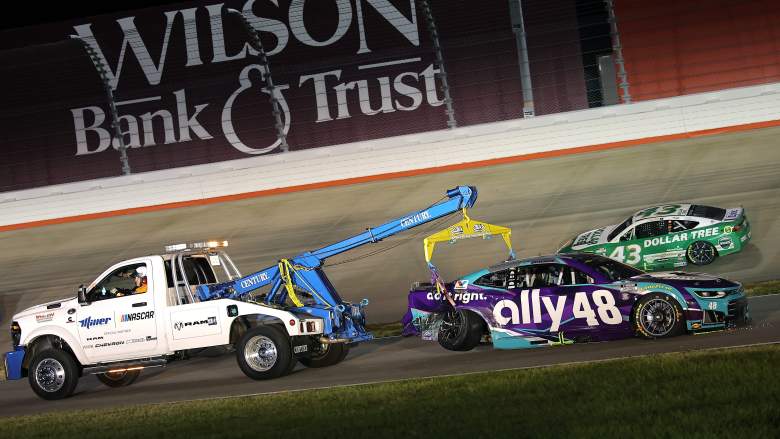
The Cracker Barrel 400 delivered everything NASCAR fans could want on Sunday night at Nashville Superspeedway: aggressive racing, strategy battles, late-race drama, and another victory for Denny Hamlin.
It also produced one of the biggest technical storylines to emerge from the race.
As the laps clicked away, brake issues became an increasingly common topic throughout the garage. By the end of the night, drivers, teams, media members, and fans were all asking the same question: What exactly was going on with the brakes at Nashville?
The conversation reached its peak when Ryan Blaney’s race unraveled in dramatic fashion during the closing laps.
Brakes Become a Major Storyline
For much of the race, Nashville’s demanding 1.33-mile concrete oval pushed drivers to the limit.
The event featured long green-flag runs, high speeds, and intense battles throughout the field. As the race progressed, concerns surrounding brake wear and reliability became increasingly difficult to ignore.
NASCAR.com’s post-race analysis identified overheating brakes as one of the defining storylines of the event, noting that several teams battled brake-related concerns throughout the race weekend.
The issue became impossible to miss when Blaney’s night took a sudden turn.
Running inside the top 10 with less than 20 laps remaining, the Team Penske driver experienced a brake failure entering Turn 1 and slammed into the outside wall. The accident ended what had been a strong run and immediately became one of the race’s most talked-about moments. He was, however, able to limp to an eighth-place finish despite leading for a total of 46 laps.
Blaney was hardly the only driver discussing brake concerns after the checkered flag.
Throughout the garage, teams spent much of the evening trying to understand why Nashville appeared to place such a heavy burden on braking systems.
While every team manages brake temperatures differently, the combination of speed, concrete surface conditions, and extended green-flag runs created a challenging environment that many competitors struggled to navigate.
Why Nashville Was So Demanding
Unlike short tracks where drivers are constantly on and off the brakes, Nashville creates a unique challenge.
Drivers carry significant speed into the corners and often find themselves managing braking zones while battling traffic, dirty air, and changing track conditions.
Those factors can generate enormous heat over the course of a 300-lap race.
The topic quickly became a point of discussion among fans as well, with many noticing the number of drivers dealing with brake-related concerns throughout the event.
For teams, the challenge now shifts to understanding exactly what happened.
Whether the issues stemmed from setup choices, cooling limitations, race conditions, or a combination of factors, Sunday’s race made one thing clear: brakes became one of the defining storylines of the Nashville weekend.
The race ultimately ended with Hamlin celebrating his third victory of the season, but one of the biggest conversations leaving Nashville wasn’t about the winner.
It was about the component hidden behind the wheels that suddenly became one of the most important factors on the racetrack.
One Problem Kept Derailing NASCAR’s Top Drivers at Nashville