
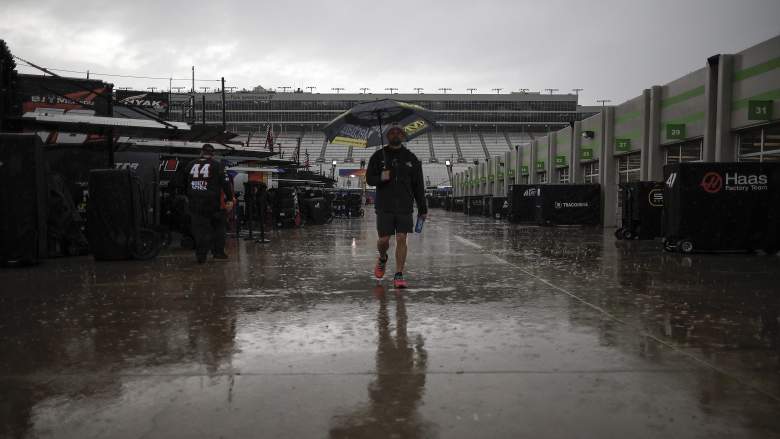
When rain hits during a NASCAR race, officials immediately evaluate track conditions. If the racing surface becomes too wet for cars to safely maintain grip, NASCAR will throw a red flag, stopping the race.
Cars are brought to a stop on track and are often later directed to pit road. Under red flag conditions, teams are generally not permitted to work on their cars, with only limited exceptions allowed at NASCAR’s discretion.
Unlike other forms of motorsports, NASCAR primarily competes on slick tires, which are not designed for wet surfaces — making rain a significant safety concern, especially at high-speed tracks.
Why NASCAR Doesn’t Race in the Rain on Ovals
The primary issue comes down to tire design and speed.
- Slick tires offer maximum grip in dry conditions but become extremely dangerous in the wet
- Water on the track creates a high risk of hydroplaning, particularly at intermediate tracks and superspeedways
- Visibility is reduced due to spray from other cars
NASCAR has introduced wet-weather tires and windshield wipers for road courses and has experimented with them at select short tracks. However, they are not used at high-speed oval tracks due to safety concerns.
What Happens During a Rain Delay?
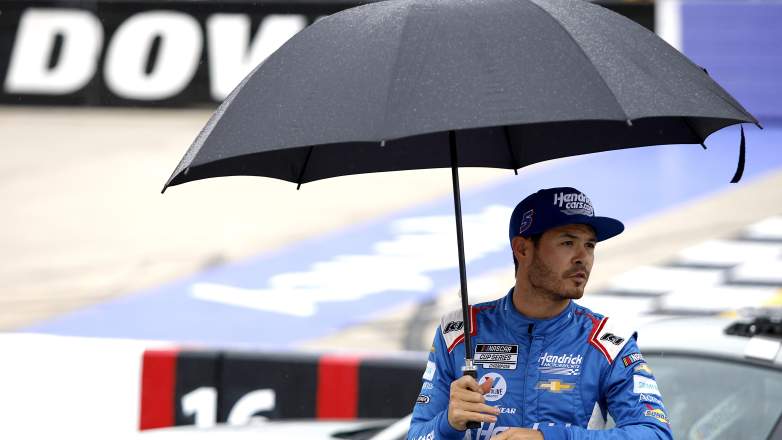
Once a race is stopped, NASCAR and track crews begin a coordinated process to prepare for a possible restart.
Track Drying Efforts Begin
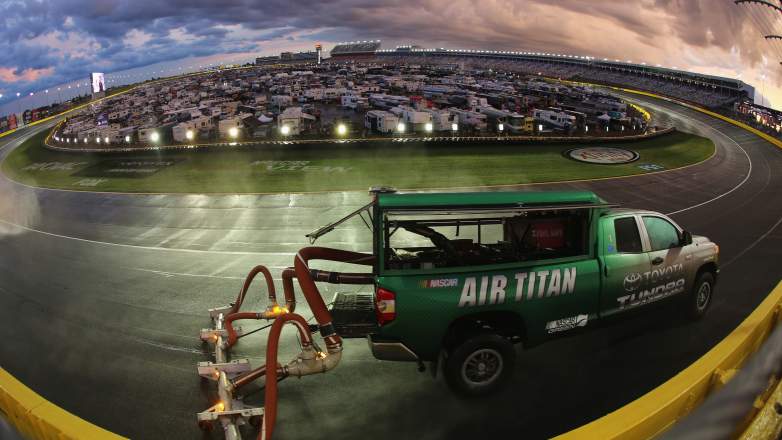
NASCAR deploys specialized equipment, including:
- Air Titans (high-powered air blower trucks)
- Jet dryers
- Track sweepers
Drying the track typically takes 90 minutes to several hours, depending on rainfall, track size, and weather conditions such as sunlight and wind.
Teams and Drivers Wait Out the Delay
While track crews work, teams and drivers go into a holding pattern:
- Drivers return to their motorhomes or team areas
- Teams monitor radar and weather updates
- Strategy discussions continue if the race is near an official distance
Teams are not allowed to make competitive changes to the car during the red flag.
When Is a NASCAR Race Considered Official?
A NASCAR race becomes official once it reaches halfway distance or the conclusion of Stage 2, whichever comes first.
If rain prevents the race from continuing beyond that point, the current leader is declared the winner.
If the race has not yet reached that threshold, NASCAR will make every effort to resume the event — including delaying it for several hours or postponing it to another day.
Can a NASCAR Race Be Postponed?
Yes. If weather conditions do not improve, NASCAR can postpone a race.
This decision is based on:
- Ongoing or forecasted rain
- Track drying feasibility
- Available daylight
- Broadcast and scheduling considerations
Most postponed races are moved to the following day, though NASCAR will attempt to complete the event the same day if possible.
How NASCAR Restarts a Race After a Rain Delay
Once the track is deemed safe, NASCAR begins the restart process:
- Cars are refired and return to the track
- Drivers complete pace laps to assess conditions
- Teams may change tires, refuel, and make limited adjustments depending on the length of the delay
- The race resumes from the last completed scoring position
Officials monitor track conditions closely during the restart phase to ensure safe racing.
The Bottom Line on NASCAR Rain Delays
Rain delays are one of the few variables that can completely halt a NASCAR race, particularly on oval tracks where wet-weather racing is not viable.
From the red flag to the eventual restart or postponement, NASCAR follows a structured process that prioritizes safety while working to complete the race whenever possible.
With weather always a factor during the season, rain delays can play a major role in shaping race strategy, timing — and ultimately, the outcome.
What Are NASCAR’s Rain Delay Procedures? How Races Are Paused, Delayed and Resumed