
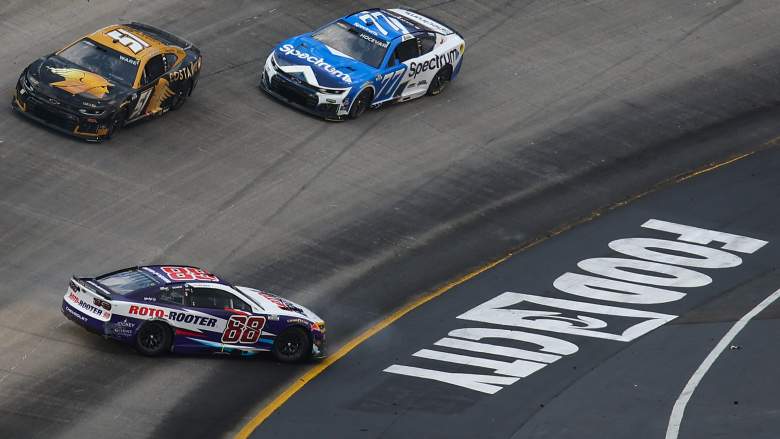
The final laps at Kansas Speedway didn’t just decide a winner — they sparked a garage-wide conversation about responsibility, timing, and the thin line between strategy and mistake.
At the center of it all is Rick Ware Racing competition director Tommy Baldwin, who isn’t dodging the moment.
He’s taking it head-on.
After Cody Ware’s late spin triggered the caution that forced overtime and reshaped the finish, Baldwin made it clear the blame doesn’t fall on the driver.
It falls on him.
A Late-Race Moment That Changed Everything
With just over a lap remaining, the race appeared to be heading toward a dramatic green-flag finish. Denny Hamlin had just retaken control, and the battle at the front was intensifying.
Then everything flipped.
Ware spun while running deep in the field, bringing out a caution that erased the existing order and sent the race into overtime. The reset gave Tyler Reddick the opportunity he needed — and he capitalized, driving to victory while several frontrunners were left wondering what could have been.
It was the kind of moment that instantly draws scrutiny. Not just because of the timing, but because of who it impacted.
Baldwin Takes Full Responsibility
Rather than let speculation build, Baldwin addressed it directly — and took ownership of the decision that put Ware in a vulnerable position late in the race.
“I know Cody’s getting a lot of flack, but it’s my fault, right,” Baldwin said. “At the end of the day, it’s my fault. I mean, that’s what I get paid to do — not for him to make any mistakes. We were just beat down, man.”
Baldwin pointed specifically to the team’s call to keep Ware on track instead of bringing him in for fresh tires as the race tightened.
That choice, made in the context of a difficult day, ultimately proved costly.
“We run like [crap] all weekend. We unloaded like [crap]. We raced like [crap]. We took a wave around in the third stage to try to hopefully get a caution and go race again, and we were just deflated. We were all done.”

The Strategy That Backfired
Late-race strategy in NASCAR often comes down to calculated risk — track position versus fresh tires, short-term gain versus long-term stability.
In this case, Rick Ware Racing gambled.
By staying out, the team hoped to gain track position and potentially benefit from a caution. Instead, they found themselves exposed as tire wear became a critical factor in the closing laps.
Ware was left trying to manage a car that was no longer capable of maintaining pace with the field around him.
“I’m taking the blame because I should have just gambled and lost. I should have come in, put tires on, and not make any mistakes and cause any problems, because man, it is an unwritten rule, in the garage area, that you do not want to change or be part of changing the outcome of the race.”
That “unwritten rule” carries weight inside the garage — an understanding that teams not contending for the win should avoid impacting those who are.
Baldwin believes his team crossed that line.
Respect, Regret and a Hard Lesson
What stands out most in Baldwin’s comments isn’t frustration — it’s reflection.
He knows the decision. He knows the moment. And he knows what he would change.
“You do not want to do that. It’s all about respect and I just hate it because I am on the plane sitting down and saying to myself, I could have did one thing, come over the radio, and told Jerry (Kelley) let’s just take our medicine, take four tires, we’re already two seconds off the pace,’ and we could have done it.”
Instead, the team stayed out — and the consequences followed almost immediately.
“We were just beat up man. I was just sitting there, I was done, and shame on me for losing focus on the whole thing. So yeah, I’m taking the blame to be honest with you.”
Bigger Than One Spin
Kansas didn’t just produce a chaotic finish — it highlighted a reality that exists every week in NASCAR.
Strategy calls from teams throughout the field can — and often do — influence the outcome, even if they’re not racing for the win.
Baldwin’s willingness to take responsibility doesn’t erase what happened, but it does bring clarity to it. There’s no ambiguity about how the No. 51 team views the moment.
They missed it.
And in a sport built on split-second decisions, that’s sometimes all it takes.
‘It’s My Fault’: Tommy Baldwin Owns Kansas Decision That Changed the Race