
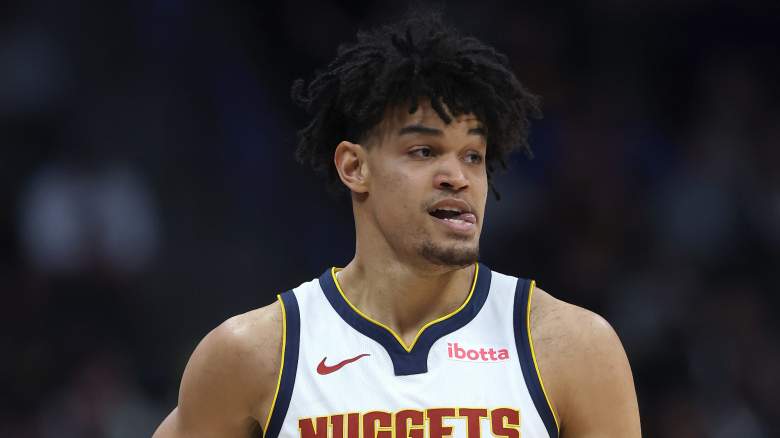
Spencer Jones spent the first part of his NBA career fighting for security.
Now that the Denver Nuggets forward finally has it, he has no intention of spending like somebody who does.
Jones offered a remarkably detailed look at how he plans to handle the biggest paycheck of his career, writing on X that he expects to make $6 million this season but estimates taxes, agent fees and so-called jock taxes will leave him with roughly $3.3 million to actually allocate.
His plan for most of it?
Invest it.
“The biggest part of my financial plan is also the least exciting,” Jones wrote.
For a player whose NBA journey began on a two-way contract, that might be the point.
Spencer Jones Plans to Keep Lifestyle Nearly Unchanged
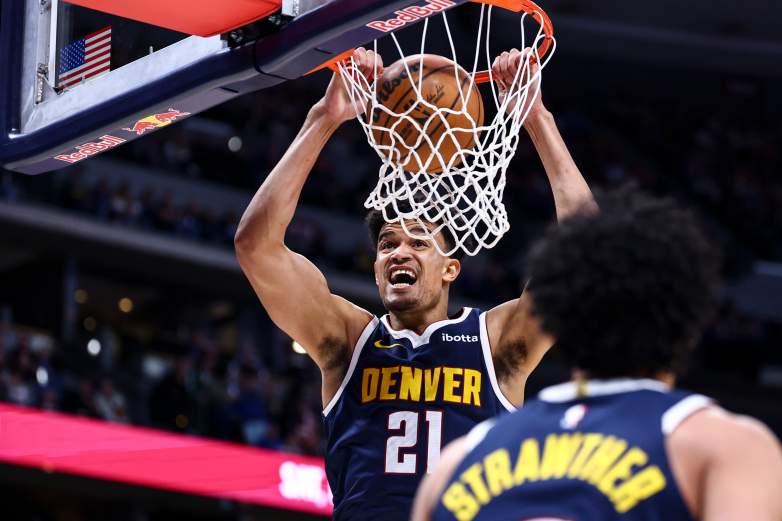
Jones said he intends to put 15% to 20% of his available money into venture investments, an admittedly aggressive allocation that he views through a much longer lens than his playing career.
He is 25 and believes his basketball network can give him access to opportunities that could eventually become part of his post-NBA life.
But the most striking number in Jones’ breakdown was not his venture allocation.
It was his spending budget.
Jones expects his living expenses to remain under $100,000 for the year.
For an NBA player earning $6 million, that is a remarkably modest number.
Sudden wealth can make lifestyle inflation almost effortless in professional sports. Luxury cars can cost six figures by themselves. High-end watches and jewelry can climb into that territory just as quickly, before accounting for expensive homes, vacations, nightlife, entourages and the other status symbols that can accompany life in the NBA.
Jones is budgeting less than 2% of his gross salary for personal living expenses.
“That probably sounds surprising relative to the salary, but a lot is covered as an NBA player,” Jones wrote, pointing to travel, meals and gear. “I’m also 25 and single. I have plenty of fun, and there just isn’t that much I feel the need to spend money on.”
That leaves more than $2.5 million for what Jones called the “boring stuff”: index funds, savings and philanthropy.
There is some symmetry to the restraint.
Jones went undrafted out of Stanford in 2024 before signing a two-way deal with Denver. He eventually earned a standard NBA contract in February after becoming a dependable part of the Nuggets’ rotation. Denver then matched Oklahoma City’s reported two-year, $12 million offer sheet this summer to keep him.
The deal pays Jones exactly $6 million this season and $5.75 million in 2027-28.
Denver Bets on Jones After Two-Way Rise
The dramatic jump in income could easily have produced an equally dramatic jump in lifestyle.
Jones had already decided against that.
He said he made himself a promise when he was still earning two-way money: If the bigger NBA contract ever arrived, his lifestyle would not automatically expand with it.
Now it has.
That approach is particularly notable because an NBA career can produce enormous earnings without guaranteeing enormous career length. Jones’ strategy appears built around turning a finite window of basketball income into something that lasts considerably longer.
His venture allocation gives him exposure to potentially higher-growth investments. The majority goes toward the less glamorous foundation of index funds and savings. He is also setting aside money for philanthropy.
And the portion dedicated to simply living remains comparatively tiny.
“The goal isn’t figuring out how much I can afford to spend,” Jones wrote. “It’s figuring out how much freedom I can build.”

After taxes, agent fees and jock taxes, I’m estimating I’ll actually have around $3.3M to allocate.
Here’s how I’m thinking about it:
Venture: 15-20%.
It’s aggressive, but I’m 25, have a long time horizon, access to some really interesting
That might be the most revealing part of his financial plan.
Jones finally reached the type of NBA salary that could buy almost any toy a 25-year-old professional athlete might want.
Instead, one of the Nuggets’ most unlikely success stories plans to spend as little has changed.
Nuggets’ Spencer Jones Reveals Surprising Plan for $6 Million Salary