
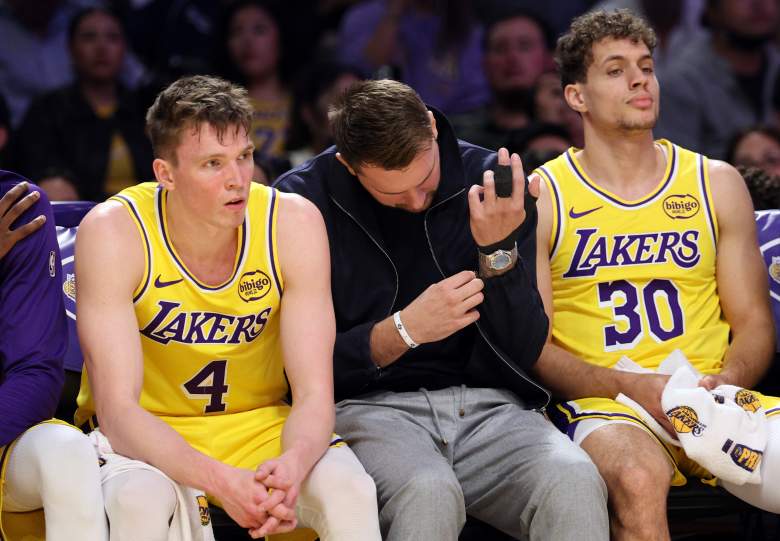
The Los Angeles Lakers possess something every front office covets this time of year: draft capital.
They can trade as many as three future first-round picks, including the No. 25 selection in Tuesday’s NBA Draft.
What they do not appear to possess, according to The Athletic’s Dan Woike, are players under contract who hold significant value around the league.
“When I talk to people around the NBA about the current players on the Lakers’ roster, there just isn’t a real clamoring from teams to go and get one of them,” Woike wrote in his latest mailbag. “They all have real flaws that might knock them out of a team’s plans.”
The assessment arrives at a pivotal juncture for the Lakers.
The franchise is under increasing pressure to upgrade its roster around Luka Doncic after repeatedly emphasizing that the summer of 2026 would be the beginning of an aggressive effort to build a championship contender around the five-time All-NBA guard.
The challenge is that the players Los Angeles appears most willing to move may have little to no trade value.
Dalton Knecht’s Value Has Fallen Sharply
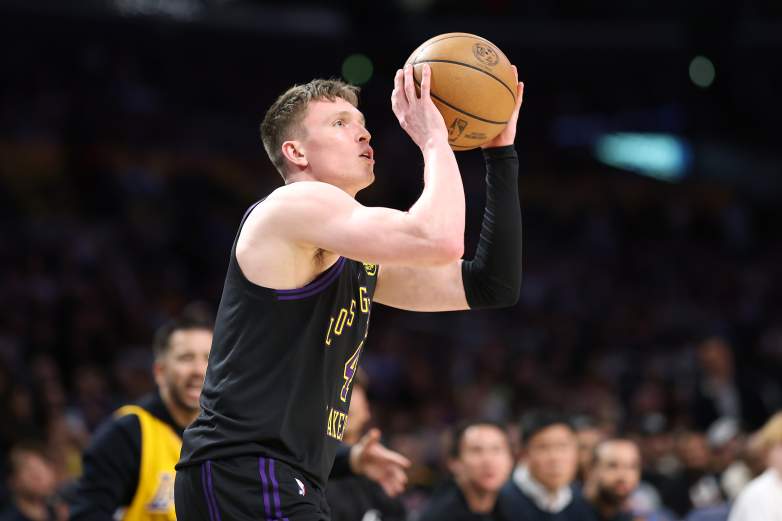
Not long ago, Dalton Knecht looked like one of the Lakers’ better assets.
Selected with the 17th pick in the 2024 NBA Draft, the former Tennessee star was widely viewed as one of the steals of his class after several projections had him coming off the board in the lottery.
His rookie season offered reasons for optimism.
Knecht appeared in 76 games, including 16 starts, and showcased legitimate three-level scoring ability. He shot 38% from three-point range, finished 74% of his attempts at the rim and posted a 57.9% effective field-goal percentage that ranked in the 79th percentile among NBA wings.
His second season, however, brought a dramatic reversal.
Knecht appeared in only 37 games and made one start while seeing his playing time drop from 18.6 minutes per game to just 11.3.
His finishing at the rim declined by 10 percentage points, his three-point percentage fell by seven points and his effective field-goal percentage dropped nearly seven points.
Combined with persistent defensive concerns and inconsistent awareness, the offensive regression significantly damaged his value.
Woike acknowledged there could be “a team desperate for shooting” willing to explore a deal for Knecht. But he added that he does not believe there is a significant market for the young wing.
That assessment aligns with recent history. After rescinding a trade that would have sent Knecht and draft compensation to Charlotte for Mark Williams last year, the Lakers aggressively shopped him at the trade deadline but were unable to find a suitable deal.
Jarred Vanderbilt’s Contract Has Become a Hurdle
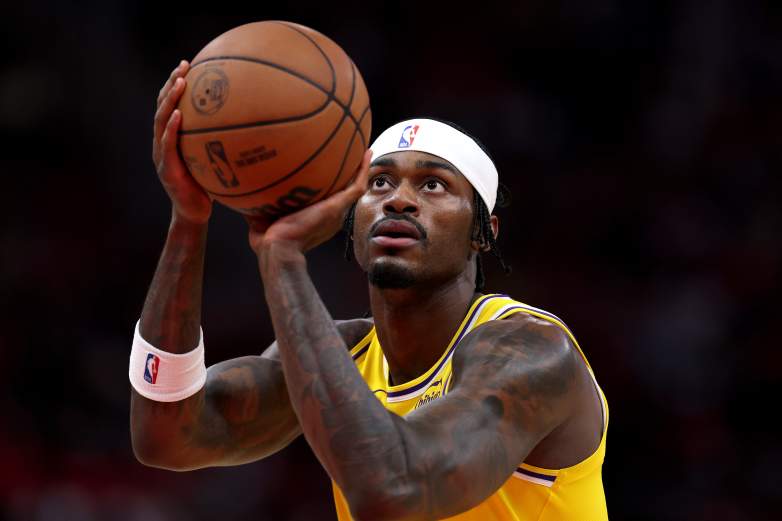
Vanderbilt presents a different problem.
The 27-year-old remains one of the Lakers’ most versatile defenders and rebounders. He averaged 4.4 points, 4.5 rebounds and 1.3 assists while shooting 47.1% from the field in 65 appearances last season.
In theory, those traits should hold value.
The issue is financial.
Woike noted that Vanderbilt’s $13.3 million player option for the 2027-28 season is widely expected to be exercised, making his contract difficult for teams to absorb.
The implication is stark.
Rather than receiving assets in return for Vanderbilt, the Lakers may have to attach additional compensation simply to move his deal.
Creativity May Be Lakers’ Best Path Forward
The reality facing Los Angeles is increasingly clear.
The Lakers have draft assets. They have urgency. And they have a franchise cornerstone in Doncic whose foremost request remains an elite center capable of helping restore the organization to championship contention.
What they lack is a surplus of desirable contracts.
The players they appear most willing to move carry limited appeal around the league, leaving the Lakers in an awkward middle ground: possessing enough draft capital to make deals but not enough player value to easily execute them.
Woike suggested the Lakers could instead explore opportunities involving other teams’ undesirable contracts as franchises attempt to maneuver under luxury-tax thresholds and apron restrictions.
It is not the blockbuster approach many envisioned when Doncic arrived in Los Angeles.
But if the market’s appetite for the Lakers’ available pieces is as modest as the latest reporting suggests, ingenuity may prove just as important as assets in determining whether the Lakers can build the roster they promised their new superstar.
Lakers Learn Cold Hard Truth About Their Trade Chips