

Sitting at roughly $243,000 in cap space, the Chicago Bears are already exploring ways to free up money, including potential moves involving veterans across the roster. That makes Cole Kmet one of the most interesting situations to watch.
He has two years left on his deal, no guaranteed money remaining, and a cap hit north of $11 million in 2026. At the same time, the offense is evolving, with Colston Loveland emerging as a primary receiving option and younger playmakers taking on bigger roles.
Still, Kmet’s value hasn’t gone anywhere. He remains a key part of the run game, a reliable option for Caleb Williams, and an important piece in how Chicago structures its offense.
That’s where the decision comes in. The Bears can restructure and save about $4.4 million. They can move on and create around $9 million in space. Or they can extend him, clearing more than $7 million while keeping a player who still fits what they do.
When you factor in the cap situation, roster construction, and Kmet’s role, this is one of the clearest decisions Chicago has to make.
Why an extension makes more sense than a trade
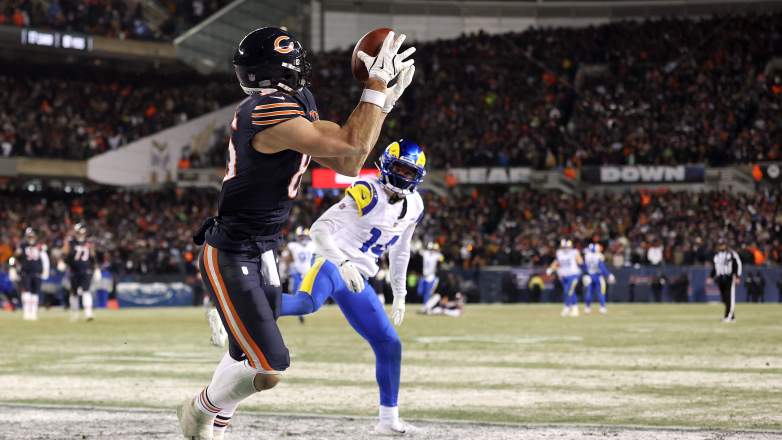
There has been some outside speculation about moving Cole Kmet, especially with the emergence of Colston Loveland as a dynamic receiving threat.
On paper, it’s easy to connect the dots. Younger tight end. Bigger upside in the passing game. Potential cap savings via trade (around $9 million). But that view misses the bigger picture of how the Chicago Bears actually operate offensively.
According to Brad Biggs, the Bears value Kmet far beyond the box score: “Yeah, really, I don’t think that’s likely,” Biggs said of trading Kmet. “But they’re in a spot where you can’t say impossible for most things, but I think they highly value Cole Kmet, and they’re not evaluating him through the lens of fantasy football statistics, okay? Or No. 1 or No. 2. Cole’s value, as a guy who can help you in the passing game, both catching and pass blocking when needed. His value in the run game was extremely valuable this offseason, third-ranked rushing offense in the league. The ability he had to handle some of those things in the run game are what allowed Colston Loveland, in part anyway, to steadily kind of gain and become more effective throughout the entire season. So, I would certainly be surprised if Cole Kmet’s not on the roster this year, but you almost can’t say never to about anyone.”
A deal that works for both sides
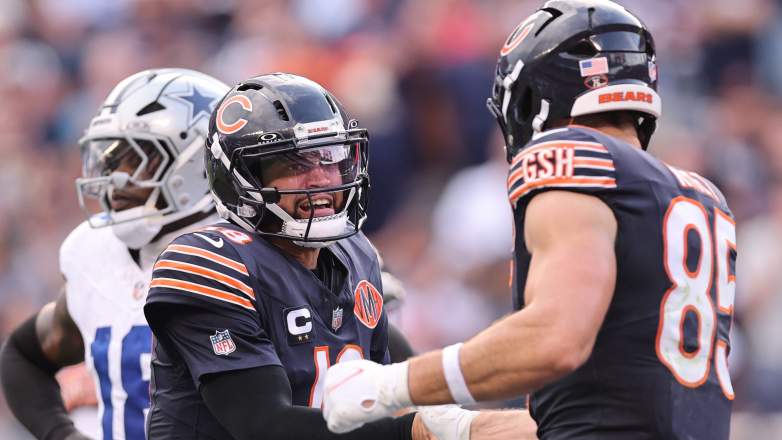
For Caleb Williams, having a dependable tight end matters and Cole Kmet has been exactly that.
Even as Loveland grows into a featured receiving role, Kmet’s presence helps balance the offense. It allows the Chicago Bears to stay multiple, disguise intentions, and protect their quarterback. That kind of value may not show up fully in stat sheets, but it shows up on film.
An extension something like two years in the $16-18 million range layered onto his current deal could lower his immediate cap hit, provide him with new guaranteed money (potentially around $15 million), and keep him in Chicago through his prime years
If there’s any hesitation, it’s most likely on Kmet’s side. At 27, he’s still firmly in his prime. Taking a shorter, team-friendly extension now could limit his long term earning potential down the line. As Biggs pointed out, that’s where things could get tricky.
Does Kmet prioritize staying in Chicago and maintaining his role in a developing offense? Or does he hold firm, knowing he could command more on the open market later?
When it comes to Cole Kmet, the path forward feels unusually straightforward. They need cap space. He provides it. They value his role. He wants to be here.
Sometimes, the obvious move is the right one. And for the Chicago Bears, extending Cole Kmet might be the easiest call they make all offseason.













The Bears Are Running Out of Time on a Key Cole Kmet Decision