

The Cincinnati Bengals enter the 2025-26 season in rare territory.
They carry just $11 million in dead cap, 30th among NFL franchises, according to Spotrac.
Compared to the San Francisco 49ers, New Orleans Saints, Philadelphia Eagles, Seattle Seahawks, and Cleveland Browns — who are shelling out massive dollars for players no longer on the field — Cincinnati’s clean books give them real flexibility.

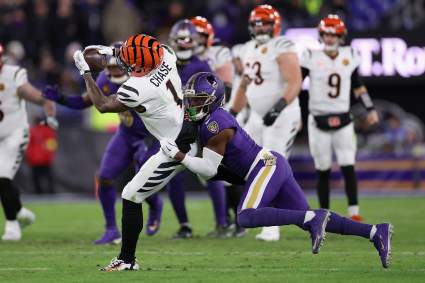
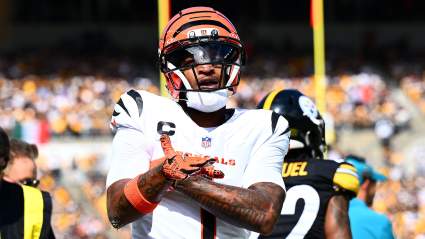
Low dead cap means the Bengals can keep their stars, patch weaknesses and maneuver through injuries without scrambling. For a franchise with Joe Burrow, Ja’Marr Chase and Tee Higgins in their prime and under long-term contracts that’s a massive advantage.
Burrow and Bengals’ Responses Hold Weight
The offseason plan was simple: Secure Chase (check), Higgins (check) and Trey Hendrickson (yep). Now, the Bengals‘ core is locked in for a pivotal campaign.
Hendrickson got a raise that pushed their top four salaries — Burrow, Chase, Higgins, and Hendrickson — to a combined $141.1 million in cash this season. Their cap hits make up 41.3% of the total cap. Both marks lead the league, according to The Athletic’s Paul Dehner Jr.
The Bengals went against their conservative DNA, even adding a void year to Hendrickson’s deal to spread the cap hit into 2026. That’s not something Cincinnati normally does. But they found middle ground, and Hendrickson called the raise “humbling.”
Zac Taylor credited the Bengals front office for a job well done, throughout what has been a tumultuous summer in Cincinnati.
“Balancing a lot of talented players is not easy, especially when it’s time for them to get paid,” Taylor acknowledged on Thursday. “And I don’t think our organization gets enough credit for how they balance all this, how they handle it. It’s not simple.”
Low Dead Cap, High Ceiling Ahead
The Bengals’ unique approach isn’t just spending big on stars.
They’ll pay the stars and rely on drafting and development to fill out the middle of the roster. The defense won’t be stacked with pricey veterans like in 2021, but Al Golden’s fresh defensive schemes could maximize the younger talent in place. Meanwhile, the front office has room to pivot — 14th in cap space despite committing so much to the big four.
Injuries are the risk with any top-heavy roster. Depth matters in a league built on attrition, and losing one of the four pillars could shift the season. But Cincinnati’s financial discipline means they’ll have options to adjust if needed.
The roster is balanced where it matters: Burrow’s protection is stronger with guys like Dylan Fairchild and now Dalton Risner. Chase and Higgins give him elite options downfield, and Hendrickson’s deal keeps one of the league’s most disruptive defenders in a Bengals uniform on Sundays. For once, it feels deliberate rather than desperate.
The Bengals are now the league’s test case. Can a franchise lean so heavily on stars and still sustain depth? The answer will define their 2025 season.
For Burrow, it’s simple. “We all want to stay together,” he said. Now they are. And with the NFL’s lowest dead cap, Cincinnati has set themselves up not just to contend this year, but to keep the window open longer than anyone expected.



Bengals’ Cap Situation Reveals a Potential Edge in 2025