
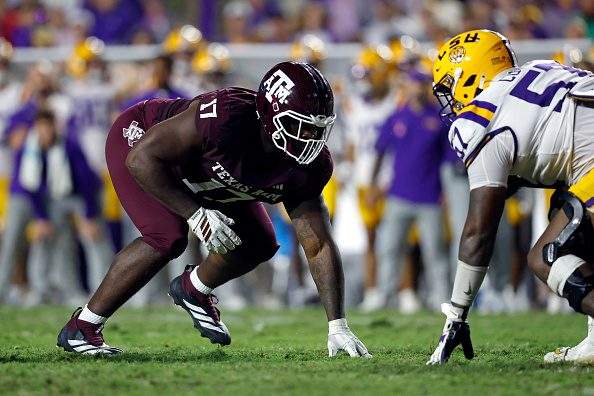
Albert Regis doesn’t have to win a starting job to become one of the Jacksonville Jaguars’ most important rookies.
The third-round defensive tackle enters training camp behind DaVon Hamilton, the veteran nose tackle who helped Jacksonville finish first in the NFL against the run last season.
That depth-chart position would usually create modest expectations for a rookie.
Sports Illustrated’s John Shipley sees a larger opportunity.
Shipley ranked Regis second among the Jaguars’ 10 draft picks in his pre-training camp rookie power rankings. His reasoning centered on the workload available behind Hamilton, where Austin Johnson played nearly 200 defensive snaps last season.
If Regis inherits a similar assignment, Jacksonville could receive immediate production from the No. 81 overall pick without changing the top of its defensive line.
Regis Has Straight Path to Defensive Snaps
Johnson’s role was limited, but it was necessary.
Pro Football Reference credited him with 192 defensive snaps in 2025, accounting for 17.5% of Jacksonville’s defensive plays. He provided relief for Hamilton and gave the Jaguars another interior body for early downs and heavier offensive personnel.
Johnson entered free agency after the season, leaving those snaps available.
Shipley projected Regis as Hamilton’s primary backup and argued that the rookie could play a larger role than many members of Jacksonville’s draft class.
The opportunity comes with a demanding standard.
Jacksonville allowed 85.6 rushing yards per game, the lowest mark in the league, and coaches repeatedly credited Hamilton’s ability to absorb double teams and keep linebackers clean.
Regis was drafted with a background that fits the assignment.
The 6-foot-1, 295-pound defender started 28 of 49 games at Texas A&M and finished his college career with 116 tackles, 11 tackles for loss, 3.5 sacks and 10 passes defensed. He posted career highs with 49 tackles and two sacks in 2025.
The Jaguars also noted that Regis earned an 82.6 run-defense grade from Pro Football Focus, fifth among SEC interior defensive linemen who played at least 400 snaps.
Despite his solid college grade, the physical difference between college and the NFL tends to show quickly inside.
But the grade does point to why Jacksonville believes Regis can enter the rotation early.
Jaguars Can Protect NFL’s Top Run Defense With Rookie Rotation
Regis’ simplest route to playing time does not involve replacing Hamilton.
Jacksonville needs him to keep the structure of the defense intact when Hamilton leaves the field, so that means controlling his gap, holding up against double teams and preventing offenses from creating easy movement through the middle.
A dependable backup would also allow the Jaguars to manage Hamilton’s workload without losing the trait that defined their defense last season.
Shipley’s ranking placed Regis ahead of several rookies with probable paths to visible statistics.
Other defensive draft picks could record sacks or make special teams plays whereas Regis may spend much of his season doing work the dirty work, ultimately creating tackles for somebody else.
Matching Johnson’s 192-play workload would give Regis a meaningful rookie role before injuries or performance create any additional opportunities.
It would also give Jacksonville an early answer about whether the third-round pick can eventually handle more responsibility.
Training camp will offer the first reliable evidence.
Padless spring practices revealed little about whether Regis can anchor against NFL linemen, disengage from blocks and maintain his leverage throughout drills and simulated drives.
Regis does not have to look as good as Hamilton immediately.
But the Jaguars need him to become trustworthy enough that their run defense remains recognizable whenever Hamilton steps to the sideline.
Jacksonville Jaguars’ Third-Round Pick Tipped for Crucial Role