

The Los Angeles Chargers season ended quietly.
A 16–3 loss to the New England Patriots in the Wild Card Round closed the book on a year that never found its footing offensively. The defense did enough to keep the game within reach. The offense never responded, stalling repeatedly in predictable situations and failing to generate pressure on a Patriots defense that rarely had to adjust.
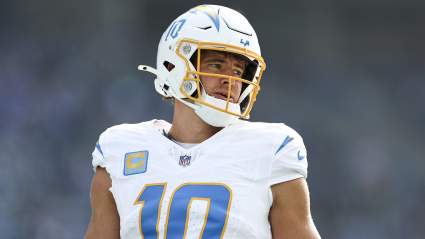
Afterward, the focus turned to Justin Herbert. Not just because of the result, but because of what came next.
Justin Herbert On What Comes Next
Herbert did not deflect responsibility after the loss to the Patriots. He did not offer excuses. When asked directly about his confidence in breaking through in the postseason, his response was blunt.
“I don’t know. I haven’t figured it out yet and it hasn’t happened, so we’ll have to reevaluate and see what happens.”
It was not a dramatic answer. It was an honest one.
For a quarterback often praised for composure and consistency, the moment stood out because of its uncertainty. Herbert did not promise growth. He did not point to progress. He acknowledged that the question remains unanswered.
That uncertainty mirrors where the Chargers’ offense sits as a whole, particularly within a system that has struggled to evolve once January arrives.

Justin Herbert on his confidence level of getting his first career postseason win.
A Chargers Offensive Performance That Matched the Frustration
The numbers reflected the tone.
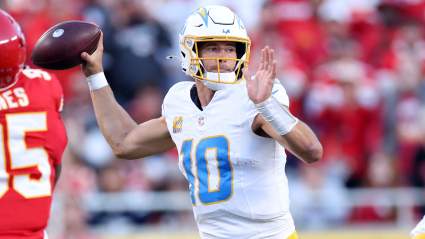
Herbert finished the night completing 19 of 31 passes for 159 yards, with no touchdowns and no receiver catching more than three passes. The Chargers offense never found rhythm, never dictated matchups, and rarely created clean answers against pressure within Greg Roman’s scheme.
The defense gave the Chargers a chance. Holding an opponent to 16 points in a playoff game is usually enough to stay alive.
The offense did not meet that moment.
Herbert acknowledged that directly.
“I didn’t play well enough and didn’t make any plays,” he said. “We let the defense down today.”
There was no ambiguity in that assessment. Herbert owned the outcome. But the night also reinforced how little margin the offense has when structure breaks down and separation is hard to find.
The Playoff Pattern Is Hard to Ignore
This was not an isolated night.
Across three playoff appearances, Herbert has now produced limited results relative to expectations. The arm talent remains unquestioned. The regular-season production is real. But January has not followed the same script.
Time and again, Chargers offenses have tightened under playoff pressure. Routes compress. Protection erodes. Adjustments come slowly. Those issues extend beyond one quarterback and place renewed focus on whether the offensive approach is built to survive postseason defenses.
That is the context behind Herbert’s words.
When Herbert said he has not figured it out yet, it was not self-pity. It was an acknowledgment that the Chargers are still searching for answers at the most important position, while also determining whether the system around him is helping or hindering that search.
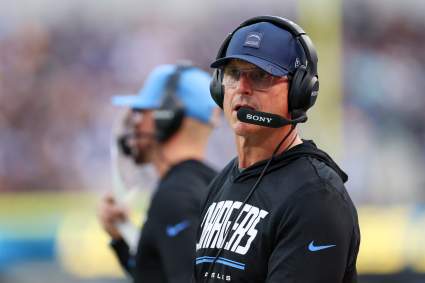
That tension will shape the offseason. Roster decisions. Coaching evaluations. Offensive identity.
Nothing is settled.

(Via @NFL)
Final Word for the Chargers
Herbert did not offer reassurance after the Chargers’ season ended. But he offered some clarity.
The Chargers have a quarterback capable of elite play. They also have a postseason résumé that continues to raise uncomfortable questions. Herbert did not run from those questions. He stood in front of them and admitted the work remains unfinished.
That work will not be limited to the quarterback room.
What happens next will define more than just another season. It will define whether this era in Los Angeles ever becomes what it was supposed to be.
Chargers’ Justin Herbert Addresses His Future After Playoff Exit