
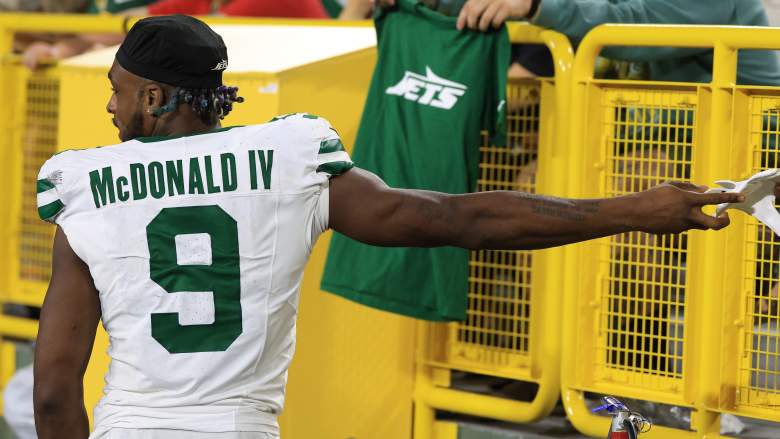
The New York Jets pulled off one player-for-player trade earlier this offseason. Could they do it again?
Beat reporter Nick Faria of the Jets on SI argued that they should strongly consider the idea he floated.
Arizona Cardinals receive: pass rusher Will McDonald
New York Jets receive: pass rusher Josh Sweat
“Sweat reportedly wants out. Former Cardinals beat writer Kyle Odegard reported the edge rusher’s absence from Arizona’s OTA workout schedule, expressing frustration over the organization’s future. Sweat’s potential unhappiness leaves the Jets in a unique position,” Faria wrote.
Assessing the Potential Swap
Sweat, 29, won’t turn 30 until the 2027 offseason. He has three years remaining on his $76.4 million contract.
McDonald, 26, will turn 27 before the start of the 2026 season. This offseason, the Jets picked up his fifth-year team option. That means he is now under contract for the next two years through the 2027 season.
Sweat is a former Pro Bowler and Super Bowl champion. He is listed at 6-foot-5 and weighs 265 pounds. Across his eight years in the NFL, Sweat has appeared in 121 games and has made 81 starts. With those opportunities, he has collected 55 sacks, 114 quarterback hits, 11 forced fumbles, 13 pass deflections, 67 tackles for loss, and 267 total tackles.
Rationale Behind This Trade Idea
Why would the Jets swap a mid-20s pass rusher for one that is getting long in the tooth?
“For as quick and dominant as McDonald has been as a pass rusher at times, there’s a clear weakness to his game: Run defense. McDonald was the third-worst edge rusher in football at stopping the run (41.6 grade), according to Pro Football Focus. A big part of those struggles have come due to his light frame – standing in at just 245 pounds,” Faria explained.
“Sweat doesn’t have that problem. Throughout his career, both in Philadelphia and in Arizona, the now 29-year-old has posted quality run-defense grades alongside his strong pass-rushing skills. In the same three-year span as McDonald, Sweat has recorded 26.5 sacks while posting a run defense grade of 69.8, per PFF,” Faria wrote.
“Yes, Sweat is older. And the Jets (or any other team) would need to accept a higher cap hit for his services over the current player they would be giving up, but New York needs more productivity against the run this season. Adding a player like Sweat, even if it means giving up on McDonald before his rookie contract is up, solves that need. And puts the Jets’ defense in a much better light going into 2026,” Faria stated.
What’s the Truth?
During the pre-draft process, there was a big debate in Jets land. Arvell Reese or David Bailey? One of the biggest talking points was run defense. If you can’t defend the run, then typically you can’t be a three-down player on defense. If you can’t be a three-down player on defense, should you be the No. 2 overall pick in the class?
Despite the outside noise, the Jets took Bailey with the No. 2 overall pick. Shortly after he was drafted, head coach Aaron Glenn was inevitably asked about Bailey’s deficiencies in the run game. He downplayed those concerns.
Interestingly, last offseason, Glenn was asked about McDonald’s development, and he explained it was coaching—a seemingly arrogant response with an indirect shot at the previous coaching staff. McDonald ended up not having the year he was hoping for, and that made Glenn look bad.
Is he right this time around? Or is he set to be wrong again?
If he can fix Bailey’s run defense problems, then McDonald’s weakness is less glaring. If he can’t, McDonald and Bailey being on the field together could be bad news for the Jets defense when offenses opt to run the ball.












Jets Trade Pitch Swaps Will McDonald for $76 Million Pro Bowler