

The Philadelphia Eagles offensive coordinator search is nearly two weeks old, and the longer it drags on, the clearer the picture becomes.
This is not a process that has stalled because of a lack of interest. It has stalled because the job itself is unusually specific.
The only thing clearer at this point is that the Eagles’ offense doesn’t look a thing like the Rams‘ or Seahawks‘ offenses did last Sunday.
On the surface, it should be one of the best coordinator openings in football. A franchise quarterback with a Super Bowl caliber roster and an offensive line, when healthy, built to win now exists.
Yet high-caliber candidates continue to come and go, the interview list keeps changing, and no clear favorite has emerged. That raises a legitimate question inside league circles.
Is this job too risky, or has it become too niche for most viable coaches to fit.
An Elite Opportunity With a Short Fuse
The Eagles offensive coordinator job offers elite upside but very little margin for error.
The last two coordinators who failed to meet expectations were dismissed after one season, Brian Johnson in 2023 and Kevin Patullo this past season. That reality is not lost on the coaching community. Around the league, jobs earn reputations quickly, and this one now carries a short leash label. If the hire works, the payoff is immediate and massive. If it does not, the exit is swift, unceremonious and humiliating. That combination makes the job very appealing to some and highly radioactive to others.
Exhibit A: Brian Daboll
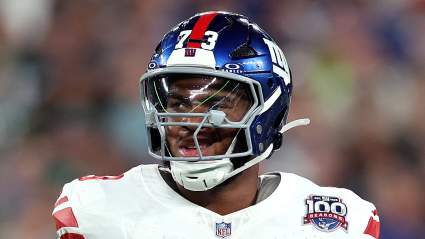
Former Giants head coach Brian Daboll is flat out the best candidate for the Philly vacancy. But the word on Daboll, who already inteviewd with the Birds is that he’s going to take the OC job with the Tennessee Titans. Now let that marinate for a minute.
Why the Job May Be Too Risky For Strong Candidates
Despite the risk, this is still a premier opportunity for the right coach.
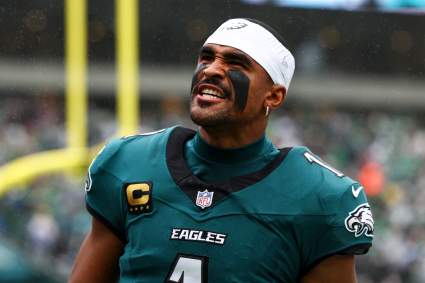
This is not a rebuild. You are calling plays for Jalen Hurts, a quarterback who has already proven he can win at the highest level when properly supported. The infrastructure and the talent exists. That upside is why the Eagles remain attractive even as the market tightens if you are confident, experienced and not too risk-averse.
The danger lies in the instability of the position. In the past four years two Eagles offensive coodinators went on to get head coaching jobs, while two others were relieved of their duties after just one season.
Why the Job May Be Too Niche for the Birds
The quick-trigger is why the opportunity is unattractive from the perspective of the viable candidates who are left. But from an Eagles standpoint the job is also extremely niche.
Hurts is approaching the possibility of working with his tenth offensive coordinator or primary offensive voice across college and the NFL combined.
Each new coordinator brings new terminology, new sequencing, new preferences, and new ideas about what the quarterback should be. At some point innovation stops advancing and begins to yield diminishing returns.
That is where this job becomes niche. Ideally the Birds would do best with an offensive Vic Fangio-type. The problem is that there are few to none out there.
The Fangio Question Applied to the Offense
The Eagles found stability on defense by hiring Vic Fangio not because of scheme but because of disposition.
Fangio was not auditioning when the Eagles hired him to be their defensive coordinator prior to last season. He was not chasing the next opportunity. He brought authority without ego and consistency, confidence and experience without ambition. When Fangio landed his first NFL gig, Birds head coach Nick Sirianni was four years old.
The offense has not had that successful, sustainable stability.
The Eagles do not need an offensive coordinator with no ambition. They need one whose ambition does not conflict with the job.
Why Play Calling Experience Is Mandatory
At this point one requirement should be a non-negotiable. The next offensive coordinator must have real NFL play calling experience. That experience must come with past success and must include accountability when things go wrong. Anything less guarantees more turbulence and churn.
The Candidates Left and Why None Are Clean Fits
That narrowing brings the conversation to the three names still most directly tied to the Eagles.
Matt Nagy most recently worked for the Kansas City Chiefs as a senior offensive assistant. His contract ended after this past season so Nagy is a free-agent coach, most likley in search of a head coahing job. Nagy has real play calling experience, most notably as head coach of the Chicago Bears from 2018 through 2021 and as offensive coordinator for the Chiefs in 2016 and 2017. He called plays for a 12 win Bears team in 2018 and won Coach of the Year. He also oversaw offensive regression, quarterback instability, and an eventual collapse in Chicago. Nagy fits the niche because he does not need this job to advance his career. He is also a reminder that play calling experience alone does not guarantee modern answers or schematic creativity.
Jim Bob Cooter currently works for the Indianapolis Colts as their offensive coordinator. Cooter has called plays in the NFL, most notably with the Detroit Lions from 2015 through 2018. His offenses were functional but rarely threatening, often leaning heavily on structure and quarterback friendliness rather than imagination. Cooter represents stability and familiarity, but he also represents ceiling questions. Hiring him would be an admission that the Eagles value continuity over innovation.
Josh Grizzard was the offensive coordinator for the Tampa Bay Buccaneers this past season before being fired back on January 8 after only one season in that position. Grizzard has coordinator experience but does not have a long track record as a standalone NFL play caller. Much of his résumé is built around collaboration and structure rather than ownership. In a different market, Grizzard might be a developmental hire. In Philadelphia, with this roster and this quarterback, that margin does not exist.
None of these candidates are perfect. Each comes with baggage. Each requires the Eagles to decide which flaw they can live with should they choose to settle, which doesn’t exactly instill confidence in the next hire for the much-maligned, yet polarizing position.
Matt Nagy’s Baggage
The baggage with Nagy is not whether he has called plays. He has. The baggage is how his offenses aged.
In Chicago, Nagy’s system peaked early and then collapsed. After the 2018 season, defenses adjusted, and Nagy struggled to counterpunch. The Bears offense became rigid, predictable, and overly reliant on horizontal concepts that did not fit his quarterbacks. His handling of Mitchell Trubisky, Nick Foles, and later Justin Fields raised real questions about quarterback adaptation versus forcing a scheme.
There is also the perception league wide that Nagy can overthink sequencing and lose feel for the game. That reputation followed him back to Kansas City, where he no longer calls plays. Fair or not, some evaluators believe Nagy works best inside structure rather than owning it.
In short, Nagy’s baggage is proof that experience does not equal evolution.
Jim Bob Cooter’s Baggage
Cooter’s baggage is about ceiling, not competence.
He has called plays and stabilized offenses, most notably in Detroit, but his units rarely stressed defenses or dictated games. His offenses were often conservative, timing based, and quarterback protective, which kept them functional but limited. When talent advantages existed, they were not always maximized.
There is also skepticism that Cooter can elevate an offense in January rather than simply keep it afloat in October. Around the league, he is viewed as a floor raiser, not a ceiling breaker.
The concern is not that Cooter would fail quickly. The concern is that he would succeed quietly and cap the offense without anyone noticing until it mattered.
Josh Grizzard’s Baggage
Grizzard’s baggage is experience based, not philosophical.
He does not have a long track record of independent NFL play calling. Much of his résumé is built inside collaborative environments where responsibilities were shared. That makes it difficult to evaluate how he handles in game pressure, late game adjustments, or postseason scrutiny as the singular voice.
There is also the reality of timing. In another market, Grizzard could grow into the role. In Philadelphia, with this roster and this quarterback, the job does not allow for a learning curve.
Grizzard’s baggage is that hiring him would be betting on projection at a moment when projection has already failed twice.
The Samsonital Truth
Each candidate’s baggage points to the same truth that an ideal fit no longer exists. Perhaps it never existed. Nagy carries scar tissue. Cooter carries ceiling concerns. Grizzard carries uncertainty. Mike McDaniel is with the Chargers and it looks like Daboll is heading to Tennessee. Joe Brady is waiting to hear from his moronic and unimpressive boss, Terry Pegula and Bill Walsh has been dead almost 17 years. Can Big Dom call plays?
Eagles Have Made OC Job Too Risky to be Attractive and Too Niche for Their Own Good