
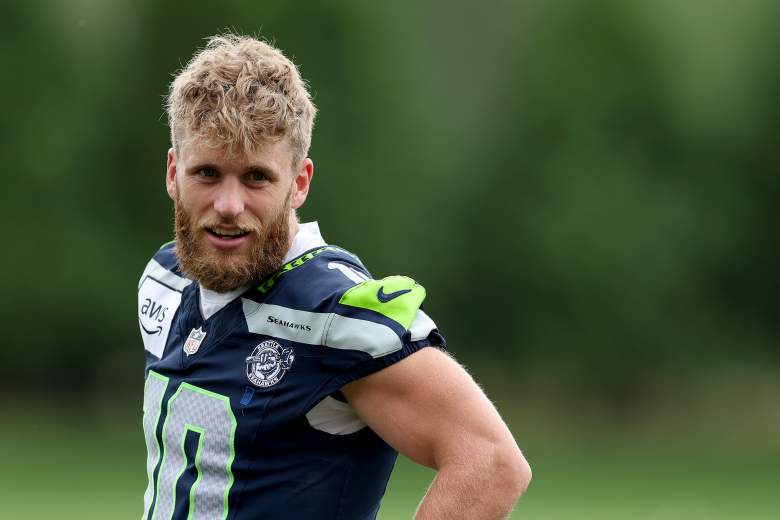
Cooper Kupp needed time to understand exactly how Mike Macdonald planned to build a champion with the Seattle Seahawks.
Kupp had spent eight seasons with Sean McVay’s Los Angeles Rams, where game plans, favorable practice looks and detailed information showed players how they were supposed to win. Seattle’s approach felt considerably less complicated.
The Seahawks were going to compete, play physically and, as Kupp put it, “hit them really, really hard.”
Appearing on “The Pat McAfee Show” on July 22, Kupp offered a revealing comparison of the two championship cultures. He described McVay’s system as a carefully engineered operation and Macdonald’s as a daily test of whether Seattle could impose its will.
“We did things a certain way in LA,” Kupp said. “Sean has, you know, his alchemy is science. We’re scientifically building what we know works, what we know is going to win games.”
Then Kupp arrived in Seattle.
“You get to Seattle and it’s like, ‘Hey, there’s a piece of this. We’re just going to play harder than you. We’re going to outcompete you. We’re just going to play more physical than you,’” Kupp said.
The contrast initially left him searching for the evidence he had grown accustomed to seeing with the Rams.
“I’m not seeing the data sheets,” Kupp said. “I’m not seeing the Excel spreadsheet that says this is how we’re going to win games. It’s like, ‘No, no, we’re just going to come and hit them really, really hard, and we’re just going to will ourselves to win.’
“And then that came to life.”
(Kupp’s appearance comes about 46 minutes into the episode.)
Cooper Kupp Saw Mike Macdonald Make Every Practice a Competition
Kupp’s comments were more than a colorful description of two coaches’ personalities. They showed how Macdonald’s philosophy changed the Seahawks’ daily working environment.
Under McVay, Kupp said the Rams would sometimes send their first-team offense against reserve defenders instructed to provide particular looks. That allowed the offense to test plays against coverages it expected to encounter, even when those coverages were not a major part of the Rams defense.
Macdonald took a different approach.
“Mike’s a big believer in ones-on-ones,” Kupp said. “During training camp, it’s ones on drill work.”
For Seattle, the immediate objective was not always to create the ideal look for a particular play. It was to force the Seahawks’ best offensive players to solve problems against the best defense available.
“In Seattle, it was just ones on ones — let’s go compete over and over and over and over again,” Kupp said. “So you’re seeing what ended up being the best defense in the league on a daily basis. That’s a great challenge for us offensively.”
Kupp also noticed that a poor day for one side of the ball did not define Macdonald’s evaluation of the entire practice.
With the offensively minded McVay, Kupp said a bad performance by the offense could sour the head coach’s assessment of the session. Macdonald could leave the same field encouraged because his defense had practiced at a championship level.
That forced Seattle’s offense to conduct a more independent and honest evaluation.
“You get to be your own critic,” Kupp said. “You’re really challenging yourself as an offense.”
Seahawks’ Championship Identity Faces a New Test
The timing of Kupp’s explanation matters as the Seahawks return to work.
Veterans report for training camp on July 24, beginning Seattle’s attempt to defend its Super Bowl championship. The defense still carries Macdonald’s unmistakable imprint, but the offense must transition from Klint Kubiak to new coordinator Brian Fleury.
Kubiak left Seattle after one season to become head coach of the Las Vegas Raiders. The Seahawks replaced him with Fleury, a former San Francisco 49ers assistant who will call plays for the first time.
Fleury has emphasized continuity rather than a reconstruction of an offense that finished third in the NFL in scoring. He also appears to fit the broader identity Kupp described. During his introductory news conference, Fleury said he wanted the offense to play “fast, violent and aggressive.”
That makes Kupp’s account particularly relevant. Seattle’s offensive terminology and play-caller may change, but Macdonald’s mechanism for preparing the unit should not.
The Seahawks will again ask their offense to improve by confronting a championship-caliber defense, not escaping it. They will prioritize competitive periods that may produce ugly offensive practices but expose problems before the regular season.
Kupp now understands the logic.
“There’s more than one way to win a football game, to build a culture,” he said. “It was very different.”
Different does not automatically mean better. McVay’s approach helped produce one of the greatest receiving seasons in NFL history from Kupp and delivered a championship in Los Angeles.
But Macdonald’s method ultimately supplied the only proof Kupp needed.
It worked.
Cooper Kupp Details ‘Very Different’ Mike Macdonald Formula Behind Seahawks