
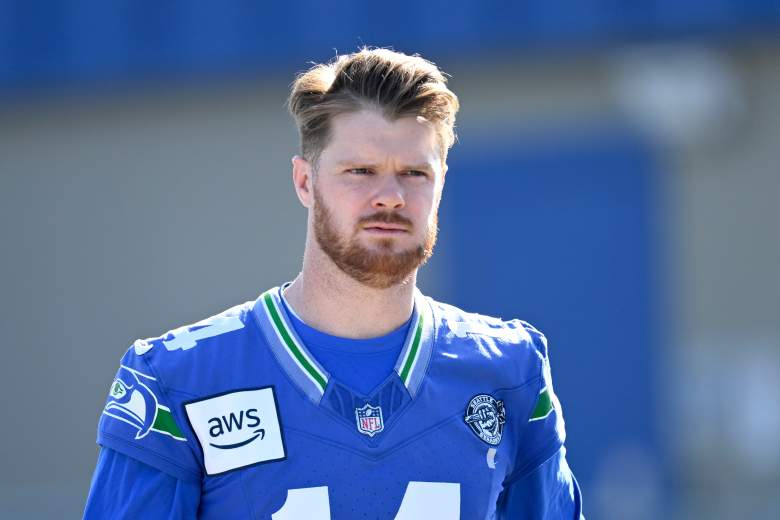
Sam Darnold knows what it feels like to be written off.
Before becoming the quarterback at the center of the Seattle Seahawks’ latest run, Darnold was a former No. 3 overall pick whose early years with the New York Jets became a case study in how quickly a young quarterback can go from franchise savior to cautionary tale.
That made Darnold’s recent appearance with Chris Long stand out. He did not just reflect on his own comeback. He gave a pointed answer about how social media, TV debate clips and outside criticism can affect young quarterbacks before they have fully developed.
“People are really fast to give up on them, especially in this social media culture,” Darnold told Long. “We live in a time where TikTok is king, and YouTube short clips of guys sitting on ‘Get Up’ or ‘First Take’ sharing opinions about a young quarterback can go viral. Sometimes that gets back to a young kid and affects them.”
For Darnold, the difference was not pretending he never heard the noise. It was having the right people around him when the criticism was at its loudest.
“For me, having great relationships really saved my career and my outlook on who I was as a player,” Darnold said.
Sam Darnold Says Support System Helped Him Survive Jets Struggles
Darnold’s Jets tenure did not become what either side envisioned when New York drafted him out of USC in 2018. He started early, took plenty of blame and eventually became part of the NFL’s familiar quarterback cycle: prized prospect, struggling starter, traded player, reclamation project.
But Darnold pushed back against the idea that those early failures told the entire story.
He praised Jets fans during the interview, calling them “so loyal” and saying home games remained loud even when the team was not winning. He also admitted that his own response to mistakes early in his career could become too heavy.
“There were some bad plays that I would make and it would just ruin me for a series or two,” Darnold said. “That’s something I’ve definitely learned from, and I’ve learned coping mechanisms to deal with things going wrong in a game.”
The most revealing part was how Darnold described the people closest to him. He said his high school friends can humble him after success, and remind him he is loved after failure.
“When I feel like I’m on top of the world after the Super Bowl, my buddies from high school are there to make a joke about how dumb I looked to bring me back down to real life,” Darnold said. “And when I eat shit kind of like I did in New York, I have my buddies to tell me they still love me.”
Darnold Credits Mindset Shift Before Seahawks Breakthrough
Darnold also described a mindset change that helped him stop letting mistakes swallow him.
Before his season in Minnesota, he met with a sports psychologist who told him he had spent years “hammering” away to build the foundation of his career. At that point, the psychologist told him, it was time to start “painting the house” and giving himself more credit.
“He said I needed to tell myself that I’m really good, that I deserve to be here, and that I need to start patting myself on the back a little bit more,” Darnold said. “That was the weird unlock for me, realizing that I do deserve to be here.”
That detail matters because Darnold’s Seattle rise is not just a simple change-of-scenery story. He also credited coaching stops along the way, including Kyle Shanahan in San Francisco, for helping him better understand how progressions change based on defensive coverages.
In other words, Darnold did not suddenly become a different quarterback. He accumulated better tools, better perspective and a better way to process failure.
Darnold’s Message Goes Beyond His Own Comeback
Darnold did not absolve young quarterbacks of responsibility. In fact, he said he is now a harsher critic when watching quarterbacks struggle because he better understands the answers that should exist against certain defensive looks.
But he also acknowledged that quarterback failure can involve coaching, receivers, communication and details fans do not always see.
That is what gives his comments weight. Darnold is not saying criticism is always unfair. He is saying the modern NFL can turn young quarterbacks into viral content before they have become finished players.
The Seahawks are now benefiting from the version of Darnold that came out the other side: more confident, less consumed by mistakes and more aware of what helped him last.
“I’ve played really good football in the league, albeit not as consistent as I would have liked, but mistakes are going to happen,” Darnold said. “Being super hard on myself is never going to leave my mindset, so telling myself that I’m a really good player has helped me build confidence and move on from mistakes throughout games and seasons.”
The NFL never ran out of opinions about Darnold. He just finally found enough support, coaching and self-belief to stop letting those opinions define him.
Erik C. Anderson is an award-winning sports journalist covering the NBA, NFL, MLB and trading card market for Heavy.com. His coverage focuses on breaking news, trade rumors, roster moves, player contracts and the stories driving national fan conversation. His work has appeared in The New York Times, The Associated Press, USA Today and ESPN. More about Erik C. Anderson
Seahawks QB Sam Darnold Sends Blunt Message on Viral QB Criticism