

Player appreciation in the National Football League (NFL) often extends far beyond what shows up on a stat sheet. While contracts are built on performance incentives and strict financial structures, there are moments when teams reward players even if specific benchmarks are not technically met.
This quiet culture of respect and relationship-building speaks to the human side of a league that is often defined by strict numbers and quantitative statistics. The Tampa Bay Buccaneers have set an example of this reciprocal and respectful culture towards their players. Here’s what to know.
The Case of Paying Performance-Based Bonuses Even When Benchmarks Go Unmet
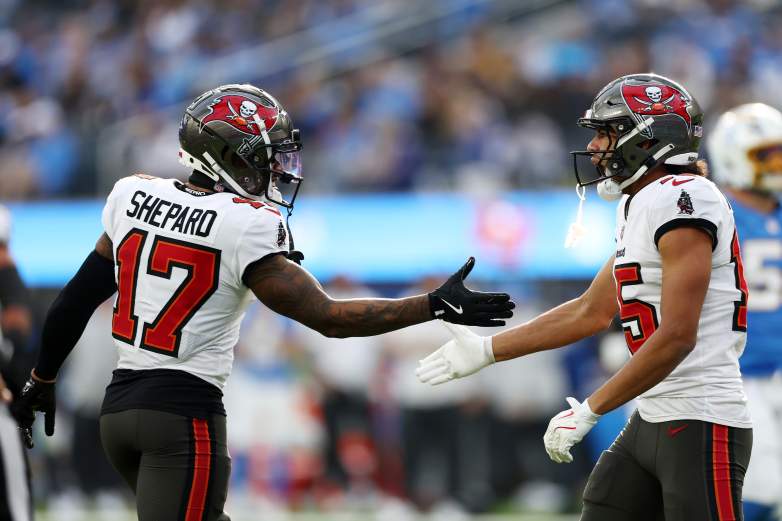
One way that NFL franchises can extend player appreciation initiatives is through taking novel and unexpected actions that surprise players with the team’s attitude of gratitude towards them. For example, it is practically unheard of for players who don’t meet the terms of performance bonuses to then receive them. That is why this action taken by the Tampa Bay Buccaneers is an example of player appreciation that other NFL franchises can follow to enhance veteran retention and player satisfaction both on and off the field.
When the Tampa Bay Buccaneers signed wide receiver Sterling Shepard, the move was viewed as a low-risk, incentive-heavy deal designed to add depth and veteran reliability to the offense. As part of his contract, Shepard had the opportunity to earn a $500,000 performance bonus tied to two statistical benchmarks.
Shepard’s bonus terms were designed as incentives to meet specific requirements totaling the half-million-dollar payout. The terms were to reach 400 receiving yards for $125,000 and then he’d receive another $125,000 if he increased his receiving yards to 500, and the same with catches – $125,000 for 40 catches with an additional incentive of $125,000 if Shepard could increase that number to 50 catches. But the WR wrapped up the season with only 371 yard and 39 yards, thus failing to earn his performance-based bonus. But the Bucs still gave Shepard the full $500,000 in a gesture of goodwill to honor the time, field efforts, and locker room leadership of the veteran player.
Football is Rarely as Simple as a Sheet of Statistics
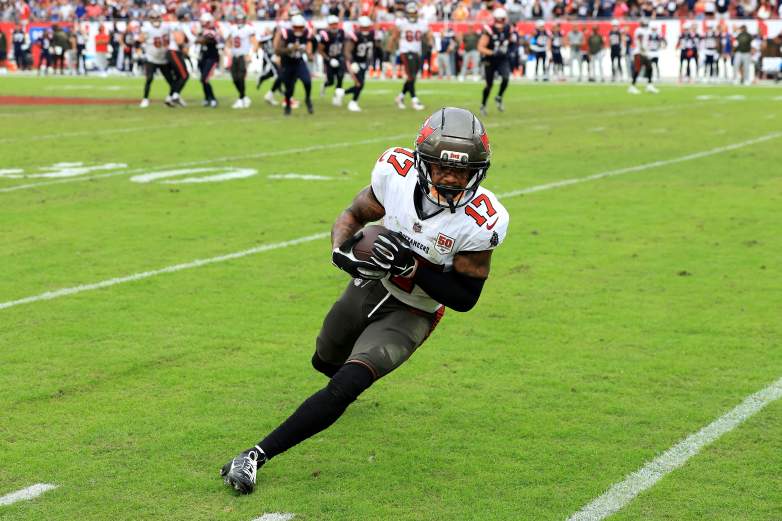
Like the case of Sterling Shepard’s performance bonus being paid out despite the WR failing to meet any of the requirements, football and life in the NFL is rarely as simple as a straightforward statistics list. Yes, incentive clauses are common in NFL contracts. The goals set forth in these performance-based clauses can financially protect teams while giving players specific goals to work towards throughout a season. But injuries happen, schemes change, quarterbacks switch directions, and game flow is often unpredictable – and these are all factors that can impact a player’s ability to meet specific quantitative incentive goals.
This is where player appreciation comes into the fold. Teams sometimes restructure contracts, add workout bonuses the following year to compensate, or provide new guarantees in shows of good faith. While the Collective Bargaining Agreement limits how clubs can directly pay missed incentives, front offices of franchises often think of creative – yet compliant – ways to reward players whose efforts have been outstanding but whose numbers failed to add up to those listed in their contractual incentive clauses.
Like Shepard, a veteran who falls just short of a yardage threshold due to injury or scheme changes, but who still provides critical leadership in the locker room and mentorship of younger players, may see the respect the team’s directors have for him reflected in the paying out of an unmet performance bonus. Ultimately, appreciation in the NFL unfolds in many ways – maybe through a payout, an endorsement from a head coach, or a contract renewal with increased terms to benefit the player – and there are examples of these acts of player appreciation throughout the league, not just in Tampa Bay.

Tampa Bay Bucs Paid a Player $500k in a Show of Team’s Appreciation. Should Other NFL Teams Follow Lead?