
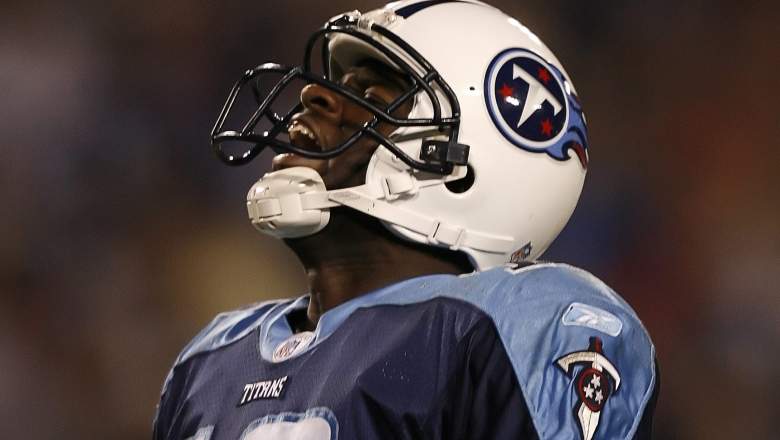
For nearly two decades, Vince Young’s NFL career has been summarized by what could have been.
The former Texas quarterback arrived in the NFL as one of the most celebrated college football players of his generation, became an immediate success with the Tennessee Titans and then watched his career unravel before he ever reached his 30th birthday. The highlights have been replayed endlessly, as have the low points.
Netflix released Untold: The Testimony of Vince Young on August 25, bringing Young’s story to the streaming service’s long-running sports documentary series.
Rather than focusing solely on his legendary run at Texas, the film digs into the complicated years that followed and gives Young a platform to revisit a period of his life that was often defined publicly by controversy.
It also raises a question that has followed Young since his final days in Tennessee: How did a quarterback with so much promise lose control of his NFL career so quickly?
Netflix Documentary Gives Young Control of His Story
Tennessee selected Young No. 3 overall in the 2006 NFL Draft, and Young responded by winning AP Offensive Rookie of the Year. He later made two Pro Bowls and showed enough flashes of his unique talent to make it seem possible that his success at Texas would translate to the NFL.
Young discusses the pressure that accompanied his arrival in Tennessee, the loss of veteran quarterback Steve McNair as a mentor and the deterioration of his relationship with head coach Jeff Fisher.
“I had just a few rules. The rules are pretty simple. So if you had a problem with that, then you had a problem with me.” Fisher said in the series.
Former teammates also appear, giving viewers a glimpse of how the situation looked from inside the Titans’ locker room.
What Happened Between Young and Fisher?
The feud between Young and Fisher developed over several seasons as disagreements over discipline, playing time and trust damaged the relationship between the Titans’ franchise quarterback and longtime head coach.
During the 2006 NFL Draft, Fisher had interest in Vanderbilt quarterback Jay Cutler, while Titans owner Bud Adams pushed for Young.
Young nevertheless delivered immediate results, helping Tennessee recover from an 0-5 start to finish 8-8. But disciplinary issues soon emerged.
Young was late for the team flight before a November 2006 game against Philadelphia, and Fisher later benched him for a 2007 preseason game after he violated a rule requiring players to stay at the team hotel.
The relationship took a more serious turn in September 2008. Young struggled and suffered a knee injury in Tennessee’s season opener against Jacksonville. The following day, concerns about Young’s well-being led the Titans to contact Nashville police when he couldn’t immediately be located.
“He [Vince] was located at a friend’s house, where we made contact with him,” the Titans said at the time. “He then came to the practice facility where it was determined that those initial concerns by his friends and family were unfounded and he returned home without incident.”
Young later took issue with how Fisher handled the episode, while Fisher maintained that the organization was concerned about its quarterback’s safety. The incident became a significant fracture in their relationship, and veteran Kerry Collins replaced Young as Tennessee’s starter.
Collins led the Titans to a 13-3 record in 2008, but Tennessee opened the following season 0-6. Adams pushed for Young to get another opportunity, and the quarterback responded by going 8-2 as the starter over the remainder of the 2009 season and earning his second Pro Bowl selection.
The breaking point came on November 21, 2010, against Washington. Young injured his thumb and was replaced by rookie Rusty Smith. Young wanted to return, but Fisher kept Smith in the game because he believed Young couldn’t adequately control the football.
According to CBS Sports, after Tennessee lost 19-16 in overtime, Young threw his jersey and shoulder pads into the stands and confronted Fisher before leaving the stadium. Fisher reportedly told Young not to walk out on his teammates, but Young left anyway.
The Titans decided after the season that Young would not return, concluding that the relationship between quarterback and coach could no longer work. Fisher’s tenure also ended shortly afterward when he and Tennessee parted ways in January 2011.
Young Sent Fisher an Apology Letter
Years after their relationship with the Titans ended, Young attempted to make amends with Fisher.
Young revealed in Untold: The Testimony of Vince Young that he sent his former coach an apology letter. He explained that he didn’t want to leave unresolved issues between them and wanted Fisher to forgive him for the way he handled parts of his tenure in Tennessee.
“I definitely wanted to apologize for the things that I did, letting him know about the frustration, a lot of different things that was going on in my life at the time, and want him to know that I really did appreciate him trying to make me become one of those type of leaders on the team, a successful quarterback,” Young said in 2013.
But Young never received a response to his apology.
Fisher reveals in the documentary that one reason he didn’t respond was surprisingly simple: Young had made a crucial mistake in the letter. He spelt Fisher’s name wrong.
“Yes, I got a letter from Vince,” Fisher said in 2018. “And I didn’t respond. My name was spelled wrong on the letter, the letter came from the University of Texas, and I had no way of knowing if it was [really] from him. It came from the athletic department. But my name was spelled incorrectly.
“I still have it. But I didn’t know if it was from him so I felt no need to respond.”
Fans Divided Over Young Documentary
Reaction to Untold: The Testimony of Vince Young has renewed the debate over how much responsibility Young deserves for the way his NFL career unfolded.
Some viewers came away with greater sympathy for Young after hearing about his upbringing, the expectations he carried into the NFL and his fractured relationship with Fisher. Fisher’s comments in the documentary, including his explanation for never responding to Young’s apology letter, have also generated criticism.
Others believe the documentary doesn’t challenge Young enough about his own decisions. While the film addresses his financial problems and difficulties after football, critics have pointed to other parts of his story that receive less attention, including reported spending habits and problems during his post-playing career at the University of Texas.
That leaves viewers with the same complicated question that has followed Young for years. Fisher can be criticized for his handling of the quarterback while Young can also be held responsible for the decisions that contributed to his downfall.
Netflix’s Vince Young Documentary Reveals New Details on Titans Fallout