

The family of NHL legend Claude Lemieux has taken an extraordinary step following his death, donating his brain to researchers in hopes that the findings may help future generations of athletes.
The decision adds a powerful new dimension to Lemieux’s legacy, transforming a tragedy into an opportunity to advance understanding of the long-term effects of head trauma in sports.
Lemieux’s daughter, Claudia Lemieux Bishop, released the statement Saturday, according to The Guardian. The family granted the Boston University CTE Center permission to publish any findings under his name.
“Claude dedicated his post-playing career to helping the next generation,” the family said. “By allowing his name to be connected to this research, we hope his life can contribute to greater understanding, more honest conversations and better protection for athletes and families in the years ahead.”
Claude Lemieux Brain Donation Announced by His Family
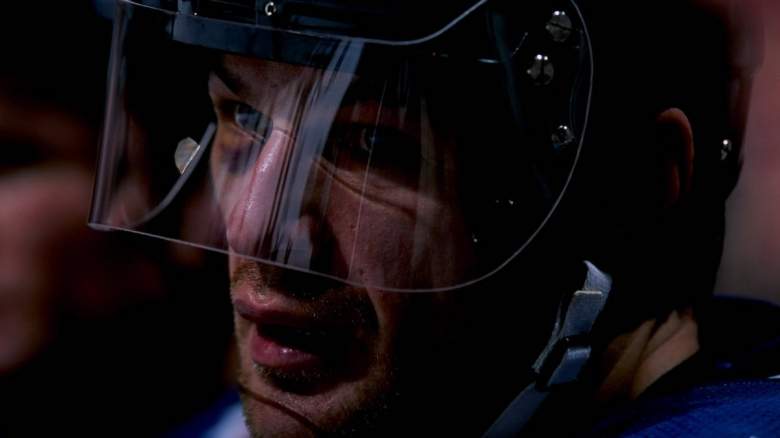
Lemieux was found dead early Thursday inside the warehouse of Andros Home, his family’s furniture business in Lake Park, Florida. The Palm Beach County Sheriff’s Office confirmed suicide as the manner of death, as first reported by The New York Post, which also reported that Lemieux’s cause of death resulted from hanging.
One of hockey’s most punishing competitors, Lemieux played 1,449 games across six franchises from 1983 to 2009. He won the Stanley Cup four times — Montreal in 1986, New Jersey in 1995 and 2000, Colorado in 1996 — and earned the Conn Smythe Trophy as playoff MVP in 1995. Commissioner Gary Bettman called him “one of the greatest big-game players in hockey history,” according to The Guardian. Three days before his death, Lemieux carried the torch before Game 3 of the Eastern Conference Final at Bell Centre, drawing a standing ovation.
Lemieux Donation and Research on CTE and Suicide
CTE — chronic traumatic encephalopathy — is a degenerative condition caused by repeated head trauma. Symptoms can include memory loss, aggression, mood swings, and depression. It can only be confirmed postmortem. No CTE finding exists for Lemieux. His family stated that none should be assumed.
But research connecting CTE and suicide has expanded considerably in recent years. In 2023, Boston University scientists found that roughly 41 percent of 152 athletes under 30 who died by suicide had CTE, according to Psychology Today. The study covered football, hockey, soccer, and wrestling. Scientists note that the correlation does not establish causation.
Among athletes who died by suicide and were later found at autopsy to have had CTE:
| Death year | Athlete | Sport | CTE finding |
|---|---|---|---|
| 2010 | Unnamed professional American contact-sport athletes | American football / contact sports | Case series reported suicides and parasuicides in five athletes; postmortem exams found CTE. |
| 2011 | Dave Duerson | Football | Researchers reported “moderately advanced” brain damage consistent with CTE; widely cited as CTE at autopsy. |
| 2012 | Ray Easterling | Football | Autopsy later found a degenerative brain disease consistent with CTE. |
| 2012 | Junior Seau | Football | Postmortem study found CTE in his brain. |
| 2012 | Jovan Belcher | Football | Autopsy reportedly found signs of CTE. |
| 2017 | Aaron Hernandez | Football | Postmortem exam found severe CTE. |
| 2018 | Tyler Hilinski | College football | Autopsy findings showed Stage 1 CTE. |
The Lemieux family’s decision allows researchers to publicly reveal the results of his brain examination.
If you or someone you know is struggling with suicidal thoughts or a mental health crisis, free and confidential support is available. Call or text 988, or visit 988lifeline.org.
Claude Lemieux Cause of Death: Family Donates NHL Great’s Brain to Research