

Aston Villa’s season finally has a pulse. After a painful, goalless start to the Premier League campaign that left them near the bottom of the table, Unai Emery’s rebuilt side — last season’s Europa League champions — produced a first-half masterclass in Belgium to beat Club Brugge 3-2 and open their Champions League account with three points.
The Europa League winners had looked short of cohesion and confidence after heavy summer departures. Three league games without a goal, including a 4-0 thrashing at Brighton, raised familiar questions about whether the new-look squad could gel quickly enough. Tuesday night in Bruges provided the clearest answer yet.
How Aston Villa Ended Their Scoring Drought Against Club Brugge
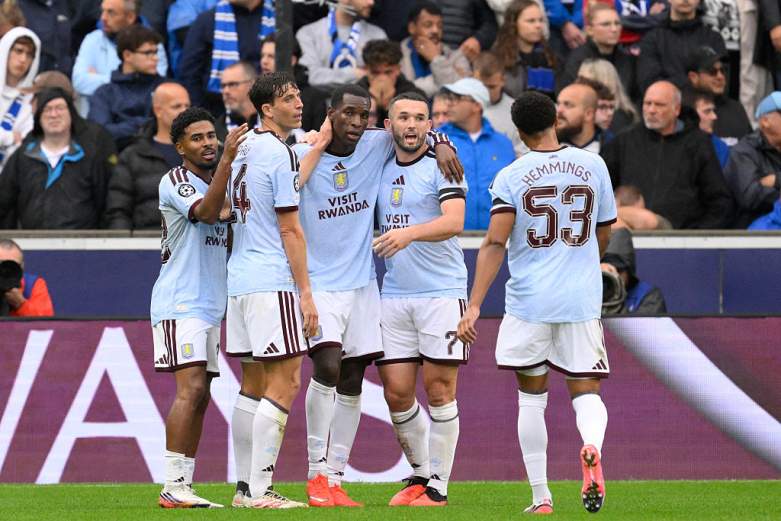
Villa arrived at the Jan Breydel Stadium still searching for their first goal of the season. They found three before halftime. John McGinn opened the scoring in the 11th minute with a first-time strike curled into the bottom-left corner after Pau Torres drove forward from defense. Hugo Vetlesen equalized eight minutes later, but Emiliano Buendía restored the lead just three minutes after that. Nicolas Jackson then made it 3-1 in the 42nd minute, scoring his first goal for the club since joining from Chelsea.
The first-half performance was everything the Premier League displays had lacked — intensity, clinical finishing, and midfield control. Villa finished the match with 21 shots to Brugge’s 14, a stark contrast to a side that had managed just one shot on target across their opening three scoreless league games.
What Changed for Unai Emery’s New-Look Side
The summer overhaul left Villa with a younger, less familiar squad, and integrating multiple new signings takes time. Yet the Champions League stage appeared to free the players up. McGinn’s opener carried extra weight — it made him Villa’s all-time leading scorer in UEFA competitions, moving him past former striker Ollie Watkins, and because it came in one of the tournament’s two earliest kickoffs, it officially made him the first goalscorer of the entire 2026-27 Champions League season. It was also Villa’s first time scoring three first-half goals away from home in European competition, something they’d previously only managed twice at Villa Park. Jackson’s movement and finishing, meanwhile, offered a real glimpse of the focal point Villa’s attack had been missing.
A Nervy Finish, But a Result That Held
Emery’s side also showed real resilience. Club Brugge controlled a majority of possession in the second half and pulled a goal back through a Tresoldi penalty in the 61st minute, but Villa dug in and refused to collapse, with goalkeeper Zion Suzuki making important saves down the stretch. That ability to protect a lead under pressure may prove just as valuable as the first-half goals themselves — historically, Villa have now won all nine Champions League and European Cup matches in which they’ve led at halftime, one of the best such records in the competition’s history.
Why This Result Matters Beyond the Three Points
A first win of the season, especially an away victory in the Champions League, carries real psychological weight. The Premier League fixtures ahead — starting with Nottingham Forest this weekend — suddenly look more manageable with goals on the board and confidence restored. Emery has repeatedly asked for patience during this rebuild, and on this evidence, the foundations are starting to settle.
There will still be difficult nights. The second-half vulnerability against Brugge was a reminder that defensive structure remains a work in progress. But for one evening in Belgium, Villa looked like a side capable of competing on two fronts again. The goal drought is over. The season, finally, is underway.
Aston Villa End Goal Drought with Thrilling Champions League Win at Club Brugge