
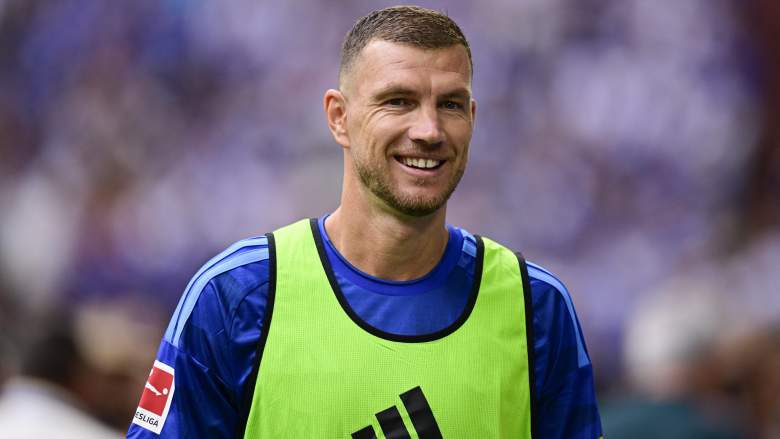
Edin Džeko will walk out for Bosnia and Herzegovina one final time tonight, and there is a good chance the moment will mean more to his country than anything that happens on the scoreboard. The captain, record goalscorer and eternal “Dijamant” — Diamond — will lead Bosnia against Sweden at Bilino Polje in Zenica in the UEFA Nations League, bringing nearly two decades in the blue-and-yellow shirt to an end. In the emotional world of international soccer, few farewells carry the weight of Džeko’s final night.
At 40, Džeko isn’t simply another veteran saying goodbye. He is the player who has been at the center of Bosnia’s greatest football moments, from its first World Cup qualification to its return to the tournament this summer. When he walks onto the field for his 152nd and final appearance, he will leave the national team holding virtually every major record available to him — 73 goals and 151 appearances before kickoff — but his importance to Bosnia goes well beyond statistics.
Edin Dzeko Leaves Bosnia as Its Record-Breaker
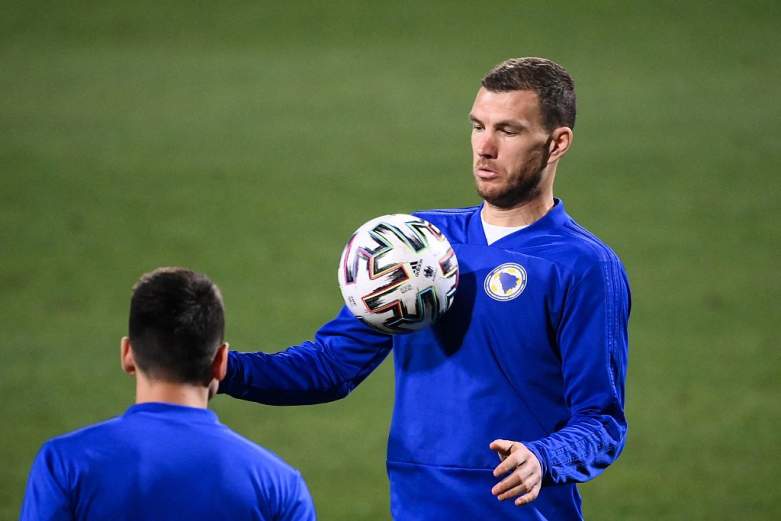
Džeko made his Bosnia debut against Turkey in June 2007 and scored in his first appearance. Nineteen years later, he enters his final match as the country’s most-capped player and its all-time leading scorer, with 73 goals. UEFA notes that those 73 goals also place him seventh among Europe’s all-time international scorers, an extraordinary achievement for a player representing a country that only made its World Cup debut in 2014.
That 2014 qualification remains one of the defining moments of his career. Džeko helped Bosnia reach the World Cup for the first time and then captained the country at its second appearance in 2026. The road between those tournaments included plenty of frustration and disappointment, but Džeko was the constant through it all. Even as his club career took him from Željezničar and Wolfsburg to Manchester City, Roma, Inter Milan, Fenerbahçe, Fiorentina and now Schalke, he continued to answer the call from Bosnia.
Sarajevo Has Already Started Saying Goodbye
The farewell began before Džeko even reached Zenica. Sarajevo has put his No. 11 at the center of its own tribute, with a giant Bosnia and Herzegovina jersey hung above the famous Eternal Flame. The shirt carries a simple message — “Hvala, Dijamante!” — and the date of his final international match. It is a fitting tribute to a player who was born in Sarajevo and became one of the city’s most recognizable sporting figures.
The emotion will continue inside Bilino Polje. Fans are expected to give Džeko a special ovation in the 11th minute, honoring the shirt number he has worn for so much of his international career. The Bosnian Football Association has also organized a farewell after the game, making clear that this is about more than simply marking the end of another international career.
The Goals Were Only Part of the Dzeko Story
Džeko’s legacy is impossible to separate from the goals, but that is only part of what made him so important to Bosnia. He became the player younger teammates could look up to and the figure supporters could identify with through victories, defeats, qualification campaigns and years when the national team fell frustratingly short. His career also gave a relatively young football nation a player capable of standing alongside the biggest names in Europe without ever losing his connection to home.
That connection was obvious when Džeko announced his retirement. He described representing Bosnia as the greatest pride of his career and recalled carrying the dream of playing for his country from childhood. He also pointed back to the 2014 World Cup qualification and this year’s victory over Italy in Zenica, which secured Bosnia’s return to the World Cup. After reaching 40 while still playing for his country, Džeko said he felt the time had come to step aside.
One Last Game for the Bosnian Diamond
Tonight will not be an exhibition. Bosnia and Herzegovina still has a competitive Nations League match to play, and Sweden arrives as the group leader after winning its opening two games. But even with points at stake, it will be almost impossible for the occasion not to feel bigger than the result. Džeko’s teammates know exactly what the night represents, with forward Esmir Bajraktarević describing him as an idol from his childhood.
Eventually, the final whistle will come and Džeko will take off the Bosnia shirt for the last time. The goals will remain in the record books, the World Cup memories will remain in the country’s history and No. 11 will always carry a little more meaning in Bosnia than it did before him. Players will come after Džeko, and some may eventually challenge his records, but replacing what he represented is another matter entirely. The Diamond is finally stepping away, and Bosnia is going to feel the loss.
Edin Džeko’s Final Bow: Bosnia Says Goodbye to Its Greatest