
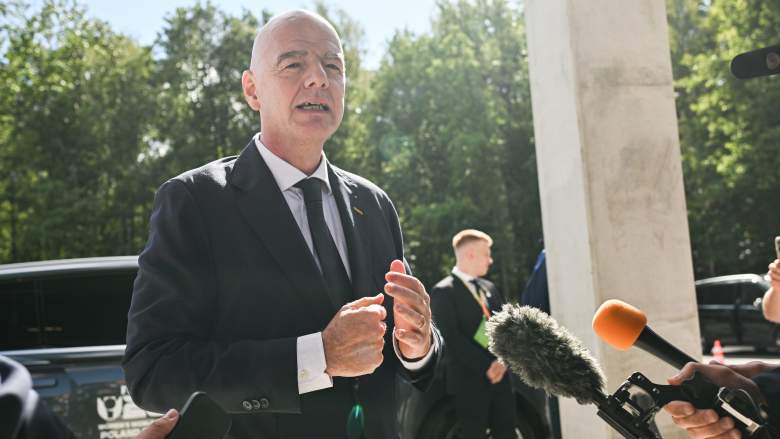
There is something almost too perfect about this FIFA story. Gianni Infantino, the Swiss-born president who promised to help clean up football’s governing body after the chaotic Sepp Blatter era, has now lost the backing of the football association from his own country. The world of soccer is rarely short on irony, but this one is difficult to ignore. The Infantino Swiss FA FIFA reform story is about much more than one endorsement disappearing. It raises an uncomfortable question: after 10 years in charge, how different is Infantino’s FIFA from the one he promised to leave behind?
Infantino’s Swiss FA Rejection Changes the Picture
The Swiss Football Association has withdrawn its support for Infantino’s bid to continue representing Switzerland within FIFA’s leadership structure, a decision that carries considerably more symbolism than its immediate practical effect. Infantino remains FIFA president and is not suddenly facing an election challenge because the Swiss FA has changed its position. But this is the association from the country where he was born and where his career in football administration began, making the rejection particularly awkward for a president who has spent years presenting FIFA as a fundamentally changed organization.
The timing also matters. Infantino has spent much of his presidency emphasizing reforms designed to make FIFA more transparent and accountable after the scandals that engulfed the organization under Blatter. His administration introduced new governance structures and limits on some senior officials, while FIFA has expanded its development programs and global reach. Those changes are documented. What remains contested is whether they have produced the kind of cultural and institutional change Infantino promised. That debate becomes harder to dismiss when his own national association decides it no longer wants to publicly back him.
Remember When Infantino Was the Reform Guy?
When Infantino arrived at the top of FIFA in 2016, the contrast with Blatter was central to the story. Blatter had been president for nearly two decades and left amid the enormous corruption scandal that resulted in criminal investigations and a wave of arrests involving football officials. Infantino, by comparison, arrived as a younger UEFA administrator promising a new era, and his election was widely presented as an opportunity to restore FIFA’s credibility.
Ten years later, the comparison has not disappeared — even though FIFA under Infantino looks very different in several important respects. The organization is considerably more aggressive commercially, the World Cup has expanded to 48 teams, and FIFA has pursued major new competitions and partnerships. Infantino has also built relationships across a much broader political and sporting landscape. Supporters of his administration point to those developments as evidence of a stronger, more global FIFA. Critics, however, argue that the concentration of influence around the president has grown even as the language of reform remains prominent. Those are very different interpretations of the same era, and the Swiss FA’s decision gives the criticism fresh attention.
Infantino’s FIFA Is Bigger Than Blatter’s — But Is It Better?
This is where the story gets more interesting than simply saying Infantino has lost an endorsement. Blatter’s FIFA became synonymous with a system that was eventually exposed by law-enforcement investigations and corruption charges involving numerous football officials. Infantino did not create that system, and his administration has made genuine structural changes. But changing the rules and changing the way an organization exercises power are not necessarily the same thing.
That distinction is at the heart of the criticism surrounding Infantino. FIFA now operates on a larger financial and global scale, with more money flowing through the organization and a much bigger development footprint. At the same time, critics have questioned the president’s influence over FIFA’s committees, relationships with national associations and the organization’s increasingly centralized decision-making. Those criticisms should not be treated as proof that Infantino has simply recreated the Blatter era. But they do explain why the Blatter comparison keeps returning whenever FIFA faces another governance controversy.
The Blatter Comparison Isn’t Going Away
Infantino would obviously prefer his legacy to be measured against what FIFA was before he took office rather than against every controversy that has followed. There is a reasonable case for pointing to the changes made since 2016 and saying FIFA is not the same organization it was under Blatter. But that does not settle the larger question of whether the reform promised by Infantino has gone far enough.
And that is why the Swiss FA decision is potentially more damaging symbolically than it is operationally. It gives Infantino’s critics something they have been arguing for years: that the story of FIFA corruption did not end when Blatter left the building. Ten years into the Infantino era, the argument over what changed — and what did not — is still very much alive. The fact that Switzerland has now stepped away from Infantino only makes that argument considerably harder to ignore.
Infantino’s Swiss Rejection Is a Brutal Blow to His FIFA Reform Story