
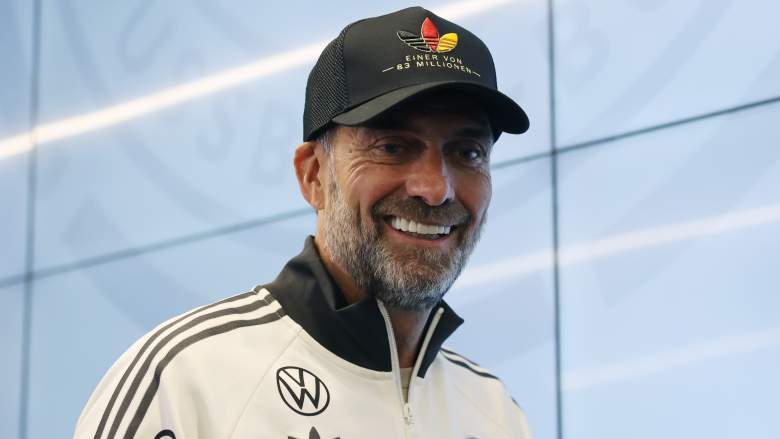
Jürgen Klopp has stunned Germany by naming 44 players in two squads for four Nations League games, with stars and newcomers sharing the spotlight. Rather than rely on a traditional group for the entire international window, Klopp has divided his players into two separate squads, turning his first four matches as Germany coach into an enormous evaluation period.
The first 24-man group will face the Netherlands in Amsterdam on September 24 and Greece in Augsburg three days later. Twenty more players then join for the meetings with Serbia in Munich on October 1 and Greece in Thessaloniki on October 4. Only goalkeeper Finn Dahmen appears in both groups.
Klopp Opens the Door to 16 Potential Debutants
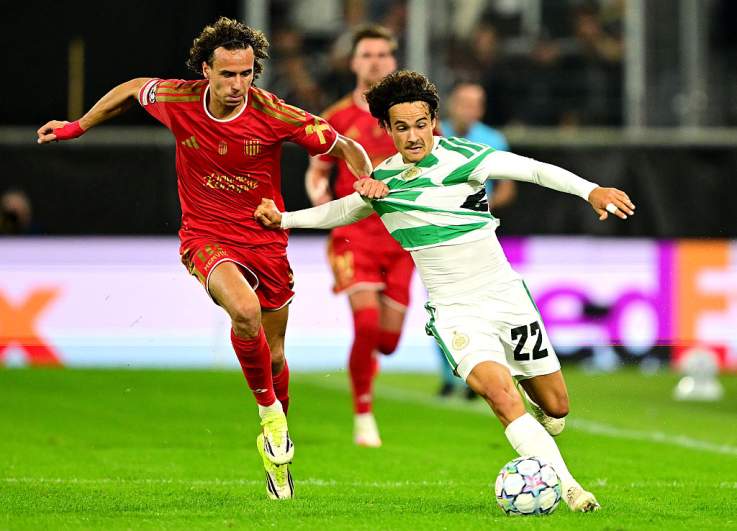
The biggest surprise is not simply the size of the squad, but how many new faces are inside it. Klopp has selected 16 uncapped players, including Celtic midfielder Mika Baur, Elversberg’s Felix Keidel, Stuttgart defender Finn Jeltsch and Eintracht Frankfurt forward Younes Ebnoutalib.
Several other young players from the Bundesliga have also been handed their first opportunity, including Freiburg trio Max Rosenfelder, Philipp Treu and Derry Scherhant, along with Yannik Engelhardt and Hoffenheim winger Bambasé Conté. Klopp made clear that the selections are designed to give him as wide a view of Germany’s talent pool as possible rather than simply maintaining the old pecking order.
The move also gives established players some very different surroundings. Marc-André ter Stegen returns as Germany’s first-choice goalkeeper following Neuer’s retirement from international soccer, while Joshua Kimmich remains captain and will move back into central midfield under Klopp. Jamal Musiala, Kai Havertz, Nico Schlotterbeck and Serge Gnabry are among the established names in the first group, while Florian Wirtz and Karim Adeyemi are in the second.
Undav and Sané Among Major Omissions
Klopp’s first selection also contains some eye-catching omissions. Deniz Undav, who was Germany’s leading scorer at the 2026 World Cup, is left out after Klopp said the striker had not yet found his rhythm this season. Leroy Sané is also absent, with Klopp explaining that he has not yet settled into the new campaign and that the door remains open for a future recall.
Those decisions underline the freedom Klopp has given himself with such a huge initial pool. The coach has repeatedly stressed that there is no permanent hierarchy and that the players who perform well now can force their way into future squads.
Germany’s Klopp Era Starts With Four Games
The experiment will be tested almost immediately. Germany travels to Amsterdam to meet the Netherlands on September 24, hosts Greece in Augsburg on September 27, welcomes Serbia to Munich on October 1 and then closes the window with another Greece match in Thessaloniki on October 4.
Klopp said the unusual structure is designed to let him see as many players as possible while also managing recovery across four matches in an unusually busy international window. He insists the two groups should not be viewed as an A team and a B team, but the arrangement guarantees that Germany’s new coach will have an enormous amount of information by the time the window ends.
For a manager known for doing things his own way, it is quite an opening statement. Klopp has barely begun his Germany tenure, and already 44 players have been invited along for the ride.
Klopp Stuns Germany With A Massive 44-Player Nations League Experiment