
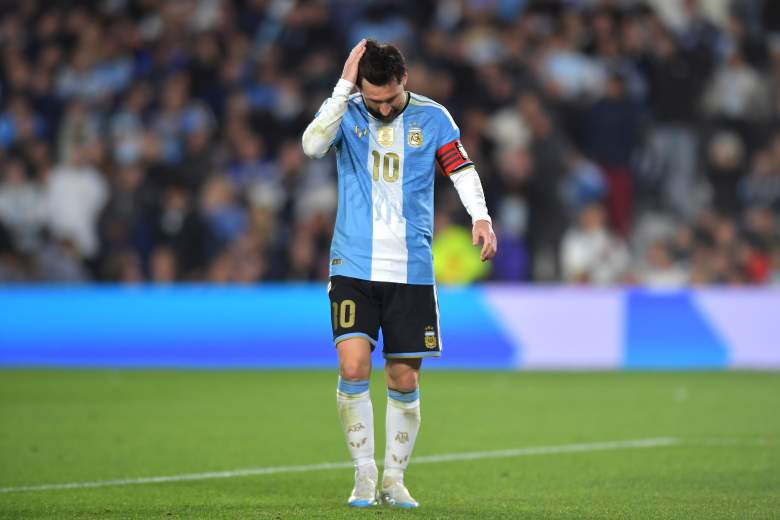
On Tuesday night, Lionel Messi officially closed the most important chapter of his international career with Argentina. In his 208th and final appearance in the Albiceleste jersey, the captain led his team to a 3-0 victory against Benin at the Monumental Stadium, converting a penalty and providing two assists.
At 39, after 21 years with the national team, 126 goals, two Copa América titles, and, most importantly, a World Cup victory in Qatar in 2022, the number 10 has definitively left the international stage.
A departure that is undoubtedly historic from a sporting perspective, but one that also opens a much more delicate period economically for Argentine football. Because behind the player and the immense public emotion lies a much colder reality.
For years, Lionel Messi has been one of the main drivers of the Argentine national team’s commercial appeal worldwide, and even of the country’s economy. This final evening at the Monumental Stadium perfectly illustrated the economic power of the Messi phenomenon.
The 85,000 tickets available for the match sold out quickly despite prices that were particularly high for the Argentine market, with some seats reaching 480,000 pesos, or more than 280 euros.
Even before the match, Forbes Argentina estimated that this single farewell evening could generate nearly $13 million in ticket sales. Demand was so high that a significant parallel market also developed around the tickets, while Argentine television recorded exceptional ratings.
The match, broadcast by Telefe, reached a peak rating of 36 points, and more than 2.59 million people watched the game on free-to-air television. In other words, even a simple friendly match against Benin became a true economic and media event because of Messi. This is precisely the phenomenon Argentina will have to learn to mitigate.
Argentina Braces for Economic Fallout as Lionel Messi Era Ends
The first danger directly concerns the AFA, which has become a veritable multinational football corporation over the years thanks to the Albiceleste’s appeal. In 2017, the Argentine governing body had only six brands associated with its national team.
It now boasts more than 100, with partnerships spread across the United States, Europe, Asia, and the Middle East. The Times even mentions 120 sponsors and approximately $150 million in revenue, whereas the AFA was close to bankruptcy when Leandro Petersen took over its commercial development.
For its part, iProfessional indicates that advertising and marketing now account for more than 50% of the association’s revenue, with around 120 sponsors worldwide. The dynamics are particularly significant, and Messi is obviously not the sole reason for this commercial explosion, as Argentina’s titles, the AFA’s international strategy, and brand building have also played a major role.
But Leandro Petersen recently acknowledged that Messi had been an “extraordinary accelerator” of the AFA brand’s development and had enabled it to reach markets much more quickly where Argentina previously had a limited presence. The international retirement of the eight-time Ballon d’Or winner is likely to have repercussions far beyond just the AFA’s finances.
Argentine broadcasters will lose a formidable audience driver, sponsors will still have to pay for exposure even though its most prominent global figure will no longer be on the pitch, and the entire international match economy could be affected.
Ticketing, hospitality, merchandise, jerseys, advertising campaigns, digital content, social media, commercial rights, and the organization of matches abroad are all sectors that benefited from the number 10’s exceptional appeal.
Inter Miami indirectly illustrates this power: since Messi’s arrival in Florida, the club’s value has increased from approximately $585 million in 2022 to $1.45 billion in 2026, while its revenues reached approximately $200 million in the last fiscal year Sportico analyzed.
The Wall Street Journal also describes a Messi effect on tourism, hospitality, commerce, and real estate in the state. It would obviously be impossible to apply these figures directly to Argentina, but they show the player’s capacity to generate economic activity far beyond his salary alone.
Argentine football can, however, take comfort in one thing: the AFA has already amassed considerable financial power thanks to the golden age of the Messi generation. Since 2019, the association has reportedly amassed approximately $121 million in competition-related bonuses alone, according to AS.
This sum includes the $8 million earned after finishing third at the 2019 Copa América, the $10 million from the 2021 Copa América, the $52 million linked to the 2022 World Cup victory (with $42 million paid by FIFA and $10 million by CONMEBOL), the $16 million from the 2024 Copa América, and another $33 million for finishing second at the 2026 World Cup.
These revenues are not solely attributable to Messi, as the team’s overall performance made them possible. However, they illustrate the economic value of this exceptional period. The challenge will be to maintain the commercial power accumulated during this era and to sustain it without its principal ambassador.
The AFA still has over 100 partners, an international commercial presence, and a brand that has become extremely powerful. It will have to convince sponsors, broadcasters, fans, and foreign markets that Argentina can keep generating tens, or even potentially hundreds, of millions of dollars without its number 10.
The loss likely won’t be an immediate cash payment, but rather the gradual disappearance of a Messi premium whose true value could be measured over future contracts, matches, and major tournaments.
Lionel Messi Exit Leaves Argentina Facing Economic Reality