
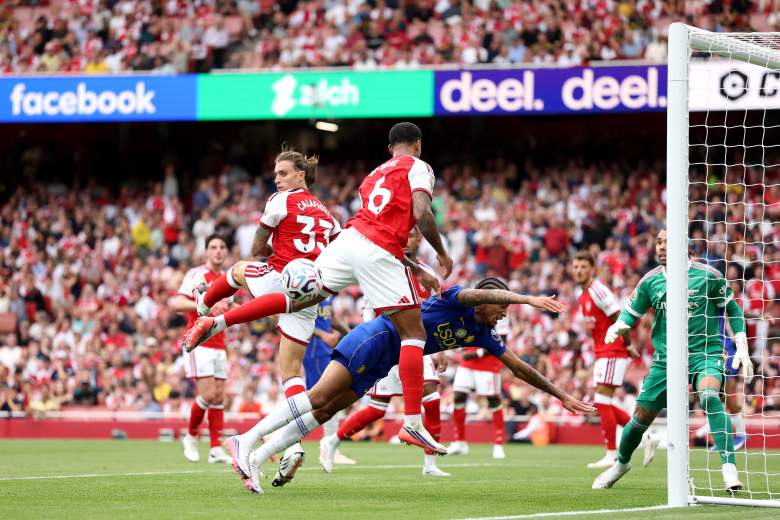
Arsenal hosted Chelsea this Sunday, Sept. 6, on Matchday 3 of the 2026-27 Premier League season. The match was not without controversy, as an incident involving the Blues’ goalkeeper, Emiliano ‘Dibu’ Martinez, quickly went viral on social media after he received a strong kick from Gunners center-back Gabriel just five minutes into the match.
The incident sparked controversy and was posted by a Liverpool fan account on Twitter (X). Among the comments, some questioned how the challenge could have gone without a red card or even a yellow card.
Some Tottenham fans even commented ironically that if it had been Cristian Romero, who, by the way, has already left for Atletico de Madrid, it would have been a straight red.
However, there were also other fans who believe that Gabriel touches the ball just before his foot makes contact with Martinez’s face, which would rule out any possibility of a red card or a booking. The incident went unnoticed and was not reviewed by VAR.
At the time of the incident, Arsenal was trailing 1-0, as Morgan Rogers had quickly put Chelsea ahead in the second minute. In the 25th minute, Kai Havertz equalized, while in the 50th minute, Martin Odegaard put the Gunners ahead. Arsenal won the match.
Why Arsenal defender Gabriel’s Challenge on Dibu Martinez Wasn’t a Red Card
According to IFAB’s Law 12, touching the ball before making contact with an opponent does not exempt a player from committing a foul. In other words, if the officials had considered Gabriel’s kick on Martinez to be a reckless challenge or one involving excessive force, it would have been punishable regardless of whether the player touched the ball first.
Regarding the use of VAR, official protocol allows it to intervene only if officials interpret the incident as a possible red card. If the referee saw a foul but interpreted it as not worthy of a sending-off, VAR cannot intervene. That would explain why the incident was not checked. However, it should also be noted that it was not even considered a yellow-card offense or a foul in the first place.
So, there you have it. It ultimately depends on each person’s interpretation as to whether it should be considered a foul, but the controversy was generated, and fans on social media will always have their say.
Arsenal Hit With Backlash After Chelsea Refereeing Controversy