

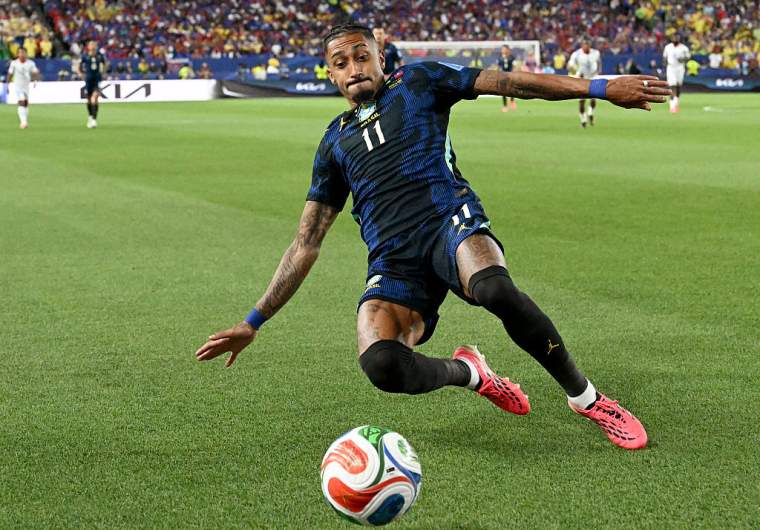
Raphinha is about to embark on one of the most punishing international schedules any elite player will face this season. The Barcelona forward is set to travel roughly 36,000 kilometers (22,400 miles), almost the distance around the Earth, during the current FIFA window as Brazil play friendlies in Australia and India.
An Extraordinary Itinerary
Brazil’s schedule, set under new head coach Carlo Ancelotti in the team’s first cycle since a disappointing Round-of-16 World Cup exit to Norway, takes the squad to Townsville, Australia on September 25, Brisbane on September 29, and then Kolkata, India on October 3. For Raphinha, the journey begins with a long-haul flight from Barcelona to Australia, includes internal travel between the two Australian venues, continues with another major leg to India, and ends with the return trip to Catalonia. Even using the most direct great-circle distances, the total exceeds 36,000 km. Actual commercial or charter routing will only add more hours in the air and further disruption to his body clock.
Why Barcelona Are Concerned
The timing could hardly be worse for the Catalan club. Raphinha has been their standout performer this season, with nine goals and three assists in just seven La Liga matches, a run that includes a hat trick against Racing Santander and braces against Elche and Rayo Vallecano, plus a brace in Barcelona’s 5-1 Champions League opening win over Feyenoord. He’s overtaken back-to-back Pichichi winner Kylian Mbappé in the pichichi trophy race and hasn’t gone a single match this season without a goal contribution. His form has been the single biggest reason Barcelona sit top of La Liga with a perfect record.
Yet the Brazilian’s recent history with the national team raises very real red flags, not hypothetical ones. Raphinha’s right hamstring troubled him repeatedly through the 2025-26 season: a significant strain kept him out roughly 58 days and 13 games between late September and mid-November 2025, followed by shorter muscular issues in January and February, before a major recurrence in March while on international duty against France in the Boston area. Barcelona estimated a five-week recovery for that one, and the timing was brutal — it cost him a Clásico appearance, the first leg of Barcelona’s Champions League quarterfinal against Atlético Madrid, and a Copa del Rey semifinal leg, all in the same stretch. The pattern continued at the World Cup itself: Raphinha started Brazil’s opening matches, then suffered another right hamstring injury during the group game against Haiti and was ruled out for the rest of the tournament, including the knockout rounds. Long-haul travel across multiple time zones is known to increase injury risk, particularly for explosive, high-intensity players, and Barcelona’s medical staff have every reason to be watching this trip closely.
The Broader Cost of International Football
This isn’t simply a story about one player’s frequent-flyer miles. It highlights a growing tension in the modern game. Clubs invest heavily in managing player workloads, recovery, and conditioning, only to watch those carefully calibrated plans unravel during international windows that prioritize commercial friendlies over sporting necessity. Australia and India are not exactly top-tier opposition, and Ancelotti has been candid that these matches are partly about giving young players a look. The competitive value is limited; the physical cost is not, and Raphinha’s own recent history is the clearest possible illustration of that gap.
For a player operating at peak output, the combination of jet lag, disrupted sleep, training sessions after long flights, and three matches in quick succession represents a genuine threat to continuity, not a theoretical one. Barcelona will hope Raphinha returns intact. His own medical file suggests they have real reason to worry.
A Star Being Stretched Thin
Raphinha’s importance to Hansi Flick’s side can’t be overstated. He’s filled the void left by departing forwards and become the focal point of the attack. Every minute he spends recovering from this trip is a minute Barcelona can’t fully rely on their most in-form player.
The Brazilian will no doubt give everything for his country, and that commitment is admirable. But the scale of this particular journey, more than 36,000 kilometers for three friendlies, feels increasingly difficult to justify in an era when player welfare is supposed to matter, and for a player with this specific injury history in particular. Barcelona will be counting the days until he lands safely back in Spain.
Raphinha’s 36,000km Odyssey: Barcelona’s Star Faces Brutal International Break