
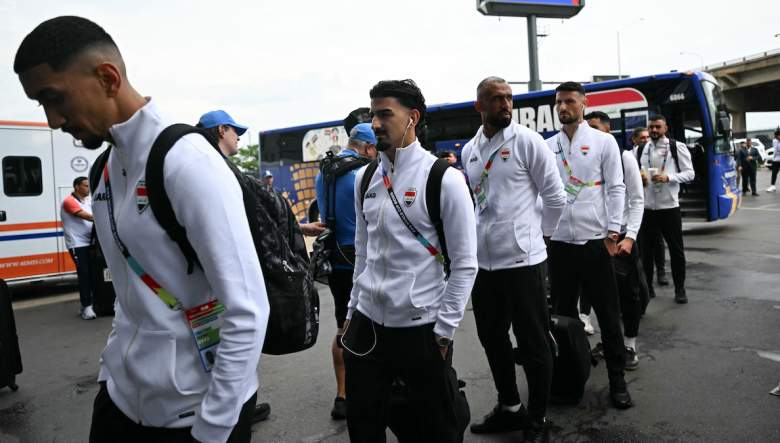
Iraq arrived at the 2026 FIFA World Cup with a talented core of emerging stars and experienced veterans, led by forward Aymen Hussein, midfielder Zidane Iqbal and winger Ali Jasim.
Making their first World Cup appearance in four decades, the Lions of Mesopotamia are relying on a blend of European-based talent and proven international performers to compete on soccer’s biggest stage.
The squad qualified through a grueling intercontinental playoff, defeating Bolivia in the final, a result built almost entirely on the contributions of three players who have become the spine of the national team’s attack and midfield and, ultimately, the reason Iraq is in this tournament at all.
Aymen Hussein: Iraq’s Goal Machine

The 30-year-old striker is Iraq’s best weapon and the qualifying numbers back that up without argument. Hussein finished Asian qualifying as Iraq’s leading scorer with eight goals, then delivered the moment that mattered most, the decisive winner in the intercontinental playoff final against Bolivia that sent the Lions of Mesopotamia to North America.
It is exactly the kind of clutch production that has defined his tenure with the national program. A mobile, clinical forward with sharp positional instincts, Hussein does not need a high volume of touches to make his presence felt. He finds space, he finishes, and he tends to do it when the stakes are at their highest.
FIFA’s tournament preview highlighted Hussein as a key figure in the playoff run, framing him alongside Iraq’s other standout contributors. Iraq’s offense runs through him.
Ali Al-Hamadi: Iraq’s Premier League Pioneer
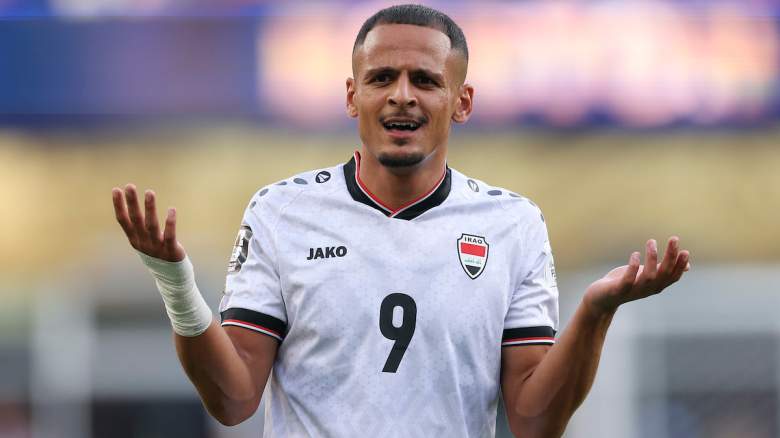
No Iraqi player had ever appeared in the English Premier League before Ali Al-Hamadi pulled on a shirt for Ipswich Town — a distinction that brought a different kind of credential to the national squad. He also opened the scoring in the playoff final against Bolivia, giving Iraq the early foothold in a match that would ultimately define the country’s World Cup fate, according to FIFA’s playoff tournament coverage.
Al-Hamadi brings pace and directness to an attack that can lean on Hussein’s finishing. He stretches defenses, creates width, and the experience of competing at the Premier League level has sharpened his technical game in ways difficult to replicate anywhere else. At 26, he is still ascending through the best years of his career.
Iraq’s coaching staff sees him as more than a depth piece. He is a genuine threat in open space, and his ability to combine with Hussein gives the team a two-striker dynamic that opposing back lines have to account for from the opening whistle.
Amir Al-Ammari: The Creative Force
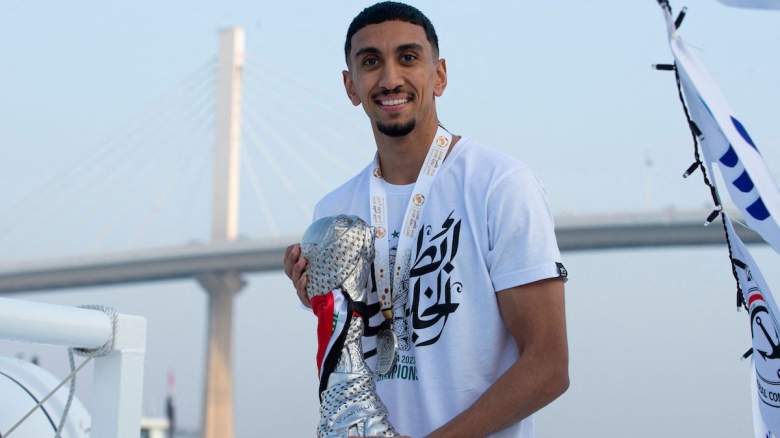
If Hussein and Al-Hamadi are the teeth of Iraq’s attack, Amir Al-Ammari is the mechanism that makes them bite. The creative midfielder controls tempo, distributes through compressed spaces, and serves as the connective tissue between Iraq’s midfield and the forwards pressing ahead of him.
Al-Ammari was a central figure in both the qualifying push and the playoff run that ultimately secured Iraq’s berth. His vision and passing range give the team a dimension that raw athleticism alone cannot manufacture — the capacity to unlock a settled defensive shape with a single, perfectly weighted ball.
On the global stage, that quality is what separates squads that survive the group phase from those that disappear after three matches. Iraq’s path forward likely runs through Al-Ammari’s creativity as much as any other player in the squad.















Who Are the Best Players on Iraq’s 2026 World Cup Squad?