
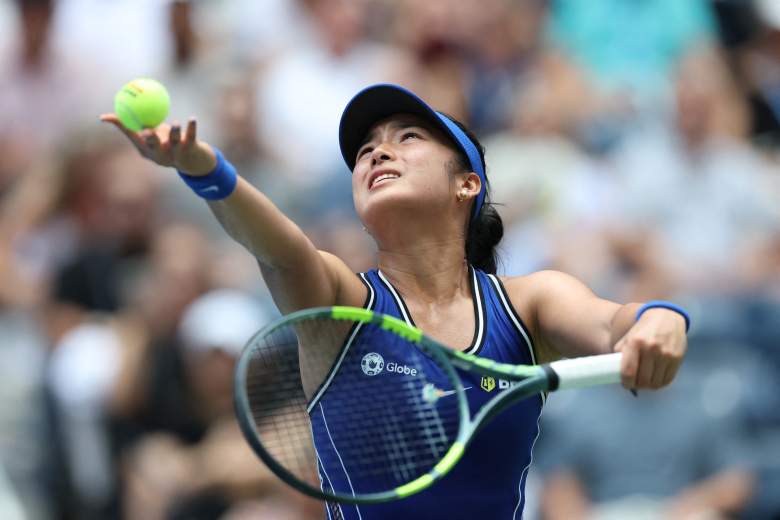
Alex Eala has already built the foundation of a top-five player, according to former world No. 4 Greg Rusedski. He believes one technical adjustment could help her complete the climb.
Rusedski, the 1997 U.S. Open runner-up and one of the biggest servers of his generation, has offered to work with Eala during the offseason to improve her serve.
“I’d love to have a crack at it,” Rusedski said on his “Off Court” podcast. “That would be something I would be very interested to do.”
It was more than a former player volunteering his résumé. Rusedski delivered a detailed diagnosis of the one stroke he believes is preventing Eala from consistently controlling matches against the world’s best players.
Greg Rusedski Identifies Alex Eala’s Serve Problem
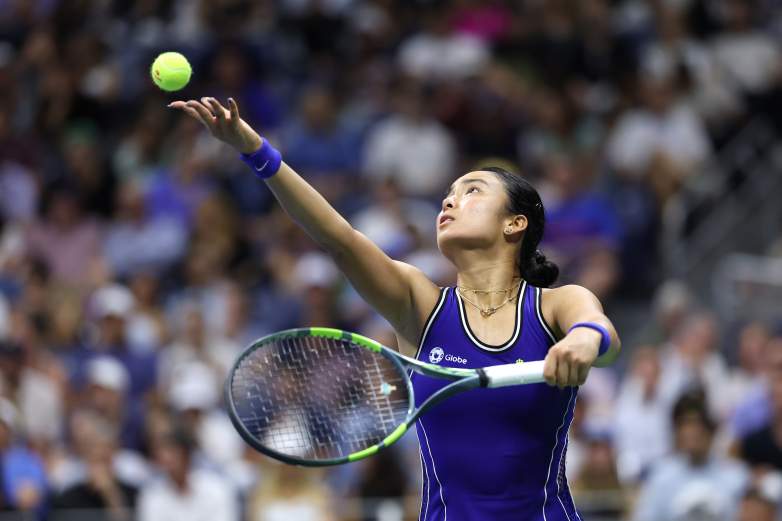
Rusedski described the serve as “the engine for everything” because it creates the first opportunity to attack.
In Eala’s motion, he sees insufficient shoulder tilt and an elbow position that limits the throwing action. Her shoulders remain too square, he explained, making it difficult to generate maximum acceleration through the elbow and wrist.
Changing that angle would not require rebuilding the entire motion. Rusedski said the technical adjustment itself is manageable, although turning it into an automatic habit would take time.
A more explosive throwing position, he believes, could add several miles per hour while improving Eala’s placement and first-strike potential.
The offer carries credibility. Rusedski reached No. 4 in the ATP rankings, won 15 tour-level singles titles and advanced to the 1997 U.S. Open final. He also held the record for the world’s fastest serve after delivering one measured at 149 mph in 1998.
Iva Jovic Loss Exposes Cost of Eala’s Serve
Rusedski pointed to Eala’s third-round U.S. Open defeat against Iva Jovic as evidence of how urgently the stroke needs attention.
Jovic defeated Eala 7-5, 3-6, 7-5 in a three-hour match at Arthur Ashe Stadium. Eala led 4-2 in the deciding set before Jovic recovered to win five of the final six games.
Rusedski recalled Eala losing serve eight or nine times. The official match statistics confirmed the higher number: Jovic converted nine of 17 break-point opportunities. Eala broke Jovic eight times in 20 chances, producing 17 service breaks across three sets.
In a match decided by only two games, one additional service hold could have changed the result.
“If she gets the serve, it just opens up everything,” Rusedski said.
He praised the rest of Eala’s game without reservation, calling her groundstrokes immaculate, her return exceptional and her movement and anticipation major strengths.
Add more speed and accuracy to her serve, Rusedski argued, and Eala could begin “bracketing the top five.”
Alex Eala’s Rise Leaves Room for Another Leap
Eala, 21, has already climbed to a career-high No. 18 and become the highest-ranked Southeast Asian player in WTA history. She also became the first Filipina to capture a WTA Tour singles title by winning in Washington this summer.
Her U.S. Open appearance completed another milestone: qualifying for the main draw at all four Grand Slam tournaments in the same season.
Eala does not need the serve to become the defining shot of her game. She needs it to stop giving opponents repeated access to everything she already does well.
Whether Rusedski receives an invitation remains uncertain. His diagnosis, however, was specific—and Eala’s final match in New York supplied the supporting evidence.
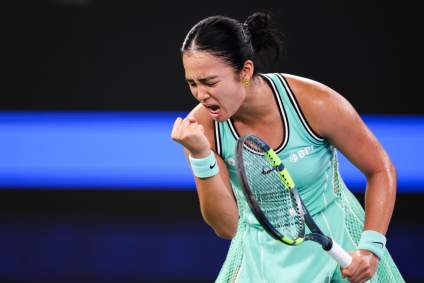
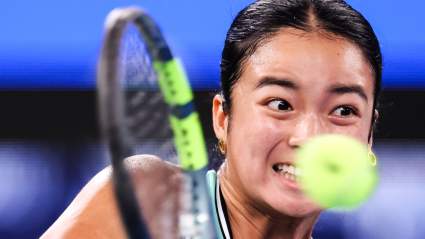



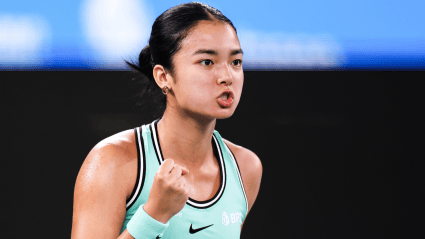

Former US Open Finalist Offers to Fix Alex Eala’s Biggest Weakness