
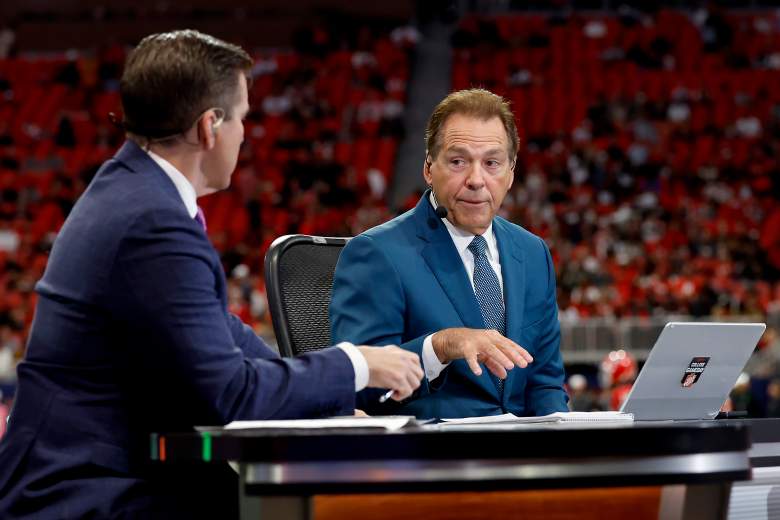
Nick Saban believes the College Football Playoff has a problem, and the legendary former Alabama coach wants evaluators to rethink how they judge wins and losses.
During ESPN’s “College GameDay” on Sept. 12, Saban argued that simply stacking victories shouldn’t necessarily make one team’s resume better than another’s. His larger concern is that the current system could discourage programs from scheduling marquee nonconference games because losing one could ultimately damage their playoff chances.
“Players love to play in big games,” Saban said. “That’s what great competitors love to do. Fans love to see big games.”
Saban then explained why he believes the playoff needs another way to measure the value of a team’s results. His argument centers on strength of schedule and the idea that challenging an elite opponent can reveal more about a team than comfortably defeating an inferior one. That led Saban to deliver a statement that could create plenty of debate as the College Football Playoff continues evolving.
“We need a better metric to actually evaluate quality wins and quality losses,” Saban said. “Some losses are better than some wins.”
Nick Saban Makes Fair Point With Dangerous Downside
There is plenty of logic behind Saban’s argument. A narrow road loss against one of the country’s best teams shouldn’t necessarily destroy a playoff resume, while piling up victories against dramatically weaker competition shouldn’t automatically create a superior one. Rewarding programs for scheduling difficult opponents could also give college football more of the heavyweight regular-season matchups that players and fans want.
The danger begins when evaluators take that philosophy too far. College football shouldn’t enter a world where losing becomes so valuable that actually winning starts feeling secondary, especially when deciding which teams deserve an opportunity to compete for a national championship. Strength of schedule deserves significant consideration, but the objective of playing the game still has to matter.
Saban offered Texas as an example, questioning whether its loss to Ohio State last season should have carried more value than beating Texas State. That comparison illustrates his argument well because those two results obviously provide evaluators with dramatically different information about a team. The difficult part is determining exactly where the line should be drawn once committees begin deciding which losses deserve more respect than another team’s victories.
College Football Playoff Cannot Make Winning Secondary
Saban is right to challenge a system that could incentivize contenders to build easier schedules. If losing to an elite opponent carries the same penalty as losing to an average one, athletic departments have little reason to voluntarily increase the difficulty of their playoff path. Creating a better formula that accounts for opponent quality could help protect the major nonconference games that make the college football regular season unique.
But any new metric has to preserve the importance of winning. Once subjective evaluations of “good losses” become powerful enough to outweigh too many actual victories, the playoff risks creating an entirely different controversy. The best solution likely isn’t choosing between record and schedule strength, but finding a better way to make both matter without allowing either to overwhelm what happened on the field.
Saban has identified a legitimate problem even if the solution carries its own risks. College football should want Ohio State to play Texas instead of watching contenders protect their records against overmatched opponents, and teams shouldn’t be excessively punished for accepting those challenges. Still, the sport has to be careful that rewarding ambition never becomes an excuse for treating losing like winning.










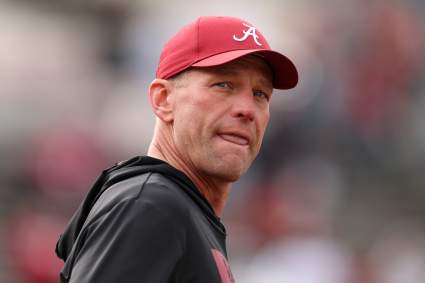

Nick Saban Sends Strong Warning About Major College Football Playoff Problem