

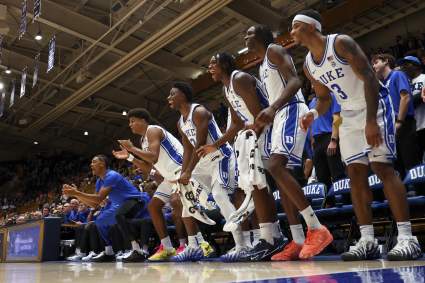
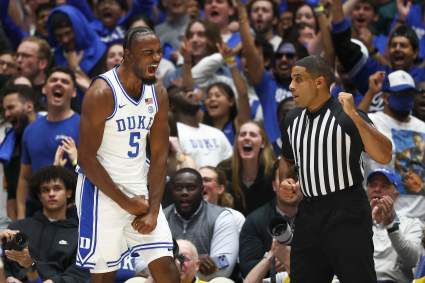
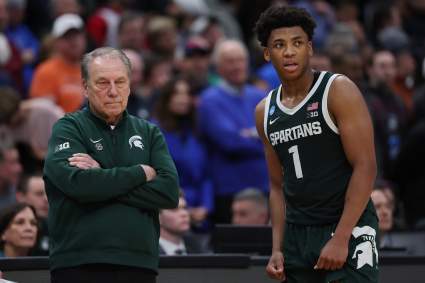
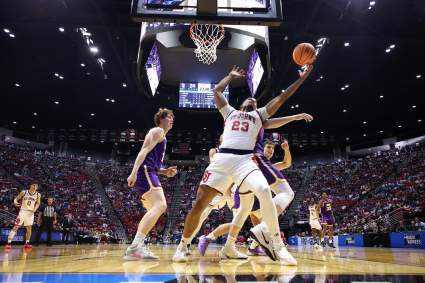
March Madness is once again reaching far beyond the basketball court and into offices across the United States. As the NCAA tournament begins each spring, many workers fill out brackets, join office pools, and follow games during the workday.
A new survey of more than 3,000 full-time U.S. workers shows how deeply the tournament has become part of workplace culture. The findings point to major spending on office pools, growing use of artificial intelligence tools such as ChatGPT for bracket picks, and a notable number of employees who say March Madness has caused problems on the job.
The survey suggests that what was once a casual office tradition now includes bigger financial stakes, new technology, and, for some workers, real consequences at work.
March Madness Brackets Drive Billions in Workplace Spending
Office pool participation remains a major part of how employees engage with March Madness at work. According to survey data from VegasInsider, 59% of full-time workers said they spend money on office March Madness pools.
Among participating workers, the average annual spend is about $97. Applied nationally, that figure suggests roughly 80.1 million workers could be putting an estimated $7.7 billion into office pools each year.
Younger workers make up a large share of that participation. Employees ages 25 to 34 account for roughly one-quarter of all office pool participants, showing how common the tradition remains among younger professionals.
The survey also found big regional differences. New York ranked first in office pool participation, with 76% of workers saying they spend money on March Madness pools. Florida followed closely at 75%, while Kentucky, Illinois, and North Carolina each came in at 71%.
Several of the country’s largest states also posted high participation rates. Texas came in at 66%, while California reached 63%.
At the other end of the list, North Dakota and New Hampshire had the lowest rate of office pool participation, with 36% of workers in each state saying they take part. Oklahoma followed at 38%.
AI Brackets Are Changing How Workers Approach Brackets in Office Pools
Artificial intelligence is also becoming part of the March Madness routine for many workers. The survey found that 38% of respondents said they have already used AI tools such as ChatGPT to help pick their brackets.
Interest in AI appears to be growing even more. A total of 52% of workers said they either plan to use AI or would consider using it for bracket decisions this year.
Workers between the ages of 25 and 44 showed the strongest interest in AI-assisted bracket help, leading both in past use and openness to using the technology going forward.
Florida ranked highest in past AI use, with 57% of workers saying they have used AI tools for March Madness brackets. California and New York were close behind at 56%, suggesting AI-assisted bracket strategies are already common in several large states.
North Dakota reported the lowest past AI use, with only 10% of workers saying they had used AI for their brackets.
In terms of future adoption, Washington and Virginia led the country.
In both states, 67% of workers said they will use AI or would consider using it for March Madness brackets this year. New York followed at 64%, while Georgia came in at 63%.
North Dakota again ranked last in future AI openness, with 30% saying they planned to use or would consider using AI for their picks.
March Madness Workplace Trouble Is More Common Than Some Might Expect
The survey also found that March Madness can create issues at work. About 1 in 5 workers, or 21%, said they have gotten into trouble at work because of the tournament.
That trouble ranged from informal call-outs by managers to more formal warnings. The findings suggest that while March Madness often brings friendly competition into the office, it can also blur professional boundaries during the workday.
Washington reported the highest level of March Madness-related trouble at work. In that state, 49% of workers said they had gotten into trouble over the tournament.
Georgia followed at 42%, while New York came in at 40%. Texas and California also ranked high, with 37% and 36%, respectively, saying they had experienced some form of workplace trouble tied to March Madness.
North Dakota had the lowest rate, with only 2% of workers saying the tournament had caused them problems at work. Wyoming followed at 4%, and Minnesota came in at 6%.
A VegasInsider analyst said the findings reflect how much the tournament now shapes office life.
“March Madness has grown into a full workplace ritual, where office pools, bracket talk and now AI-assisted picks all shape how employees experience the tournament,” the analyst said. “What stands out is that this is no longer just about casual fandom — it now involves real money, new technology and, for some workers, real consequences on the job.”
March Madness for 2026 officially kicks off on Thursday, March 15.
March Madness Brackets Could Drive $7.7 Billion in Workplace Spending