
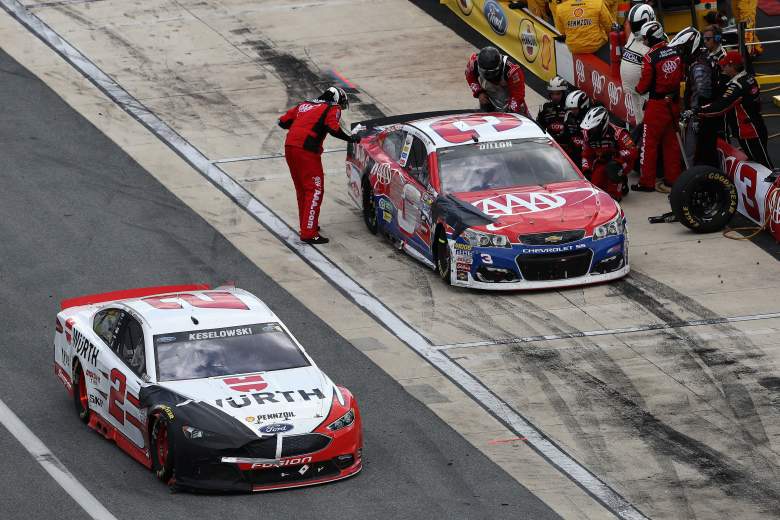
NASCAR has decided not to penalize Austin Dillon following his contact with Brad Keselowski during Sunday’s NASCAR Cup Series race at Nashville Superspeedway. The decision came after officials reviewed data from the incident and determined Dillon did not intentionally cause the crash.
The ruling has become one of the biggest talking points from the NASCAR race, especially after Keselowski and his team believed the contact was deliberate. NASCAR officials said telemetry data showed Dillon had already lifted off the throttle before impact.
The incident added to a chaotic afternoon that featured multiple cautions and several brake-related problems under NASCAR’s new 2026 rules package. While some fans agree with NASCAR’s decision, others continue to question whether the contact warranted further action against Dillon.
NASCAR Explains Austin Dillon Penalty Decision
The Austin Dillon penalty discussion was addressed on Tuesday during NASCAR’s “Hauler Talk” podcast. Officials stated they examined the incident almost immediately by utilizing data from NASCAR’s remote race control in Concord, North Carolina.
Senior Director of Racing Communications Amanda Ellis explained why NASCAR reached its conclusion.
“Scott Miller pulled all the data from that incident, and we knew pretty quickly that Austin was out of the throttle (before hitting Keselowski). They obviously tangled on the track, and then the incident happened, right? But we were able to tell pretty quickly that it wasn’t a situation where Austin was in the gas or anything related to that.”
Ellis also noted that the two drivers had been involved in several on-track disagreements during the race.
“Those two (drivers) clearly kind of had some differences of opinion throughout the race. And so that one is really more of just a racing incident, and that’s really how NASCAR viewed it on Sunday night.”
Prime Video analyst Steve Letarte supported NASCAR’s review, explaining that Dillon dropped from full throttle exiting Turn 4 to roughly 17 percent throttle when the contact occurred on the frontstretch.
Brad Keselowski Disagrees With NASCAR Ruling
Despite NASCAR’s explanation, Brad Keselowski and his team did not share the same view of the crash.
During team radio communications, Keselowski’s spotter accused Dillon of intentionally causing the incident. The driver also voiced frustration after the race and believed the move was connected to earlier battles between the two competitors.
The NASCAR ruling means Dillon will not lose points, face a suspension, or receive any additional penalties. However, the incident adds another chapter to the ongoing rivalry between the drivers.
Keselowski has even hinted that the matter may not be forgotten as the season continues.
NASCAR Race Also Exposes Brake Problems
The Nashville NASCAR race featured 11 cautions, four of which were linked to brake issues. NASCAR officials believe the problems were connected to teams adjusting to the new 750-horsepower, lower-downforce package introduced for 2026.
Vice President of Racing Communications Mike Forde said setup choices played a major role.
“Depending on what kind of brake package you use and the setup that you chose, which is a team’s choice, that’s what we believe led to a lot of the problems. I think it’s going to be pretty easy to fix. We saw 30-some cars that had no problems. We did see the four, but we want to see zero.”
Forde added that teams are still learning how to maximize the new package.
“So I think there will be some learnings from the entire garage, but I think, suffice to say, we looked at it, and if this was back at the 670 (horsepower) package last year, we probably wouldn’t have seen the problems. It’s kind of the teams have to work through it, and I don’t think anyone’s calling for any change in that regard.”
For now, NASCAR considers both the Austin Dillon penalty debate and the brake issues part of the adjustment process as the 2026 season moves forward.
NASCAR Reviewed the Data and Reached a Verdict on Austin Dillon and Brad Keselowski Incident at Nashville