
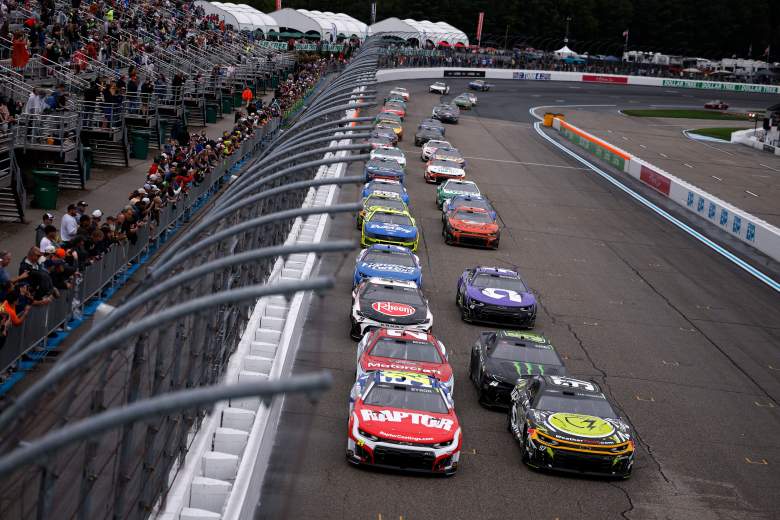
NASCAR’s wet-weather procedures faced another major test at New Hampshire Motor Speedway during the Dollar Tree 301. Rain left the 1.058-mile Loudon track damp before the NASCAR Cup Series race, forcing teams to start on Goodyear wet-weather tires. NASCAR then managed the switch to slick tires as the track dried.
Brad Moran, NASCAR Cup Series Managing Director, called the process a success while speaking on SiriusXM NASCAR Radio. “Overall, I think it was a success.” The race gave NASCAR another chance to test wet-weather racing on an oval and refine procedures that remain relatively new. Officials also had to balance track conditions, pit road safety and the need to keep the race moving for fans.
NASCAR Wet-Weather Tires Tested Again
NASCAR used wet-weather tires to start the race instead of waiting for the track to dry completely. Moran said the series has taken a careful approach to NASCAR wet-weather racing on oval tracks.
“If we go back a couple of years and just think of where we were, I mean, it was kind of unheard of running a stock car on an oval track on wet tires.”
He said NASCAR planned to “crawl, walk and run” while developing the system. The series has used wet-weather tires fewer than half a dozen times on oval tracks, so teams, officials and crew chiefs are still learning.
“So, again, we’re learning as we go, getting better with the procedures.”
NASCAR Race Interrupted by Tire Change
NASCAR held a crew chief meeting before the race to review the wet-weather rules and procedures.
“We had a quick crew chief meeting. We went over all the procedures. All the rules are pretty straightforward for this year.”
The main challenge came around Lap 40-41 when the track began drying, but pit road still needed attention. NASCAR called a competition caution and directed teams to change from wet-weather tires to slicks during a non-competitive pit stop.
Moran said safety remained the priority because pit road was not fully dry.
“And then obviously safety is always a number one thing. Pit road is another problem.”
NASCAR Wet-Weather Procedures Keep Race Moving
Instead of spending up to two hours drying the track under traditional procedures, NASCAR continued once officials removed enough water from the racing surface and made pit road suitable.
“And rather than burning up an hour and a half to two hours to dry the track, we actually were out there racing once we got the water knocked off and we got pit road decent.” .
The controlled stop cost teams one normal competitive pit stop, but the race quickly returned to normal.
“You know, we lost one pit stop and then we were back to business as usual and the fans got to see a full race on a track that didn’t have light.”
Moran said NASCAR’s long-term goal remains a simpler wet-weather system, but the series will continue developing it gradually.
“Definitely, our direction would love to be just, you know, call the track wet and the tires are on them, just like we would basically do at a road course.”
For now, NASCAR will continue gaining experience with wet-weather tires and procedures on oval tracks.
NASCAR’s Rainy New Hampshire Race Exposes a Problem Officials Had to Solve