

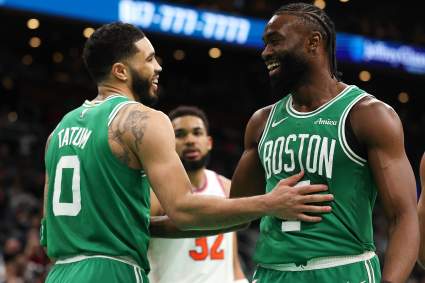
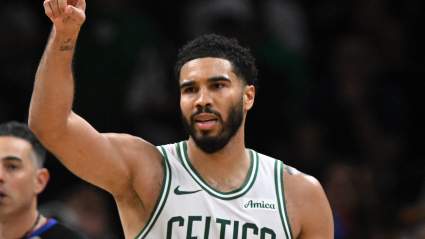
The Boston Celtics are navigating a summer of adjustment. With Jayson Tatum rehabbing a ruptured Achilles, Boston is reshaping its rotation and identity in real time. Several pieces from the 2024 championship have moved on. The front office is balancing development with competitiveness.
In that bridge-year context, the appeal of a proven closer is understandable. Recently, ClutchPoints’ Rohan Brahmbhatt floated DeMar DeRozan as a potential in-season target. The idea raises fair questions about fit, cost, and timeline.
The Case for DeRozan in Celtics Green
DeRozan remains one of the league’s steadiest half-court scorers. He averaged 22.2 points, 4.4 assists, and 3.9 rebounds last season. His game translates late, where possessions slow and teams need someone to manufacture a clean look.
In a gap year, his cadence could stabilize closing lineups. The rest of the roster could soak up developmental reps. That stability has value in the months before Tatum is fully back.
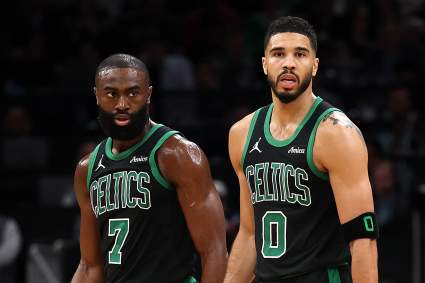
Within Boston’s structure, DeRozan’s foul-drawing and mid-post gravity can still generate efficient outcomes. Jaylen Brown screening and short-roll play can force backline help. That can free cutters and shooters. Derrick White relocating off the ball pairs with DeRozan’s pacing, keeping outlets available.
Second-unit groups could lean on DeRozan to anchor offense when pull-up shooting dries up. If carried beyond this season, the approach could continue in a smaller, matchup-driven role once Tatum returns at full strength.


Why the Celtics Might Pass
The most realistic trade path likely sends out Anfernee Simons. That turns the idea from “add scoring” into “swap creation types.”
Simons offers more than just volume scoring. He’s younger, with room to grow into a long-term piece. His game stretches defenses with high-volume pull-up threes and downhill drives that pressure the rim. That vertical and horizontal gravity forces opponents to defend every inch of the floor.
DeRozan thrives in different spaces. He operates from the elbows and the nail, where help can arrive more easily without the same penalty for leaving shooters. That shift compresses spacing. It alters the nightly math Boston has leaned on without Tatum. Over a full season, those changes ripple through lineups and shot quality.
There’s also the stylistic contrast. DeRozan’s three-point shooting has never been reliable. Boston’s system is built on five-out spacing and quick-trigger threes. Shifting the offense closer to the elbows invites nail help, shrinks driving lanes for Brown and White, and narrows passing windows. You can tweak the scheme to accommodate him, but every adjustment carries an opportunity cost.
Meanwhile, Simons fits cleanly into Boston’s preferred approach. His shooting preserves floor spacing. His age ensures he can grow alongside the core. And his style keeps the offense wide and modern, which is exactly how the Celtics want to play.
The Verdict on a DeRozan Deal

Boston should keep faith in Simons. The younger guard’s fit, sustained spacing, and long-term flexibility outweigh the appeal of DeRozan’s late-game steadiness.
Paying real assets for a non-spacing scorer who is past his prime risks solving postseason problems while creating new ones during the regular season. In a year focused on development and smart roster management, patience and shooting are safer bets for the Celtics.


Celtics Trade Pitch Lands Them 6-Time All-Star Forward