
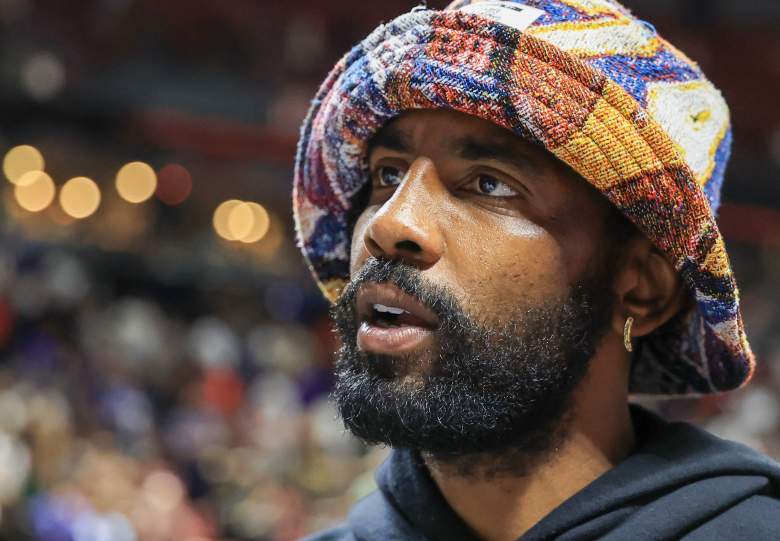
Kyrie Irving’s long recovery did not follow a straight line. There were false starts, forced pauses and moments when the Dallas Mavericks guard wondered whether he would ever feel like himself again.
Nearly 19 months after tearing the ACL in his left knee, Irving arrived at training camp Friday with the answer Dallas had waited to hear.
“No restrictions,” Irving said during Mavericks Media Day.
The declaration does not mean the Mavericks will ignore the realities of managing a 34-year-old guard returning from a traumatic knee injury. Irving said he expects regular conversations with the medical staff about back-to-back games and how his body responds from one day to the next.
Still, being cleared without formal limitations represents a significant development for a franchise attempting to climb out of a 26-win season.
Irving missed the entire 2025-26 campaign while rehabilitating the injury he sustained against the Sacramento Kings on March 3, 2025. His absence stretched longer than early projections suggested, and Dallas ultimately shut him down in February rather than force a late-season return.
For the first time, Irving disclosed that the delay included multiple setbacks.
Kyrie Irving Admits Recovery Was Not Linear
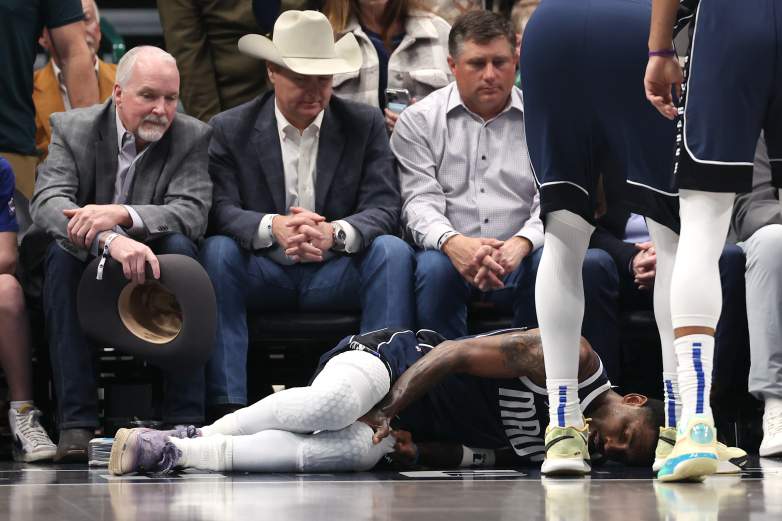
“There were moments where I was really pressing, and I had a few setbacks, unfortunately,” Irving said. “I had to be removed from the court.”
Those interruptions forced Irving to reconsider his approach. A player accustomed to attacking obstacles through repetition and long hours had to learn that more work was not always the answer. Sometimes the knee required patience rather than another drill.
Irving described the mental burden of wondering whether he would return as the same player — or become better. He also acknowledged that he had not always been fully honest about his physical condition before the injury.
That candor matters after Irving carried an enormous workload during the final stretch of the 2024-25 season. Before tearing his ACL, he averaged 24.7 points, 4.8 rebounds and 4.6 assists while shooting 40.1% from 3-point range.
He often pushed to remain on the floor for close to 40 minutes because Dallas needed him to create offense and stabilize an injury-ravaged roster.
The time away altered that perspective.
Irving called the injury “probably the best thing” that happened to him, not because of the physical pain, but because it forced him to examine his career, leadership and life away from basketball.
Mavericks Will Still Manage Irving Carefully
Irving’s “no restrictions” announcement should not be confused with a promise that he will play every game.
Dallas is expected to monitor his workload, especially during back-to-backs. The goal is to preserve Irving deep into the season rather than recreate the strain that preceded his injury.
His return also changes the developmental environment around Cooper Flagg. Irving spent last season embracing a player-coach role, offering guidance while unable to contribute on the court. Now, he can mentor Flagg from the backcourt beside him.
Irving said he feels great and is eager to prove that recovery has not diminished his game.
The setbacks taught him how fragile a comeback can be. Friday’s update showed how far he has traveled anyway.
After a season spent watching, waiting and healing, Irving is finally ready to play without restrictions — and with a different understanding of what his body requires.
Mavericks Star Kyrie Irving Reveals Major Update After Multiple Injury Setbacks