
The Los Angeles Lakers offered Jonathan Kuminga more money than the Minnesota Timberwolves. They offered him a starting role, a clean offensive fit and the opportunity to play beside Luka Dončić and Austin Reaves.
They could not offer him the contract structure he wanted.
Kuminga’s agent, Aaron Turner, revealed why the Lakers’ pursuit ultimately fell apart during an appearance on FanDuel TV’s “Run It Back” with Chandler Parsons. The problem was not JJ Redick’s vision. It was the length, price and inflexibility required to complete a sign-and-trade with the Atlanta Hawks.
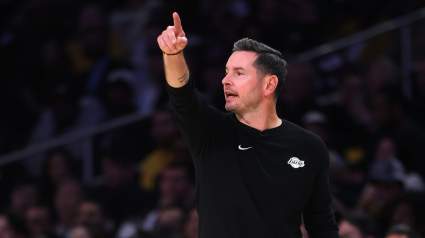
“He definitely spent a good amount of time talking with JJ,” Turner said.
Kuminga ultimately signed a two-year, $12.4 million contract with Minnesota that includes a player option for the second season. The deal pays him less next season but allows the 23-year-old to return to free agency in 2027 if he rebuilds his value.
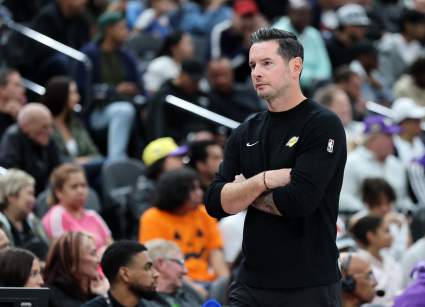
JJ Redick Presented Jonathan Kuminga With Clear Role
Turner said Redick outlined a defined role for Kuminga as the Lakers’ starting power forward.
Los Angeles envisioned him benefiting from the shooting and playmaking surrounding him. Kuminga could screen for Dončić, cut behind distracted defenders, run in transition and attack before opposing defenses were set.
Turner called Los Angeles and Minnesota the “two cleanest” basketball situations available to his client.
That distinction matters.
Kuminga did not reject the Lakers because of playing time, fit or Redick’s plan. Los Angeles had a glaring opening at power forward after LeBron James joined the Philadelphia 76ers, and Kuminga’s athleticism addressed a weakness on an otherwise skilled but slower roster.
The Lakers offered more than $12 million annually over three seasons. That proposal represented substantially more guaranteed money than Minnesota’s offer.
But the extra security came with a cost Kuminga’s camp considered too steep: control.
Sign-and-Trade Rules Undermined Lakers’ Offer
Because the Lakers lacked the spending power to sign Kuminga outright at their proposed salary, Rob Pelinka needed Atlanta’s cooperation on a sign-and-trade.
A sign-and-trade contract must cover at least three seasons, and those first three years cannot contain an option. The Lakers therefore could not offer Kuminga the two-year arrangement with a second-year player option that Minnesota placed on the table.
Turner considered approximately $12 million annually too low to lock up a player he views as a starting-caliber wing through his prime.
“If you’re going to tie somebody up three years going into their prime as a starting wing, locking in at $12 million in this NBA is pretty decently below the midlevel,” Turner said.
The 2026-27 non-taxpayer midlevel exception is worth approximately $15 million.
Atlanta’s proximity to the first apron complicated matters further. The Hawks could accept only so much salary without moving additional players, forcing three organizations to solve an increasingly crowded financial puzzle.
“It was hard to put it all together,” Turner said.
Minnesota eliminated those obstacles. The Timberwolves could use their taxpayer midlevel exception, provide the player option Kuminga coveted and guarantee him a starting job. Anthony Edwards, Chris Finch and team president Tim Connelly delivered a unified recruiting message that resonated with Kuminga.
The Lakers had the stronger financial offer and a legitimate basketball plan. What they could not provide was a quick path back to the open market.
For Kuminga, that proved more valuable than guaranteed money.




Jonathan Kuminga’s Agent Reveals Why Lakers Deal Fell Apart