
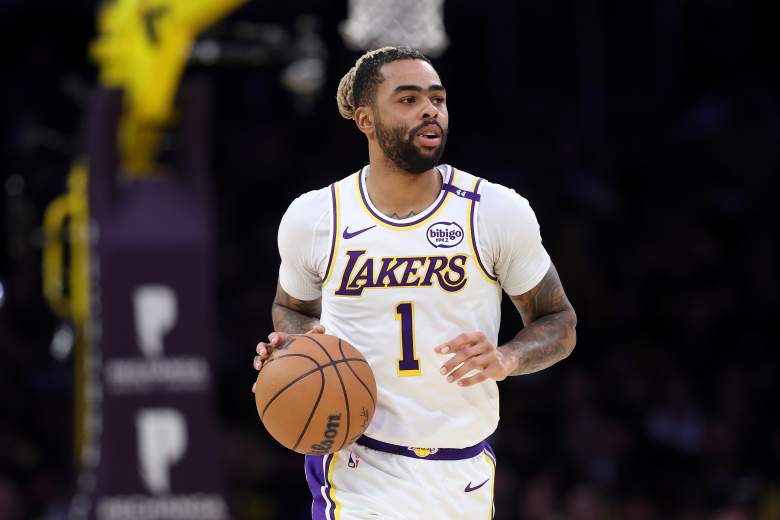
Once again, D’Angelo Russell, eleven-year NBA veteran, is looking for a new team. But he is starting to run out of both time and suitors.
After the Memphis Grizzlies waived Russell on Friday, the 30-year-old guard is back on the market, having passed through the hands of three teams in six months. He arrived in Memphis from the Washington Wizards as part of a six-team trade in July, but left without playing a game for either franchise.
Russell’s departure had been anticipated. Memphis acquired him purely as salary filler after he had exercised his $5,969,250 player option for 2026-27, but the Grizzlies were always expected to trade him or part ways with him. For a player who was an All-Star relatively recently to now have two teams acquire him as a purely bookkeeping matter and who would rather pay him to leave than play him in a single game, it begs the question; which team has a role for a ball-dominant guard whose production and playing time have fallen sharply over the past two seasons? And if he cannot still cut it as a ball-dominant player at the NBA level, is there another way in?

Russell’s Best Years
Only seven years ago, Russell – a former All-Rookie Second Team nominee – was an All-Star with the Brooklyn Nets. In the 2018-19 season, he averaged 21.1 points and 7.0 assists and helped Brooklyn reach the playoffs after an ugly three-year drought. Russell’s ability to create shots (if largely for himself) and galvanize an offence has kept him in the league for more than a decade, and back in the day, had him near the top of it.
In the NBA, though, seven years is equal to about four million non-NBA years. Nowadays, Russell is on the fringes not just of a rotation but of a spot in the league altogether, staring a move to China in the face.
Russell signed with the Dallas Mavericks last July, when Kyrie Irving was recovering from a torn ACL and the Mavericks had an immediate need for guard help. He did not provide it, though. Instead, Russell appeared in only 26 games, starting three, before Dallas traded him to Washington in February as a financial filler part of the Anthony Davis trade. He averaged 10.2 points and 4.0 assists in 19.0 minutes per game and shot 40.5% from the field for the Mavericks, and did not play for the Wizards after the trade.
A loss of momentum is not in itself a loss of skill. Russell remains a capable passer who can run pick-and-roll possessions and create his own shot, and on some nights, despite the degree of difficulty of many of those shots, the Irving-esque impression comes off. He can be great fun, and occasionally a game-winner. For a team short of experienced guards and creativity, those skills could be useful in a reserve role.
The important issue for prospective teams, though, may be the kind of minutes, touches and import that Russell seems to need to be effective. He has always done his best work with the ball in his hands, making decisions as a scorer and passer, dominating the ball without ever showing much nous for how and when to move without it in his hands. A team seeking a guard to stand off the ball, defend at a high level and take only occasional shots would be asking him to fill a different role. And a team seeking a primary ball-handler can find younger, better and quicker performers than what the notoriously inconsistent Russell showed last season.

Father Time Is Undefeated, And All That
Even if Russell catches a second wind – which is far from guaranteed – there are limits to even the most favourable projections. Russell’s shooting – always spotty, in part due to shot selection – was less reliable last season than it has been over his career, and although he maintains a decent defensive effort, a lack of elite lateral movement and instincts on that end makes for a fairly average defensive impact at the lead guard position, without the physical profile to switch down elsewhere. Any suitor team will have to decide whether his offensive contribution outweighs the defensive demands of playing him, particularly alongside another guard who needs the ball.
Potentially, the thought of a Russell Redux could appeal to a team with an unsettled backup point guard position, or one like the Mavericks looking for cover against injuries. Joining a contender, though, would likely mean accepting a narrow, clearly defined role. And two non-contending teams just decided not to play him at all.
As of this week, Russell is again a free agent, but this time running into late September. Camps are open, and he is not in one. With an NBA résumé few available guards can match – an All-Star selection, more than a decade in the league, several thousand points, a lot of fun highlights and experience running offences for several teams to a high standard – Russell will be hoping the China route can be kept at bay for at least one more year. Character is not the issue, and nor really is his defense, which will do. Instead, he might have just aged out of the fine margins that once made his slightly chaotic style work.



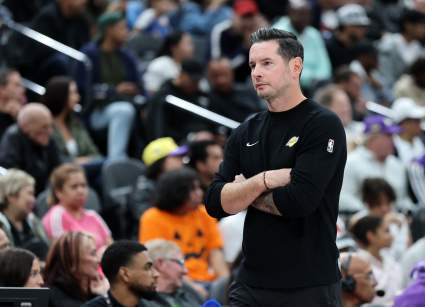
Where Does D’Angelo Russell Go From Here?